A strong mesh network should do more than eliminate dead zones. The best systems maintain dependable speeds between nodes, support busy households, and make it easier to manage coverage from a single app.
This roundup compares 10 mesh Wi-Fi systems with dedicated backhaul, including Wi-Fi 6, Wi-Fi 6E, and Wi-Fi 7 options. Use the buying guide below to match system design, capacity, coverage, and value to your home.
Best 10 Mesh Wifi Systems with Dedicated Backhaul Picks for 2026
Best Premium Wi-Fi 7

- Tri-band Wi-Fi 7 with up to 10,000 Mbps
- 10G WAN/LAN plus four 2.5G ports
- Up to 5,800 sq. ft. and 200+ devices
Best For: Performance-focused homes with multi-gigabit networking needs
Best for Large Homes

- Three-pack covers up to 8,000 sq. ft.
- Tri-band Wi-Fi 7 with Enhanced Backhaul
- Supports up to 100 devices and 2.5 Gbps plans
Best For: Large or multistory homes needing broad coverage
Best Wi-Fi 6E Value

- 6 GHz band can serve as dedicated backhaul
- Three-pack covers up to 7,200 sq. ft.
- Tri-band speeds up to 5,400 Mbps
Best For: Homes seeking affordable Wi-Fi 6E coverage
Best Entry Wi-Fi 7

- Wi-Fi 7 speeds up to 5 Gbps
- Three-pack covers up to 6,000 sq. ft.
- Enhanced Backhaul and 2.5G Ethernet
Best For: Households wanting accessible Wi-Fi 7 coverage
Best Wi-Fi 7 Value

- Wi-Fi 7 speeds up to 5 Gbps
- Coverage up to 6,600 square feet
- Hybrid wireless and 2.5G Ethernet backhaul
Best For: Large homes upgrading to Wi-Fi 7
Best for Easy Whole-Home Coverage

- Up to 6,000 square feet of coverage
- Wi-Fi 7 speeds up to 5 Gbps
- Dual-band Enhanced Backhaul
Best For: Families seeking simple Wi-Fi 7 coverage
Best Budget Wired-Backhaul Pick

- Coverage up to 6,500 square feet
- Three Gigabit ports per unit
- Supports wired Ethernet backhaul
Best For: Homes with Ethernet cabling and Wi-Fi 6 devices
Best Value Wi-Fi 7

- Wi-Fi 7 dual-band performance
- 2.5G traffic-balancing backhaul
- Up to 2,600 sq. ft. coverage
Best For: Homes wanting expandable Wi-Fi 7 coverage and simple management
Best Heavy-Duty Pick

- Up to 4,500 sq. ft. coverage
- Wired Ethernet backhaul support
- Six Gigabit ports in the two-pack
Best For: Large homes needing broad Wi-Fi 6 coverage and wired connectivity
Best Premium Tri-Band Pick
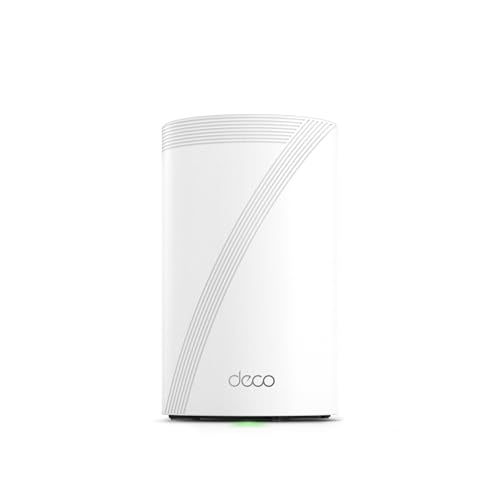
- Tri-band Wi-Fi 7 performance
- 10G and four 2.5G ports
- Supports over 200 devices
Best For: Performance-focused homes with demanding Wi-Fi 7 and multi-gigabit networks
Best Premium Wi-Fi 7 – TP-Link Deco BE63
The TP-Link Deco BE63 is a high-end choice for shoppers seeking mesh wifi systems with dedicated backhaul. Its tri-band Wi-Fi 7 design, 10G networking, and multi-gigabit ports are built for demanding whole-home networks, while the two-pack covers up to 5,800 square feet.
Best For: Performance-focused homes with many connected devices, fast internet plans, and demanding streaming or gaming needs.
Pros:
- Tri-band Wi-Fi 7 supports combined speeds up to 10,000 Mbps.
- Mesh backhaul helps balance traffic between Deco units.
- Includes a 10G WAN/LAN port, four 2.5G ports, and USB 3.0.
- Supports more than 200 devices across up to 5,800 square feet.
Cons:
- Requires a separate modem for most internet providers.
- Backhaul requires at least two Deco units.
- Actual wireless performance varies with distance, walls, and interference.
With extensive wired connectivity and strong capacity, the BE63 is a forward-looking option for users who want to make full use of multi-gigabit internet and Wi-Fi 7 devices.
Best for Large Homes – NETGEAR Orbi 770
The NETGEAR Orbi 770 is a three-piece Wi-Fi 7 system designed for large spaces and busy households. Its tri-band configuration with Enhanced Backhaul helps maintain connectivity across up to 8,000 square feet while supporting internet plans up to 2.5 Gbps.
Best For: Large or multistory homes that need broad coverage, simple app-based management, and support for up to 100 devices.
Pros:
- Covers up to 8,000 square feet with the included router and two satellites.
- Tri-band Wi-Fi 7 and Enhanced Backhaul support simultaneous connections.
- Offers speeds up to 11 Gbps and includes 2.5G LAN connectivity.
- Orbi satellites can be added for additional coverage.
Cons:
- NETGEAR Armor requires a separate subscription after the trial period.
- Coverage varies with home layout, construction materials, and satellite placement.
- Designed for use in the United States only.
The Orbi 770 stands out when coverage takes priority, pairing a generous rated range with Wi-Fi 7 performance and an app-guided setup process.
Best Wi-Fi 6E Value – TP-Link Deco XE75
The TP-Link Deco XE75 offers a practical route to mesh wifi systems with dedicated backhaul through its dedicated 6 GHz band. The three-pack covers up to 7,200 square feet, and the 6 GHz band can serve as the node-to-node backhaul by default or be opened for compatible Wi-Fi 6E devices.
Best For: Homes wanting stable tri-band coverage and Wi-Fi 6E features without moving to a Wi-Fi 7 system.
Pros:
- The 6 GHz band can work as a dedicated backhaul for stable node connections.
- Three-pack coverage reaches up to 7,200 square feet.
- Tri-band speeds reach up to 5,400 Mbps and support up to 200 devices.
- Deco app provides guided setup and remote network management.
Cons:
- Wi-Fi 6E is an older generation than Wi-Fi 7.
- 6 GHz client access requires compatible devices if the band is switched from backhaul mode.
- A modem is required for most internet providers.
The XE75 is especially compelling for buyers who value a true 6 GHz backhaul and broad coverage but do not need the newer Wi-Fi 7 standard.
Best Entry Wi-Fi 7 – NETGEAR Orbi 370
The NETGEAR Orbi 370 is a more streamlined three-piece Wi-Fi 7 mesh system for homes up to 6,000 square feet. Its dual-band design uses Enhanced Backhaul to help keep connections moving between the router and satellites, with support for internet plans up to 2.5 Gbps.
Best For: Households that want Wi-Fi 7 coverage and straightforward management without stepping up to a tri-band system.
Pros:
- Wi-Fi 7 speeds reach up to 5 Gbps.
- Three-piece system covers up to 6,000 square feet.
- Enhanced Backhaul helps maintain performance across the mesh.
- Supports up to 70 devices and includes 2.5G Ethernet.
Cons:
- Dual-band design offers less band capacity than tri-band alternatives.
- Coverage depends on the home’s layout, materials, and satellite placement.
- NETGEAR Armor requires a separate subscription after its 30-day trial.
The Orbi 370 is a sensible entry point for Wi-Fi 7, combining next-generation compatibility with a manageable three-unit setup and useful multi-gigabit Ethernet.
Best Wi-Fi 7 Value – Deco 7 Dual-Band BE5000
The TP-Link Deco 7 is a strong choice among mesh wifi systems with dedicated backhaul, combining Wi-Fi 7 performance with hybrid wireless and wired backhaul support. Its three-unit system is rated to cover up to 6,600 square feet and supports more than 150 devices, while 2.5 Gbps Ethernet helps distribute traffic between Deco units.
Best For: Large homes that want Wi-Fi 7 speeds, broad coverage, and the flexibility to use either wireless or Ethernet backhaul.
Pros:
- Wi-Fi 7 throughput up to 5 Gbps, with up to 4,324 Mbps on 5 GHz and 688 Mbps on 2.4 GHz.
- Rated coverage of up to 6,600 square feet and support for over 150 devices.
- Supports Wi-Fi 7 and 2.5G Ethernet backhaul for more stable communication between units.
- Deco app offers guided setup, management, AI roaming, and basic security features.
Cons:
- Backhaul requires at least two Deco units.
- Dual-band design does not provide a separate, dedicated wireless backhaul band.
- A separate modem is required.
Deco 7 is the more future-ready option here, especially for homes with newer Wi-Fi 7 devices or a wired Ethernet backbone. Buyers specifically seeking a fully dedicated wireless backhaul should note that this model uses hybrid backhaul rather than a separate third band.
Best for Easy Whole-Home Coverage – Orbi 360 WiFi 7 Mesh System
The NETGEAR Orbi 360 3-pack is designed for straightforward whole-home coverage, with a router and two satellites rated for up to 6,000 square feet. Its dual-band Wi-Fi 7 design includes Enhanced Backhaul to help maintain performance across the mesh, with support for internet plans up to 2.5 Gbps.
Best For: Families wanting a simple Wi-Fi 7 mesh setup for multi-room coverage, streaming, gaming, and video calls.
Pros:
- Rated to cover up to 6,000 square feet and connect up to 70 devices.
- Wi-Fi 7 speeds up to 5 Gbps, with compatibility for Wi-Fi 6 and Wi-Fi 5 devices.
- Enhanced Backhaul helps support faster mesh performance across the home.
- Orbi app provides guided setup and remote network management.
Cons:
- Dual-band configuration does not offer a separate dedicated wireless backhaul band.
- NETGEAR Armor security requires a separate subscription after the 30-day trial.
- Designed for use in the US only.
Orbi 360 is a practical pick when ease of installation and broad coverage matter more than advanced configuration. Its Enhanced Backhaul is useful for maintaining mesh performance, but shoppers should not confuse it with a true tri-band dedicated-backhaul system.
Best Budget Wired-Backhaul Pick – Deco X55 AX3000 Wi-Fi 6 Mesh
The TP-Link Deco X55 is a value-focused option for shoppers comparing mesh wifi systems with dedicated backhaul capabilities. Its three-unit Wi-Fi 6 system covers up to 6,500 square feet, supports up to 150 devices, and includes three Gigabit Ethernet ports per unit for wired Ethernet backhaul.
Best For: Homes with Ethernet cabling that want dependable Wi-Fi 6 coverage and a straightforward way to connect mesh nodes by wire.
Pros:
- Wi-Fi 6 AX3000 performance with combined speeds up to 3,000 Mbps.
- Rated coverage of up to 6,500 square feet for up to 150 devices.
- Three Gigabit Ethernet ports on each unit and support for wired Ethernet backhaul.
- Deco app, AI-driven mesh management, and basic HomeShield security features are included.
Cons:
- Uses Wi-Fi 6 rather than newer Wi-Fi 7 technology.
- Ethernet ports are Gigabit, not multi-gigabit.
- Its backhaul advantage depends on having Ethernet cabling available.
Deco X55 makes the most sense when you can wire the nodes and want consistent coverage without paying for Wi-Fi 7. It is less compelling for buyers relying entirely on wireless backhaul or planning for the newest client devices.
Best Value Wi-Fi 7 – Deco 7 BE25
The TP-Link Deco 7 BE25 is a practical starting point for shoppers seeking mesh wifi systems with dedicated backhaul capabilities. Its Wi-Fi 7 and 2.5G Ethernet traffic balancing can support faster, more stable coverage, while the dual-band design covers up to 2,600 square feet and supports more than 150 devices.
Best For: Homes that want Wi-Fi 7 performance, flexible expansion, and straightforward app-based setup without moving to a tri-band system.
Pros:
- Wi-Fi 7 speeds up to 5,000 Mbps class, with up to 4,324 Mbps on 5 GHz and 688 Mbps on 2.4 GHz.
- Supports Wi-Fi 7 and 2.5G Ethernet traffic balancing for more stable whole-home coverage; backhaul requires at least two Deco units.
- Covers up to 2,600 square feet and more than 150 devices, with compatibility across Deco products.
- Deco app provides setup, management, firmware updates, basic security, and parental controls.
Cons:
- It is a dual-band system, so it has less band capacity than the tri-band Deco BE63.
- The stated coverage and speeds vary with distance, walls, obstacles, and other conditions.
- A separate modem is required for most internet service providers.
The BE25 stands out as an expandable Wi-Fi 7 option for medium-size homes. Choose it when its 2.5G connectivity and app controls fit your network; larger or especially demanding setups may benefit from a tri-band model.
Best Heavy-Duty Pick – Deco X55 AX3000
The TP-Link Deco X55 is a sensible choice for shoppers comparing mesh wifi systems with dedicated backhaul support on a Wi-Fi 6 budget. This two-pack covers up to 4,500 square feet, supports up to 150 devices, and includes wired Ethernet backhaul for users who want to connect the nodes directly.
Best For: Large homes that need broad Wi-Fi 6 coverage, multiple wired connections, and reliable support for many everyday devices.
Pros:
- Wi-Fi 6 AX3000 performance with up to 2,402 Mbps on 5 GHz and 574 Mbps on 2.4 GHz.
- Covers up to 4,500 square feet and supports up to 150 connected devices.
- Each unit has three Gigabit Ethernet ports, with wired Ethernet backhaul support.
- Deco app, AI-driven mesh, HomeShield features, and compatibility with major internet service providers simplify management.
Cons:
- Wi-Fi 6 offers less future-facing capacity than the Wi-Fi 7 systems in this roundup.
- The Ethernet ports are Gigabit rather than 2.5G or 10G.
- A modem is required for most internet service providers.
The X55 is the coverage-focused pick here, especially when wired backhaul and several Ethernet ports matter more than the newest wireless standard. It offers a strong balance for homes with many devices and a larger floor plan.
Best Premium Tri-Band Pick – Deco 7 Pro BE63
The TP-Link Deco 7 Pro BE63 is the premium option for shoppers seeking mesh wifi systems with dedicated backhaul capacity and strong wired networking. Its tri-band Wi-Fi 7 design combines with 10G Ethernet to balance traffic between Deco units, while the system covers up to 3,000 square feet and supports more than 200 devices.
Best For: Performance-focused homes with Wi-Fi 7 devices, multi-gigabit networking needs, and many simultaneous connections.
Pros:
- Tri-band Wi-Fi 7 speeds up to 10,000 Mbps class, including a 6 GHz band rated up to 5,188 Mbps.
- Wi-Fi 7 and 10G Ethernet work together for faster, more stable traffic balancing; backhaul requires at least two Deco units.
- Includes a 10G WAN/LAN port, four 2.5G WAN/LAN ports, and a USB 3.0 port.
- Supports more than 200 devices and includes AI-driven roaming, app control, security features, and VPN support.
Cons:
- Its stated 3,000-square-foot coverage is lower than the Deco X55’s listed coverage.
- Advanced Wi-Fi 7 and multi-gigabit capabilities may exceed the needs of basic networks.
- A separate modem is required for most internet service providers.
The BE63 is the strongest fit when high device capacity, a 6 GHz band, and multi-gigabit wired options justify a premium system. It is particularly compelling for demanding home networks that can take advantage of Wi-Fi 7 and 10G connectivity.
How We Picked the Best Mesh Wifi Systems with Dedicated Backhaul
We focused on systems designed to improve communication between the main router and satellite nodes, whether through a dedicated wireless band, Ethernet backhaul support, or a combination of both. We also considered Wi-Fi generation, tri-band versus dual-band architecture, advertised coverage, port speeds, expandable node options, and the practical needs of modern homes.
Coverage claims are estimates and vary with construction, floor plan, interference, and device placement. A three-pack is not automatically better than a two-pack; the right number of nodes depends on your home’s size and layout.
Quick Comparison
| Best For | What to Prioritize | Recommended Type |
|---|---|---|
| Large homes | Coverage, node capacity, and wired backhaul | Tri-band Wi-Fi 7 or Wi-Fi 6E |
| Busy households | Higher capacity and multi-gigabit support | Wi-Fi 7 with multi-link operation |
| Reliable streaming and work | Stable node-to-node communication | Tri-band system with dedicated backhaul |
| Budget upgrades | Value, simple setup, and adequate coverage | Dual-band Wi-Fi 7 or Wi-Fi 6 |
| Ethernet-equipped homes | Consistent wired connections between nodes | Any compatible system with Ethernet backhaul |
Key Buying Factors for Mesh Wi-Fi Systems with Dedicated Backhaul
Backhaul Design
A dedicated wireless backhaul reserves one band for communication between mesh nodes, helping reduce congestion for phones, laptops, TVs, and smart-home devices. Ethernet backhaul can be even more consistent if your home has network cabling. Check whether the system supports both options and whether the backhaul band is shared with client devices.
Wi-Fi Generation and Capacity
Wi-Fi 7 systems can offer higher throughput, lower latency, and improved performance with compatible devices, but Wi-Fi 6 and Wi-Fi 6E remain capable choices for many households. Wi-Fi 6E adds access to the less congested 6GHz band, although 6GHz signals generally have shorter range and require compatible clients.
Coverage and Placement
Use the fewest nodes that provide complete coverage. Too many nodes placed close together can increase interference rather than improve performance. Place satellites in open areas roughly between the router and weak-signal zones, not inside the dead zones themselves.
Ports, Subscriptions, and Management
Check each unit’s Ethernet port speeds against your internet plan and local network. Also review app features, parental controls, security tools, guest networking, firmware support, and any subscription requirements before buying.
Who Should Buy Which Mesh Wifi Systems with Dedicated Backhaul?
Choose a high-capacity tri-band Wi-Fi 7 system if you have a large home, gigabit-plus internet, many simultaneous users, or newer Wi-Fi 7 devices. A Wi-Fi 6E tri-band system is a sensible middle ground when you want extra spectrum without paying for the newest standard. Dual-band Wi-Fi 7 models can provide strong value for smaller homes and moderate device counts, especially when Ethernet backhaul is available. Wi-Fi 6 systems remain practical for apartments, smaller houses, and buyers prioritizing dependable coverage over maximum speeds.
Before choosing, map your home’s size, floors, construction materials, wired Ethernet availability, and busiest usage areas. Then select the least expensive system that provides the required coverage and backhaul capability with room for future devices.