A power amplifier with balanced inputs can reduce noise, simplify long cable runs, and make it easier to integrate source components with professional or high-end home audio equipment.
This roundup compares 10 options across compact stereo systems, mono subwoofer builds, rack-mounted installations, and higher-output applications, with attention to connectivity, power, controls, and system compatibility.
Best 10 Power Amplifier with Balanced Inputs Picks for 2026
High-Power Balanced Mono
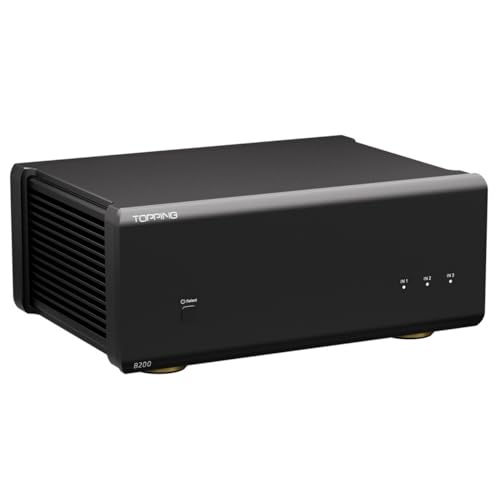
- 200W mono output
- Three XLR/TRS balanced inputs
- High/low gain and 12V trigger
Best For: Audiophiles building a powerful separates-based stereo system
Feature-Rich Stereo Value

- TRS balanced input and Bluetooth 5.2
- Adjustable high-pass filter
- Subwoofer pre-out and remote control
Best For: Flexible bookshelf-speaker and 2.1 home audio systems
Professional Rack Power
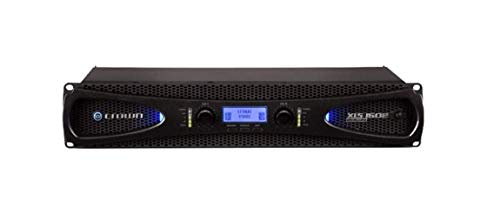
- 525W per channel at 4 ohms
- XLR, TRS, and RCA inputs
- DSP, crossover, and peak limiting
Best For: Rack-mounted systems and professional sound applications
Balanced 2.1 Specialist

- Fully balanced stereo with XLR
- Adjustable 60–200Hz HPF
- Subwoofer output and swappable op-amps
Best For: Enthusiasts building a tunable balanced 2.1 system
Best Professional Rack Amp

- Balanced XLR, TRS, and RCA inputs
- 350W per channel at 4 ohms
- DSP, crossover, limiters, and cooling
Best For: Professional audio systems and live events
Best Compact Balanced Amp

- XLR/TRS balanced combo input
- Up to 180W stereo or 235W mono
- Compact design with 12V trigger input
Best For: Desktop audio and home theater systems
Best Feature-Packed PA Amp

- Balanced XLR and TRS inputs
- 2000W maximum bridged power
- Bluetooth, USB, and Speakon outputs
Best For: PA systems and mobile sound setups
Compact Balanced Performer

- Fully balanced Class-D stereo design
- 140W×2 at 4Ω with very low stated distortion
- Balanced TRS and RCA inputs in a compact chassis
Best For: Desktop HiFi, studio monitors, and space-conscious systems
High-Current Dual-Mono Choice

- 225W RMS per channel
- Balanced XLR and RCA inputs
- Twin 800VA transformers in a 36kg chassis
Best For: Large floorstanders and high-power home audio systems
Mono Theater Specialist

- 300W maximum output at 4Ω
- Fully balanced XLR and RCA inputs
- SUB OUT, 80Hz HPF, gain control, and trigger input
Best For: Modular stereo, home theater, and 2.1 systems
High-Power Balanced Mono – TOPPING B200
The TOPPING B200 is a strong choice if you need a power amplifier with balanced inputs for a high-fidelity speaker system. Its mono design delivers 200W, while three XLR/TRS input sets, selectable gain, and a 12V trigger support flexible home audio integration.
Best For: Audiophiles building a powerful stereo system with two mono amplifiers and passive speakers.
Pros:
- 200W mono output for demanding speaker setups
- Three XLR/TRS balanced input sets
- Very low stated THD+N and high signal-to-noise performance
- High/low gain modes and 12V trigger add system flexibility
Cons:
- A stereo system requires two units
- Mono amplification is less convenient for buyers seeking one-box stereo operation
The B200 stands out for clean, high-power amplification and extensive balanced connectivity. It is most compelling when you are intentionally assembling a separates-based stereo system.
Feature-Rich Stereo Value – Ampapa Douk Audio D1
The D1 is a practical power amplifier with balanced inputs for compact stereo and 2.1 systems. It combines a TRS balanced input with Bluetooth 5.2, a high-pass filter, subwoofer pre-out, tone controls, and a digital VU display.
Best For: Home theater and bookshelf-speaker users who want flexible inputs, subwoofer integration, and convenient controls.
Pros:
- TRS balanced input plus Bluetooth 5.2
- Adjustable 30–200Hz high-pass filter
- Full-range pre-out supports active subwoofers and other equipment
- Remote, digital VU meter, tone controls, and 12V trigger
Cons:
- Its compact power-adapter-based design may not suit rack-focused installations
- Feature-rich operation may be more than a minimalist system requires
With its combination of balanced connectivity and everyday convenience features, the D1 is a versatile option for compact systems. The HPF and pre-out are especially useful for creating a controlled 2.1 setup.
Professional Rack Power – Crown XLS1502
The Crown XLS1502 is a professional power amplifier with balanced inputs designed for flexible installation and high output. Its two channels provide up to 525W per channel at 4 ohms, with DSP, crossovers, peak limiting, and XLR, TRS, and RCA input options.
Best For: Rack-mounted sound systems, venues, and users who need configurable professional amplification.
Pros:
- 525W per channel at 4 ohms and bridgeable output options
- Balanced XLR and TRS inputs alongside RCA connectivity
- DSP band-pass filters, PureBand crossover, and Peakx limiters
- Lightweight Class D DriveCore design with menu lock and sleep mode
Cons:
- Professional rack-mount format is less suited to small desktop systems
- Cooling fans may be unnecessary for quiet residential listening environments
The XLS1502 is the strongest fit here for users who need professional-level power management and installation flexibility. Its broad input selection and DSP controls make it adaptable across multiple speaker and venue configurations.
Balanced 2.1 Specialist – AIYIMA A20
The AIYIMA A20 is a power amplifier with balanced inputs aimed at high-fidelity stereo and 2.1 listening. It offers XLR and RCA connectivity, an adjustable 60–200Hz high-pass filter, subwoofer output, bypass mode, swappable op-amps, and a 12V trigger.
Best For: Enthusiasts pairing balanced source equipment with passive speakers and a subwoofer.
Pros:
- Fully balanced stereo design with XLR input
- Adjustable HPF and subwoofer output for 2.1 integration
- BYPASS mode, gain switch, and swappable op-amps
- 12V trigger and stated 116dB SNR
Cons:
- Its enthusiast-oriented features may be unnecessary for simple systems
- High-pass adjustment begins at 60Hz, which may not suit every speaker pairing
The A20 offers a particularly flexible path to a balanced 2.1 system. Its signal-routing options and upgradeable op-amp design make it appealing to listeners who enjoy fine-tuning their setup.
Best Professional Rack Amp – Crown XLS1002
The Crown XLS1002 is a strong choice when you need a rack-mount power amplifier with balanced inputs for live sound, installations, or studio systems. Its two channels, lightweight Class D design, flexible connectivity, DSP features, and multiple power configurations make it practical for demanding setups.
Best For: Professional audio systems, live events, and users who need efficient two-channel amplification with flexible input and crossover controls.
Pros:
- Balanced XLR inputs plus TRS and RCA connectivity
- Offers stereo and bridged power options, including 350W per channel at 4 ohms
- Peakx Limiters, PureBand crossover, forced-air cooling, and sleep mode
- Lightweight design weighs less than 11 pounds and includes an authorized-dealer warranty
Cons:
- Its professional rack-mount format may be more than needed for a simple home system
- The listed warranty applies to purchases from authorized Crown North American dealers in the United States
The XLS1002 stands out for combining balanced connectivity, useful signal processing, and flexible output modes in a compact chassis. It is especially well suited to buyers prioritizing dependable, configurable amplification over a basic budget component.
Best Compact Balanced Amp – Fosi Audio ZA3
The Fosi Audio ZA3 is a compact power amplifier with balanced inputs for desktop audio, home theater, and passive speaker systems. Its combo XLR/TRS input, selectable stereo or mono operation, and included 48V power supply give it more flexibility than its small footprint suggests.
Best For: Desktop listening, home theater, bookshelf speakers, and users who want a compact amplifier with balanced connectivity and stereo-to-mono flexibility.
Pros:
- Balanced combo input accepts both XLR and 1/4-inch TRS plugs
- Switches between stereo output up to 180W and mono output up to 235W
- Low-noise Class D design with TPA3255 amplification and stated 89dB SINAD
- Includes 12V trigger input, improved ventilation, and swappable op-amps
Cons:
- Its maximum output depends on the selected mode and system configuration
- Op-amp rolling requires compatible replacement components and additional setup
The ZA3 is a versatile option for listeners who want balanced input performance without a full-size rack amplifier. Its mono mode and ability to pair two units add useful upgrade potential for systems that may expand later.
Best Feature-Packed PA Amp – Pyle PTA1000BT
The Pyle PTA1000BT is a practical power amplifier with balanced inputs for PA setups, mobile sound, and rack-mounted systems. Along with XLR and TRS inputs, it adds Bluetooth, USB MP3 playback, bridge mode, Speakon outputs, and front-panel level monitoring.
Best For: PA systems, mobile entertainers, and users who want rack-mount amplification with wireless streaming and built-in playback features.
Pros:
- Provides both XLR and 1/4-inch TRS input connectors
- Supports stereo operation up to 1000W per channel and 2000W peak bridged power
- Includes Bluetooth, USB-A MP3 playback, and an LCD display
- Offers Speakon and binding-post speaker connections with built-in cooling fans
Cons:
- The supplied notes specify peak or maximum power rather than detailed continuous output ratings
- At 6.94 kg, it is substantially heavier than compact desktop amplifiers
- Its extra playback features may be unnecessary in systems using separate source equipment
The PTA1000BT prioritizes connectivity and convenience, making it a useful choice when an amplifier must handle both wired professional inputs and casual wireless or USB playback. Its bridge mode and multiple speaker outputs also suit flexible PA configurations.
Compact Balanced Performer – TOPPING Mini300
If you need a power amplifier with balanced inputs for a desktop, HiFi, or studio-monitoring system, the TOPPING Mini300 offers a compact two-channel solution. Its fully balanced Class-D design supports balanced TRS and unbalanced RCA sources, while delivering up to 140W per channel at 4Ω.
Best For: Desktop HiFi systems, studio monitors, and listeners who need flexible inputs in a small chassis.
Pros:
- Fully balanced Class-D architecture with stated 124dB SNR and DNR.
- Supports both balanced TRS and unbalanced RCA inputs.
- Compact aluminum chassis with TRIG-linked automatic power control.
- Includes overheat and overcurrent protection.
Cons:
- Its 12V DC power requirement may need attention when planning the system.
- It is a stereo amplifier, not a mono-block solution for one speaker channel.
The Mini300 is a practical choice when clean balanced connectivity and modest footprint matter more than a large, traditional chassis. Its automatic power synchronization is particularly useful in streamlined desktop or DAC-based systems.
High-Current Dual-Mono Choice – T9.4 225W RMS Dual Mono Amp
For demanding speakers, the T9.4 is a substantial power amplifier with balanced inputs built around a physically separated dual-mono layout. It provides 225W RMS per channel, twin 800VA transformers, and balanced XLR connectivity in a heavy 36kg aluminum chassis.
Best For: Large floorstanding speakers and full-size home audio systems that benefit from high current reserves.
Pros:
- Dual-mono construction uses separate amplification, power, and protection sections.
- Balanced XLR and RCA inputs provide source flexibility.
- 225W RMS per channel with a stated damping factor of 2,000.
- Includes soft start and protection for DC offset, thermal overload, and short circuits.
Cons:
- The 36kg chassis is difficult to move and requires a sturdy installation surface.
- Its large power supply and full-size construction may be excessive for compact systems.
The T9.4 is aimed at buyers who want amplifier scale rather than desktop convenience. Its dual-mono architecture, transformer capacity, and high output make it the most substantial option here for driving demanding passive speakers.
Mono Theater Specialist – AIYIMA A20 300W Mono Amp
The AIYIMA A20 is a mono power amplifier with balanced inputs for systems that need one dedicated speaker channel. Its TPA3255-based Class-D design is rated up to 300W at 4Ω and adds a subwoofer output, 80Hz high-pass filter, gain selection, and 12V trigger control.
Best For: Home theater, premium stereo pairs using two amplifiers, and 2.1 systems with an active subwoofer.
Pros:
- Fully balanced XLR input plus RCA connectivity.
- 300W maximum output at 4Ω from a mono architecture.
- Dedicated SUB OUT and 80Hz HPF support a 2.1 setup.
- Offers adjustable gain, 12V trigger linkage, and a 20-minute auto-standby mode.
Cons:
- It is a single-channel amplifier, so stereo users need two units.
- The 48V power requirement should be accounted for during system setup.
The A20 stands out when you want to build a modular system around mono amplification. Its balanced XLR input, bass-management features, and trigger control make it especially adaptable for home theater or a two-amplifier stereo configuration.
How We Picked the Best Power Amplifier with Balanced Inputs
We selected models that accept balanced connections such as XLR or TRS and cover a useful range of system types. The lineup includes compact Class D amplifiers for desktops and bookshelves, mono designs for subwoofer or bi-amping projects, and rack-style professional amplifiers for larger passive speakers.
We also considered stated output power, channel configuration, amplifier topology, input flexibility, protection features, trigger support, cooling, and practical installation needs. Because power ratings can be measured under different conditions, treat wattage as a starting point rather than a direct guarantee of louder or better sound.
Quick Comparison
- Best for compact stereo systems: Look for a small, efficient two-channel amplifier with XLR inputs and sensible heat management.
- Best for subwoofer projects: A mono amplifier or model with a dedicated subwoofer output and suitable low-frequency filtering is usually easier to integrate.
- Best for professional racks: Crown and Pyle rack-style options offer installation-friendly connections, output flexibility, and more robust system controls.
- Best for desktop or nearfield listening: Compact balanced Class D models minimize footprint while supporting clean short signal paths.
- Best for flexible sources: Bluetooth, RCA, TRS, USB, or trigger connections can be useful, but choose only the inputs your system actually needs.
Key Buying Factors for a Power Amplifier with Balanced Inputs
Power, Impedance, and Headroom
Match the amplifier to your speakers’ nominal impedance and recommended power range. More headroom can reduce clipping during peaks, but excessive power without appropriate speaker handling can cause damage. Check whether the advertised rating is per channel, bridged, or measured at a specific impedance.
Balanced Connectivity
Confirm the connector type and signal path. XLR and TRS inputs may both be balanced, but an adapter or unbalanced source can remove much of the noise-rejection benefit. Check input sensitivity and whether the amplifier accepts the output level of your DAC, preamp, mixer, or processor.
Filtering and System Controls
For subwoofer or bi-amping applications, high-pass filters, low-pass options, gain controls, and bridge modes can be more valuable than maximum wattage. DSP, limiters, and protection circuits are particularly useful in demanding or unattended installations.
Size, Cooling, and Noise
Compact amplifiers fit easily on desks and shelves, while rack units suit equipment cabinets and permanent systems. Review ventilation requirements and fan behavior, especially for quiet listening rooms. Class D designs are generally efficient, but every amplifier still needs adequate airflow.
Who Should Buy Which Power Amplifier with Balanced Inputs?
Choose a compact stereo model if you are powering bookshelf speakers, a desktop system, or a modest two-channel setup. A mono balanced amplifier makes more sense for a dedicated subwoofer, while a professional two-channel rack amplifier is the better fit for high-output passive speakers, distributed audio, or installation work. Buyers who want easy streaming should prioritize Bluetooth, but those building a purist signal chain may prefer a model focused on balanced analog inputs and low measured distortion. Before ordering, verify connector compatibility, speaker impedance, physical clearance, and the amplifier’s actual power rating at your intended load.