If you’re shopping for a teen who wants more than a basic science toy, the right chemistry set can turn curiosity into real lab confidence. The best kits add structure, safer hands-on experimentation, and enough depth to keep older learners engaged.
This roundup focuses on advanced chemistry sets for teenagers that support genuine STEM learning, from model kits and guided experiments to higher-level lab equipment and challenge-based activities.
Best 10 Advanced Chemistry Sets for Teenagers Picks for 2026
Advanced Home Chemistry Lab

- 333 experiments across 27 chapters
- Real lab glassware and burner included
- 192-page manual covers high school topics
Best For: Teens 12+ who want a serious home chemistry lab
Molecular Structure Builder

- 122 pieces with atoms, bonds, and remover tool
- Built for organic and inorganic structures
- Color-coded parts and storage box included
Best For: Students who want to study molecular structure in 3D
Intermediate Chemistry Upgrade

- 250 experiments with real lab tools
- Includes alcohol burner and electrolysis gear
- 128-page manual covers acids, water, and soaps
Best For: Middle school and early high school students ready to level up
3D Chemistry Molecule Kit

- 444 pieces for broad molecular modeling
- Includes ball-and-stick and space-filling modes
- Covers geometry, bond angles, and stereochemistry
Best For: Students who want a large set for advanced structure study
Hands-On Experiment Pack
National Geographic 45-Experiment Chemistry Set

- 45 hands-on experiments with volcano, geyser, and rocket activities
- Illustrated guide keeps experiments easy to follow
- Built around safe, practical STEM learning
Best For: Teens who want dramatic reactions and a guided experiment kit
Tabletop Lab Station
Thames & Kosmos Ooze Labs Chemistry Station

- Functional lab station with 57 included pieces
- Includes beakers, test tubes, flasks, and pipettes
- Non-hazardous experiments with cards and full-color manual
Best For: Teens who want a realistic lab-style chemistry kit
Molecular Builder Kit
Molecule Masters 3D Chemistry Model Kit

- Builds 3D molecules with color-coded atoms and flexible bonds
- Includes 48 learning cards and a guide
- Good for chemistry fundamentals and organic structures
Best For: Teens who want hands-on molecular and bonding practice
Foundation Chemistry Lab
Thames & Kosmos Chem C1000 Beginner Chemistry Set

- 125 guided experiments across 10 themed chapters
- Real lab equipment plus 7 chemicals and safety goggles
- Covers invisible ink, chromatography, crystals, and electrolysis
Best For: Teens who want a real starter chemistry lab with structured instruction.
Three-in-One Science Bundle
National Geographic Mega Science Lab with 75 Experiments
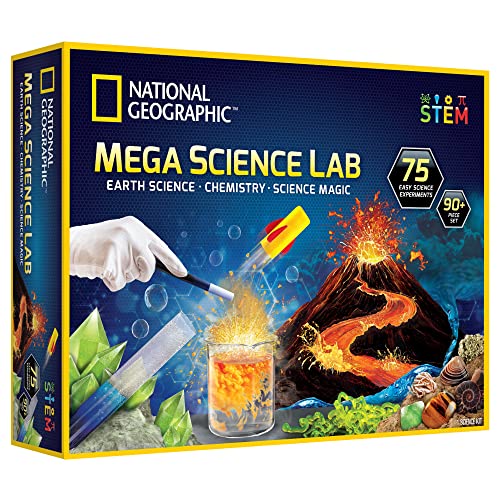
- Three kits in one: earth science, chemistry, and science magic
- 75 total experiments, including 30 using household items
- Includes crystals, fossils, and chemistry reactions like gas-powered rockets
Best For: Teens who want variety and don’t mind chemistry sharing space with other science topics.
Compact Chemistry Starter
Thames & Kosmos Chemistry C500 Science Kit

- 28 guided experiments with a 48-page full-color manual
- Covers acids and bases, invisible ink, and gas reactions
- Includes beakers, test tubes, stoppers, pipettes, and chemicals
Best For: Teens who want a compact, guided intro to chemistry.
Advanced Home Chemistry Lab – Thames & Kosmos CHEM C3000
If you’re shopping for advanced chemistry sets for teenagers, the Thames & Kosmos CHEM C3000 is built for students who want more than a simple demo kit. It includes 333 hands-on experiments across 27 chapters, real lab equipment, and a detailed manual that explains both procedures and the science behind them.
Best For: Teens 12+ who are ready for a serious home chemistry lab with real equipment and high school prep value.
Pros:
- 333 experiments organized into 27 chapters, covering inorganic, organic, and electrochemistry
- Includes glassware, burner, electrodes, tubing, goggles, and other real lab tools
- 192-page full-color manual explains topics like bonding, acids and bases, redox, and organic chemistry
- Designed to align with rigorous EN 71-4 safety standards and requires adult supervision
Cons:
- Adult supervision is required throughout
- Some experiments need a few common household additions
- It is a more serious kit, so it may be more than casual beginners need
This is the strongest pick here for teens who want a true chemistry experience instead of a simplified activity set. It stands out for depth, equipment quality, and the breadth of topics covered in a structured learning path.
Molecular Structure Builder – Swpeet 122-Piece Model Kit
For advanced chemistry sets for teenagers that focus on visualization rather than wet-lab reactions, this Swpeet molecular model kit is a practical study tool. It’s designed to help students build both simple and more complex organic and inorganic structures, making it useful for classroom work, homework, and independent study.
Best For: Students who need a hands-on way to understand molecular structure, bonds, and 3D chemistry concepts.
Pros:
- 122-piece set includes 59 atoms, 62 links, and a link remover tool
- Supports organic and inorganic chemistry modeling, including single and double bonds
- Color-coded parts follow national standards for easier identification
- Comes in a storage box for easy transport and organization
Cons:
- It models structures rather than performing chemical reactions
- Smaller piece count than the larger chemistry lab kits
- Best suited to learning support, not experiment-heavy play
This kit is a solid companion for students who want to study molecule geometry and bonding in 3D. It’s especially useful when the goal is clearer chemistry understanding, not a full experiment set.
Intermediate Chemistry Upgrade – Thames & Kosmos CHEM C2000
If you want advanced chemistry sets for teenagers but not the most demanding option, the Thames & Kosmos CHEM C2000 is a strong middle ground. It offers 250 experiments, professional-style lab equipment, and a manual that moves beyond beginner material while preparing students for the more advanced CHEM C3000.
Best For: Middle school and early high school students who are ready for a more advanced chemistry kit with real lab tools.
Pros:
- 250 real chemistry experiments with a clear progression from beginner sets
- Includes an alcohol burner for heat-based experiments and lab setups
- 128-page full-color manual covers acids, water chemistry, chromatography, soaps, and more
- Uses glassware, electrolysis equipment, and carefully selected chemicals for genuine reactions
Cons:
- Adult supervision is required
- Less advanced than the CHEM C3000
- Some experiments depend on heat and special handling
This kit is a smart pick if you want something substantial but not overwhelming. It offers a strong balance of depth, safety guidance, and practical lab experience for teens moving up from entry-level chemistry.
3D Chemistry Molecule Kit – LINKTOR 444-Piece Full Set
For advanced chemistry sets for teenagers that emphasize molecular design, the LINKTOR 444-piece kit gives students a large building system for organic and inorganic chemistry. It’s aimed at learners from Grade 7 through graduate level and is built to show structure, bond angles, and stereochemistry in a more visual way.
Best For: Students who need a large, flexible molecular model set for classroom study and advanced chemistry concepts.
Pros:
- Large 444-piece set includes atoms, bonds, and parts for Carbon-60 fullerene
- Supports ball-and-stick and space-filling structure models
- Shows molecular geometry, bond angles, and stereochemistry in 3D
- Uses color-coded pieces with easy disassembly tools
Cons:
- Focuses on modeling, not hands-on chemical experiments
- May be more kit than casual users need
- Best value depends on how much 3D structure work the student will actually do
This is the best choice here for learners who want a broad molecular modeling set rather than a reaction-based chemistry kit. Its size and included fullerene parts make it especially useful for more advanced structure study.
Hands-On Experiment Pack – National Geographic 45-Experiment Chemistry Set
If you’re comparing advanced chemistry sets for teenagers, this National Geographic kit is a solid choice for a more active, experiment-heavy approach. It focuses on visible reactions like volcanoes, geysers, rockets, and other chemical changes, with instructions that are easy to follow and include illustrations for each step.
Best For: Teens who want a high-volume, hands-on chemistry kit with dramatic reactions and simple guided experiments.
Pros:
- Includes 45 experiments with engaging demos like volcano, geyser, and rocket activities
- Kid-friendly illustrated guide helps make each experiment straightforward to follow
- Emphasizes hands-on STEM learning and safe experiment handling
- Backed by National Geographic educational branding and support
Cons:
- Designed for ages 8-12, so older teens may find the difficulty level fairly basic
- Focuses more on exciting reactions than deeper chemistry theory
- Some buyers may want a kit with more lab equipment or advanced modeling work
This set is best when the goal is to keep chemistry active, visual, and easy to get into. For a teen who likes quick wins and lots of variety, it offers a dependable introduction to chemistry concepts.
Tabletop Lab Station – Thames & Kosmos Ooze Labs Chemistry Station
For shoppers browsing advanced chemistry sets for teenagers, this Thames & Kosmos kit stands out because it feels more like a real lab setup than a simple activity box. It includes a functional chemistry station, 57 pieces, and non-hazardous experiments such as glowing slime, chromatography, fizzing reactions, and oozing bubbles.
Best For: Teens who want a lab-style chemistry set with equipment, experiment cards, and a more realistic science-table feel.
Pros:
- Functional lab station creates a more immersive chemistry experience
- Comes with 57 pieces, including beakers, test tubes, flasks, pipettes, and more
- Printed experiment cards and a full-color manual support guided learning
- Uses non-hazardous chemicals and does not contain borax
Cons:
- Experiment count is lower than some larger chemistry kits
- Best suited to hands-on beginner-to-intermediate exploration rather than advanced chemistry study
- The included chemistry station adds bulk compared with simpler kits
This is a strong pick if you want the setup and tools to feel authentic without moving into risky materials. It balances play value with a clearer lab atmosphere, which can make chemistry more engaging for teens.
Molecular Builder Kit – Molecule Masters 3D Chemistry Model Kit
If your goal is to find advanced chemistry sets for teenagers that go beyond mixing liquids, this molecule model kit is a smart option. It focuses on building 3D molecular structures with color-coded atoms, flexible bonds, and learning cards that move from simple builds to more advanced structures.
Best For: Teens who want to learn molecular chemistry, organic structures, and atom bonding through hands-on model building.
Pros:
- Lets learners build real molecular structures in 3D
- Includes 48 color-coded learning cards plus a guide for structured study
- Offers flexible bonds and multiple atom types for varied builds
- Designed to grow with the learner from simple to advanced structures
Cons:
- Focuses on modeling rather than reaction-based experiments
- Listed age range is 6-12, so it may feel less challenging for older teens
- Best suited to chemistry fundamentals and organic concepts, not a full lab kit
This kit is the best fit when a teen wants to understand how atoms connect instead of just watching reactions happen. It offers a useful bridge between visual learning and more structured chemistry study.
Foundation Chemistry Lab – Thames & Kosmos Chem C1000 Beginner Chemistry Set
If you want advanced chemistry sets for teenagers that still build from the ground up, the Thames & Kosmos Chem C1000 is a strong starting point. It offers 125 hands-on experiments with real lab equipment, so teens can move beyond kitchen-style science and learn actual technique while exploring reactions, indicators, fluids, metals, and basic electrochemistry.
Best For: Teens who are ready for a real starter chemistry lab with guided experiments and proper safety gear.
Pros:
- 125 experiments organized into 10 themed chapters
- Includes an 80-page full-color manual with step-by-step explanations
- Comes with real lab equipment like test tubes, beakers, funnels, and safety goggles
- Covers standout activities such as invisible ink, chromatography, crystal growth, and electrolysis
Cons:
- Adult supervision is required
- Designed as an introduction, so it may feel less challenging for teens already familiar with chemistry kits
- Includes only 7 chemicals, so some experiments are tightly guided
This is a well-rounded choice if you want a serious first chemistry set with a structured learning curve. It feels more like a real lab starter kit than a novelty science toy, which makes it a practical pick for older beginners.
Three-in-One Science Bundle – National Geographic Mega Science Lab with 75 Experiments
The National Geographic Mega Science Lab is a flexible option for advanced chemistry sets for teenagers who also enjoy earth science and science tricks. It combines three kits in one, including chemistry experiments, plus a bonus guide with additional activities using common household items, so it offers a lot of variety without needing a separate purchase for every interest.
Best For: Teens who like variety and want chemistry alongside earth science and science magic.
Pros:
- Three kits in one: earth science, chemistry, and science magic
- Includes 75 total experiments, with 30 using common household items
- Lets kids build a volcano, grow a glow-in-the-dark crystal, and create bubbling reactions
- Also includes real rock, mineral, and crystal specimens for collecting
Cons:
- Spreads attention across multiple science topics rather than focusing only on chemistry
- Some of the bonus experiments rely on household items, not included lab materials
- Best suited to broad exploration instead of deep chemistry study
This kit stands out if you want breadth and value in one box. It is especially appealing for teens who may not want a chemistry-only set and would rather mix hands-on chemistry with earth science and science-based tricks.
Compact Chemistry Starter – Thames & Kosmos Chemistry C500 Science Kit
The Thames & Kosmos Chemistry C500 is a compact option for advanced chemistry sets for teenagers who want an introductory lab without a huge footprint. With 28 guided experiments and a full-color manual, it focuses on the fundamentals: acids and bases, fizzy reactions, invisible ink, and the behavior of solids, liquids, and gases.
Best For: Teens who want a smaller, beginner-friendly chemistry kit with clear instruction.
Pros:
- 28 classic experiments with simple guided instructions
- Includes a 48-page full-color science guide
- Covers acids and bases, invisible ink, and gas-liquid-solid reactions
- Comes with beakers, test tubes, chemicals, stoppers, and pipettes
Cons:
- Fewer experiments than larger chemistry sets
- Best suited to introductory chemistry rather than more advanced exploration
- May be too basic for teens seeking a highly challenging kit
If you want a straightforward chemistry set that teaches core concepts without overwhelming setup, this one fits well. It is a practical pick for families who value guided learning and a smaller kit size.
How We Picked the Best Advanced Chemistry Sets for Teenagers
We prioritized kits that offer meaningful chemistry learning rather than novelty-only experiments. That means strong instructions, good value for the number of activities, quality components, and a difficulty level that can grow with a teen’s skills. We also looked for options that fit different needs, including introductory lab work, molecular modeling, and more Advanced Chemistry Sets for Teenagers ready for a bigger challenge.
Quick Comparison: What Each Type Does Best
Not every chemistry kit serves the same purpose. Full experiment sets are best for guided hands-on learning. Molecular model kits are ideal for visualizing bonding, structure, and organic chemistry concepts. Safer activity-based kits work well for younger teens or shared family use, while higher-piece-count sets suit students who want a broader lab experience and more repeatable experimentation.
Key Buying Factors for Advanced Chemistry Sets for Teenagers
Experiment Depth
Look for kits with enough variety to teach core concepts such as reactions, pH, compounds, mixtures, and states of matter. A larger experiment count can be useful, but quality of instruction matters more than raw quantity.
Lab Equipment Quality
Real tools like beakers, test tubes, droppers, and measuring gear make a big difference for teens who want a more authentic experience. Durable parts also help the kit last beyond a single weekend.
Instruction Clarity
The best Advanced Chemistry Sets for Teenagers include manuals that explain not just what to do, but why the reaction happens. Clear safety guidance and visual steps are especially important for independent use.
Safety and Supervision
Check whether the set uses household materials, non-hazardous ingredients, or more traditional chemistry supplies. Even safe kits may still benefit from adult supervision, especially when heat, glassware, or staining materials are involved.
Learning Goal
Choose based on the teen’s interest: experimental chemistry, molecular structure, or STEM enrichment. A teen who likes building models may prefer a molecule kit, while one who enjoys lab-style projects will get more value from an experiment-heavy set.
Who Should Buy Which Advanced Chemistry Sets for Teenagers?
For beginners or younger teens, start with a guided set that offers clear steps and approachable experiments. For students already comfortable with basic science, choose a more advanced kit with real equipment and a broader lab manual. If your teen is focused on school chemistry, a molecular model kit can reinforce classroom learning. If you want a gift that feels exciting but still educational, pick a set that combines hands-on reactions with strong safety and instruction support.
In short, the best choice depends on how independent the teen is, how serious they are about chemistry, and whether you want a fun introduction or a deeper STEM investment.