Interactive globes can turn geography into a hands-on, screen-friendly learning experience that kids actually want to revisit. The best models combine clear labels, audio quizzes, and engaging extras like touch response or app support.
Below, we focus on the most useful features for families, classrooms, and gift shoppers so you can choose a globe that matches your child’s age, learning style, and budget.
Best 10 Interactive Educational Globes for Kids Picks for 2026
AR Globe Explorer

- AR app with 1000+ facts, games, and quizzes
- Includes passport, stamps, and sticker activities
- Good fit for homeschool and classroom learning
Best For: Ages 4-10 who like app-based STEM discovery
Video-Screen World Tour
LeapFrog Magic Adventures Globe
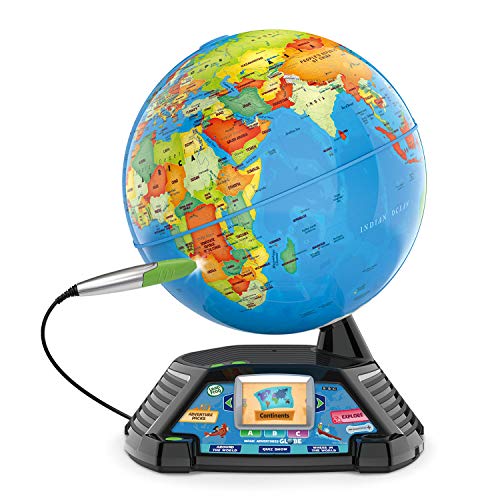
- Built-in screen plays videos, animations, and guided content
- Includes facts, quizzes, and three learning games
- Best for visual learners ages 5+
Best For: Kids ages 5+ who learn from video and guided play
Talking Globe Classic

- Rechargeable pen plus 60-page discovery book
- Thousands of facts with trivia and comparison games
- Strong classroom-friendly learning tool
Best For: Ages 4-8 and classroom learning
BBC Video Globe
LeapFrog Magic Adventures Globe
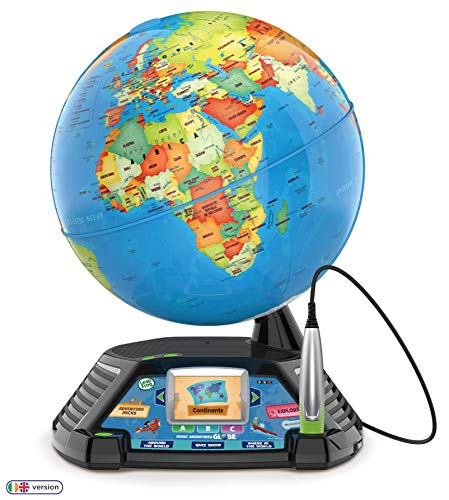
- 5+ hours of BBC videos plus thousands of facts
- Three interactive games support learning
- Good for geography and language exploration
Best For: Kids ages 5+ who prefer video-led learning
Talking Globe with Smart Pen
Interactive 9" Smart Pen Globe for Ages 8-12

- Smart pen gives spoken facts in real time
- Includes 300 trivia questions
- Covers geography, capitals, languages, and more
Best For: Ages 8-12 needing a compact talking globe with lots of facts
Light-Up Touch Learning Globe
LeapFrog LeapGlobe Touch Globe for Ages 3+

- 48 touch points for hands-on exploration
- Three modes: Exploration, Music, and Find-It
- Teaches animals, landmarks, greetings, foods, and music
Best For: Ages 3+ kids who learn best through lights, sounds, and touch
Openable Earth Core Globe
Science Can Bilingual STEM Globe
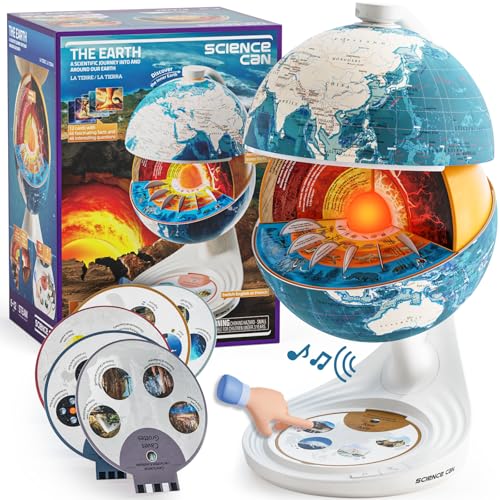
- Openable globe shows crust, mantle, and inner core
- Bilingual talking modes in English and French
- Quiz mode adds interactive learning
Best For: Kids who want a geography globe with an Earth science twist
Best with Extra Features
PlayShifu Orboot Earth Explorer

- AR app brings the globe to life
- 400+ wonders and 1,000+ facts
- Constellation mode and magic stylus
Best For: Kids 4+ who enjoy AR learning and STEM-style play
Talking Quiz Globe
Dr. STEM Toys Interactive Globe
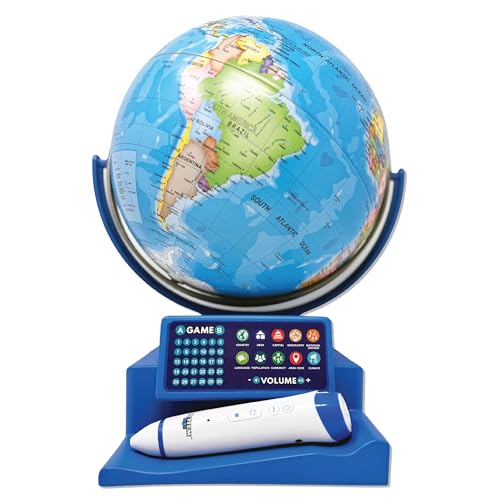
- 300+ quiz questions across 30 levels
- Smart pen plays country facts and audio
- Compact design for home or classroom
Best For: Kids 6+ who like quiz-driven geography learning
Classroom Quiz Globe
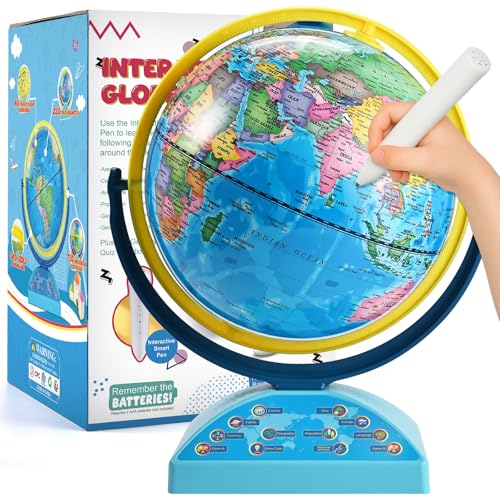
- 10+ facts per country touchpoint
- 300+ quiz games with 30 levels
- Shock-resistant ABS+PVC construction
Best For: Kids 6-12 who need durable quiz-based geography learning
AR Globe Explorer – PlayShifu Orboot Earth
PlayShifu Orboot Earth is a strong pick for families looking for interactive educational globes for kids that feel more like an adventure than a lesson. With the free AR app, children can explore animals, monuments, cultures, and more through quizzes, games, and 1000+ facts.
Best For: Ages 4-10 who enjoy app-based STEM learning and hands-on discovery.
Pros:
- AR app unlocks 1000+ facts, games, and quizzes.
- Includes passport, stamps, and sticker activities for added engagement.
- Works well for homeschool and classroom use.
- Designed to build geography, memory, and problem-solving skills.
Cons:
- Device not included with the globe.
- Not compatible with Amazon Fire devices.
- Requires a compatible iPad, iPhone, or Android device for AR features.
Overall, this globe stands out if you want a tech-powered learning toy that keeps kids moving between physical play and digital exploration. It offers a lot of educational value, but buyers should check device compatibility before purchasing.
Video-Screen World Tour – LeapFrog Magic Adventures Globe
LeapFrog Magic Adventures Globe is one of the most feature-packed interactive educational globes for kids, combining a globe, stylus, and built-in video screen. It goes beyond basic geography with facts about cultures, animals, habitats, and more, plus BBC videos and guided game play.
Best For: Kids ages 5+ who learn best from videos, quizzes, and guided play.
Pros:
- Built-in 2.8″ screen shows videos and animations.
- Offers over five hours of BBC video content.
- Includes facts, quizzes, and three interactive games.
- Stylus-based design supports hands-on exploration.
Cons:
- Requires 4 AA batteries for regular use.
- Battery power means ongoing replacement costs.
- Feature set may be more complex than a basic globe.
This is a good choice if you want a globe that keeps children visually engaged while teaching geography and world knowledge. The screen and video content make it feel especially immersive, though it does rely on batteries.
Talking Globe Classic – Replogle Intelliglobe
Replogle’s Intelliglobe is a traditional-style talking globe for kids that adds a large amount of educational content through a rechargeable pen and discovery book. It covers facts about countries, anthems, populations, geography, and more, making it a solid classroom or home learning tool.
Best For: Ages 4-8, classroom use, and families who want a content-rich talking globe.
Pros:
- Includes a 60-page World Discovery Book and rechargeable pen.
- Offers touch-and-explore features with thousands of facts.
- Includes trivia, comparison, and find games.
- Made in the USA.
Cons:
- Setup depends on the pen being fully charged.
- Some troubleshooting may be needed if the pen does not respond.
- No app or screen-based features like newer AR globes.
This globe is a good fit if you want a more classic interactive learning experience with lots of spoken facts and book-based support. It is less flashy than app-driven options, but it delivers broad educational coverage.
BBC Video Globe – LeapFrog Magic Adventures Globe
Leapfrog Magic Adventures Globe is a practical option if you want interactive educational globes for kids with a strong mix of facts, videos, and learning games. Tap the globe with the stylus to explore geography, science, culture, and languages through BBC video content and guided activities.
Best For: Kids ages 5+ who want a broad educational globe with video-led learning.
Pros:
- Shares 5+ hours of BBC videos about cultures, animals, and habitats.
- Includes thousands of facts and three interactive games.
- Stylus interaction makes exploration easy and hands-on.
- Supports geography and spatial awareness learning.
Cons:
- Requires 4 AA batteries.
- Manual operation may feel less automated than some electronic alternatives.
- Globe and manual are included, but no extra accessories are listed.
As a learning toy, this globe offers a balanced blend of education and entertainment without overcomplicating the experience. It is especially appealing for families who want a straightforward, video-enhanced globe for home learning.
Talking Globe with Smart Pen – Interactive 9" Smart Pen Globe for Ages 8-12
For families looking at interactive educational globes for kids, this 9-inch talking world globe is built around hands-on map learning and trivia. The smart pen reads out facts in real time, covering countries, capitals, geography, languages, currencies, climate, and more, so it works well as a guided learning tool at home or in the classroom.
Best For: Kids ages 8-12 who want a feature-rich talking globe with trivia and broad world facts.
Pros:
- Smart pen delivers voice recordings when it touches countries and locations.
- Includes 300 trivia questions to reinforce learning in a fun format.
- Covers a wide range of topics, including capitals, populations, area codes, and national anthems.
- 9-inch size makes it practical for home use or classroom activities.
Cons:
- Designed for ages 8-12, so it may be less suitable for younger children.
- Smaller 9-inch globe may not be ideal if you want a larger display piece.
This globe stands out if you want a compact, information-dense learning tool that goes beyond basic geography. The combination of spoken facts and trivia makes it a strong option for kids who like active, quiz-based learning.
Light-Up Touch Learning Globe – LeapFrog LeapGlobe Touch Globe for Ages 3+
This interactive educational globe for kids is a strong pick for younger learners who respond to lights, sounds, and touch-based play. With 48 touch points, three modes, and globe-spanning topics like animals, landmarks, greetings, foods, and world music, it keeps exploration simple while still offering plenty to discover.
Best For: Preschool and early elementary kids ages 3+ who enjoy light-up, touch-driven learning.
Pros:
- 48 touch points create lots of opportunities for exploration.
- Three modes add variety: Exploration, Music, and Find-It.
- Teaches animals, landmarks, greetings, foods, and world music.
- Light-up globe effects add visual excitement during play.
Cons:
- Battery powered, so regular use may require replacement batteries.
- Content is geared toward younger children, not older geography learners.
If you want an approachable globe that feels more like an interactive toy than a study tool, this LeapFrog option fits well. Its touch points and music-focused features make it especially appealing for early learners just starting to explore the world.
Openable Earth Core Globe – Science Can Bilingual STEM Globe
Among interactive educational globes for kids, this 8-inch model adds a geology angle that makes it stand out. It opens to show the Earth’s layered core structure and also includes bilingual talking modes in English and French, plus quiz mode for kids who want to test what they’ve learned.
Best For: Kids ages 5-8 who are curious about both geography and Earth science.
Pros:
- Openable design reveals crust, mantle, and inner core.
- Knowledge mode shares 48 facts about geography and landmarks.
- Bilingual English/French talking model adds flexibility.
- Quiz mode helps turn review time into an interactive game.
Cons:
- Smaller 8-inch size may feel limited compared with larger globes.
- Focus on geology means it is less traditional than a standard world globe.
This globe is a smart choice if you want a learning toy that blends world geography with Earth science. The openable core and bilingual audio features make it especially engaging for kids who like visual, hands-on discovery.
Best with Extra Features – PlayShifu Orboot Earth Explorer
If you’re comparing interactive educational globes for kids, the PlayShifu Orboot Earth Explorer stands out for turning geography into a hands-on AR experience. Kids scan the 10-inch globe with the free companion app to unlock 400+ wonders, 1,000+ facts, games, quizzes, quests, and even a constellation mode for extra science exploration.
Best For: Kids ages 4+ who learn best through augmented reality, games, and a strong mix of geography and space-themed discovery.
Pros:
- AR app interaction makes the globe feel dynamic and visual.
- Includes 400+ wonders, 1,000+ facts, games, quizzes, and quests.
- Constellation mode lights up 60+ constellations for added STEM appeal.
- Magic stylus and black-light features add extra hands-on play value.
Cons:
- Device is not included, so the app requires a separate compatible device.
- Some features depend on app-based scanning rather than the globe alone.
- May be more involved than a simple no-tech educational globe.
This is a strong pick if you want a feature-rich globe that goes beyond basic country facts. The combination of AR, space learning, and game-based activities gives it broad educational range for younger learners.
Talking Quiz Globe – Dr. STEM Toys Interactive Globe
For families shopping interactive educational globes for kids, this talking globe focuses on geography facts and quiz-based learning. Using the smart pen and game panel, children can explore 300+ quiz questions across 30 difficulty levels while hearing details about each country, including capital, population, language, currency, climate, and more.
Best For: Kids ages 6+ who want a talking geography globe with structured quiz progression for home or classroom use.
Pros:
- 300+ geographic quiz questions with 30 progressive levels.
- Smart pen lets kids tap countries for facts and audio responses.
- Includes talking functions and music for extra engagement.
- Compact size suits home learning spaces and classroom desks.
Cons:
- Requires 2 AAA batteries, which are not included.
- Content is geography-focused rather than broader AR-style play.
- Best suited to English-speaking users based on the product details.
This globe is a practical choice if you want a straightforward educational tool with lots of quiz content. It is especially appealing for repeat practice, since the difficulty levels help keep kids challenged as they learn.
Classroom Quiz Globe – Kids Smart Pen World Globe
Among interactive educational globes for kids, this smart pen globe emphasizes layered geography learning and family-friendly quiz play. Kids can touch countries to hear 10+ facts such as the capital, population, language, currency, and national anthem, while the globe’s 300+ quiz games and 30 difficulty levels support progression from basic identification to more advanced concepts.
Best For: Kids ages 6-12 who need a durable, classroom-ready globe with bilingual audio-style learning and progressive quizzes.
Pros:
- Touch-based facts cover country names, capitals, population, language, currency, and anthems.
- 300+ quiz games with 30 progressive difficulty levels.
- Shock-resistant ABS+PVC build is made for frequent use.
- Large size and gift-box presentation make it classroom and gift friendly.
Cons:
- Requires 2 AAA batteries, which are not included.
- Supports English only, according to the product notes.
- Focuses on geography learning rather than visual AR features.
This globe is a solid option if durability and structured learning matter most. It offers a good balance of facts, quizzes, and long-term classroom use, especially for families who want a more traditional interactive globe format.
How We Picked the Best Interactive Educational Globes for Kids
For Interactive Educational Globes for Kids, we prioritized age-appropriate content, accuracy, durability, ease of use, and learning value. We also looked for models that keep children engaged without making setup or daily use frustrating for parents and teachers.
We favored globes that offer multiple ways to learn, such as talking prompts, quiz modes, smart pens, app-based AR, light-up features, or bilingual content. Bonus points went to products with strong educational breadth across geography, culture, science, and landmarks.
Quick Comparison
For younger children, simpler talking or touch-based globes are usually the best fit because they reduce reading demands and support guided play. For older kids, smart-pen or AR-connected options often deliver deeper content and more independent exploration.
If you want a classroom-friendly pick, look for durable construction, clearer quiz structure, and easy volume control. If you want a giftable toy, prioritize fun features and broad topic coverage so the globe feels exciting right away.
Key Buying Factors for Interactive Educational Globes for Kids
Age Range and Reading Level
Match the globe to the child’s developmental stage. Ages 3 to 5 usually benefit from simple touch-and-listen learning, while ages 6 to 12 can handle richer quiz formats, maps, and more detailed facts.
Learning Format
Some Interactive Educational Globes for Kids focus on spoken facts and games, while others add AR apps, bilingual audio, or pen-based navigation. Choose the format that fits how your child learns best.
Content Quality
Look for strong coverage of continents, countries, capitals, animals, landmarks, and cultures. The best globes make information feel broad enough for long-term use, not just a short novelty phase.
Build, Size, and Power
Consider whether the globe will live on a desk, shelf, or classroom table. Also check whether it uses batteries, a plug, or app support, since that affects convenience and ongoing upkeep.
Who Should Buy Which Interactive Educational Globes for Kids?
Choose a simpler talking or light-up model for younger kids, early learners, and families who want easy, independent play. Choose a smarter quiz or app-connected globe for children who like challenges, facts, and repeat learning.
For gifts, the best all-around choice is usually one with a strong mix of fun and education. For classrooms, prioritize durability and clear learning modes. For STEM-focused families, Interactive Educational Globes for Kids with extra geography, science, and language content offer the most value.