Finding a capable astronomy camera does not require spending hundreds or thousands of dollars. The best astronomy cameras under $500 can improve lunar and planetary detail, simplify live viewing, or add reliable guiding to a telescope setup.
This roundup compares ten affordable models across sensor resolution, connectivity, portability, and intended use, helping you choose a camera that matches your telescope, computer, and observing goals.
Best 10 Astronomy Cameras Under 500 Picks for 2026
Best All-Around Sensor Value
SV705C IMX585 Astronomy Camera

- 3856×2180 IMX585 sensor
- Planetary, EAA, and entry-level deep-sky use
- C/CS-mount lens compatibility
Best For: EAA enthusiasts and beginner astrophotographers
Best Portable Plug-and-Play Pick
ASI662MC Color Planetary Camera
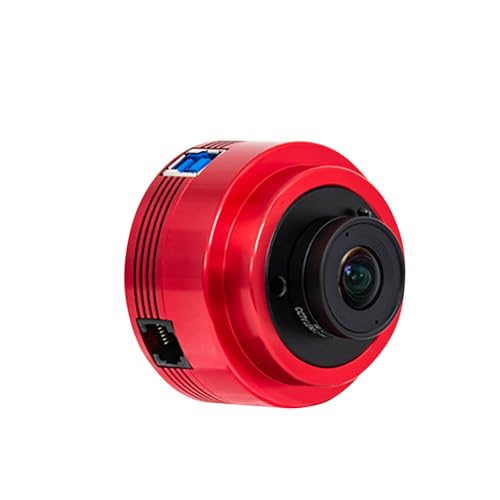
- Compact and lightweight design
- Low-light planetary imaging support
- Tool-less plug-and-play installation
Best For: Mobile observers and beginner planetary imagers
Best Wireless EAA Convenience

- Direct phone and tablet WiFi control
- 30-second exposures for EAA
- 32GB card and four-hour battery
Best For: Portable EAA and mobile telescope observing
Best High-Resolution Wide-Field Option

- 12.6MP square color sensor
- Low read noise and no amp glow
- Suitable for mosaics and wide-angle imaging
Best For: Wide-field imaging, meteor recording, and full-sky surveillance
Best Plug-and-Play Pick
SVBONY SV205 7.05MP Telescope Camera

- 7.05MP IMX415 color sensor
- 2K video at up to 30FPS
- Plug-and-play USB operation
Best For: Beginners capturing lunar and planetary video
Best Wireless Viewing

- 4K video with an 8MP CMOS sensor
- Rotatable 2.8-inch IPS display
- Universal 23–60mm eyepiece groove
Best For: App-controlled viewing and portable recording
Best Advanced Planetary Option

- IMX715 color sensor with 1.45μm pixels
- Up to 45.5FPS via USB 3.0
- ST4 guiding and astronomy software support
Best For: Experienced planetary imagers using guided mounts
Best Beginner Pick
Nova200 1080P Telescope Camera

- 1080p video at up to 30fps
- UVC plug-and-play across major computer systems
- Removable UV/IR cut filter
Best For: Beginner lunar and planetary imaging
Best Feature Set
SVBONY SV305C Color Astrophotography Camera

- IMX662 color sensor with low readout noise
- ROI and BIN functions for capture flexibility
- 128MB buffer helps preserve frames
Best For: Planetary imaging and EAA users wanting more control
Best for Autoguiding

- 1.23MP color CMOS guide sensor
- ST4 port for telescope autoguiding
- 1.25-inch body fits guide and OAG setups
Best For: Autoguiding and occasional planetary imaging
Best All-Around Sensor Value – SV705C IMX585 Astronomy Camera
For shoppers comparing astronomy cameras under 500, the SVBONY SV705C is a versatile option for planetary imaging, EAA, lucky imaging, and entry-level deep-sky work. Its IMX585 sensor combines a 3856×2180 resolution with high quantum efficiency and strong near-infrared sensitivity.
Best For: EAA enthusiasts and beginners who want one camera for planetary, lunar, and introductory deep-sky imaging.
Pros:
- IMX585 sensor offers high signal-to-noise performance and a 38ke full-well capacity.
- Large 1/1.2-inch frame captures detailed celestial images.
- Supports C-mount and CS-mount lenses with the included adapter ring.
- Dual-gain HCG helps preserve dynamic range while reducing read noise.
Cons:
- Its feature set may be more than needed for users focused only on basic planetary viewing.
- The camera requires a telescope or compatible lens setup for imaging.
The SV705C stands out as a flexible choice when you want to move beyond planetary captures without immediately investing in a dedicated deep-sky camera. Its sensor and lens compatibility make it useful for both telescope imaging and wider-angle applications.
Best Portable Plug-and-Play Pick – ASI662MC Color Planetary Camera
Among astronomy cameras under 500, the ASI662MC Color Planetary Camera is aimed at users who value portability and straightforward setup. Its compact design, low-light sensitivity, and broad compatibility make it suitable for planetary imaging in the field or at home.
Best For: Beginners, mobile observers, and hobbyists who want a lightweight color planetary camera with simple installation.
Pros:
- Compact, lightweight design is convenient for remote observing locations.
- Low-light imaging technology is designed to help produce clearer planetary details.
- Plug-and-play, tool-less installation simplifies telescope connection.
- Supports telescopic and terrestrial photography applications.
Cons:
- The supplied notes do not specify resolution, frame rate, or connection interface.
- Its positioning is primarily planetary, so it may be less suitable for users seeking advanced deep-sky features.
The ASI662MC is a practical choice when ease of use and portability matter more than a long list of advanced specifications. It is particularly appealing for straightforward planetary documentation and casual outdoor imaging.
Best Wireless EAA Convenience – SC311 Upgraded WiFi Camera
For astronomy cameras under 500 that emphasize cable-free observing, the SVBONY SC311 Upgraded WiFi Camera offers direct phone or tablet connectivity. It adds 30-second exposures, onboard storage, and an interface for saving photos, videos, and RAW/FITS files.
Best For: Beginners and EAA users who want a self-contained 1.25-inch camera for mobile viewing and sharing.
Pros:
- Built-in 2.4G WiFi creates a direct hotspot for phone or tablet control.
- Supports exposures up to 30 seconds for EAA and beginner deep-sky imaging.
- Includes a 32GB TF card, with storage expansion up to 256GB.
- Built-in 2500mAh battery provides approximately four hours of operation.
Cons:
- Photo mode does not provide an image preview until the exposure button is tapped.
- The upgraded model uses a different app from the older SC311, which may cause setup confusion.
- Its 2.1MP resolution is lower than some higher-resolution astronomy cameras.
The SC311 is a convenient option for observers who prefer a wireless workflow over a computer-connected setup. Its battery, storage, and mobile control make it especially useful for casual EAA sessions and portable observing.
Best High-Resolution Wide-Field Option – ZWO ASI676MC 12.6MP
For shoppers seeking astronomy cameras under 500 with a high-resolution color sensor, the ZWO ASI676MC offers 12.6MP capture in a square format. Its low read noise, low dark current, and enhanced near-infrared sensitivity support detailed imaging, mosaics, meteor recording, and full-sky surveillance.
Best For: Astrophotographers who want a square-frame camera for mosaics, wide-angle lenses, meteor recording, or full-sky monitoring.
Pros:
- 12.6MP sensor provides substantial resolution for detailed imaging.
- Square format simplifies mosaic construction and works well with fisheye and wide-angle lenses.
- No amp glow is specified regardless of exposure length or gain setting.
- USB 3.0 and 256MB DDR3 cache support stable data transmission.
Cons:
- No image stabilization is included.
- The camera is not water resistant.
- Its advanced features may be unnecessary for users focused only on basic planetary captures.
The ASI676MC is the strongest fit here for users prioritizing resolution and flexible framing. Its square sensor and clean-signal features make it especially compelling for wide-field projects and multi-frame mosaics.
Best Plug-and-Play Pick – SVBONY SV205 7.05MP Telescope Camera
If you want one of the more straightforward astronomy cameras under 500 for lunar, planetary, and terrestrial viewing, the SVBONY SV205 is a practical USB option. Its 7.05MP IMX415 color sensor supports 2K video at up to 30 frames per second in MJPG mode, while its 1.25-inch barrel connects directly to many telescopes.
Best For: Beginners who want plug-and-play computer viewing and recording of the moon and bright planets.
Pros:
- Plug-and-play operation without a separate driver.
- 7.05MP IMX415 color sensor with low-light compensation.
- Records 2K video at up to 30FPS in MJPG mode.
- Includes a USB 3.0 cable, dust cover, and cleaning cloth.
Cons:
- The 1.25-inch interface may require an adapter for other telescope sizes.
- Not compatible with Apple phones or tablets.
- Mac computers require Astroamx Capture software.
The SV205 keeps the setup simple and offers useful video performance for planetary targets. It is a sensible choice for observers who value easy computer connectivity over advanced guiding features.
Best Wireless Viewing – 4K WiFi Telescope Camera
Among astronomy cameras under 500, this wireless telescope camera stands out for convenient live viewing and built-in recording. It supports 4K video, includes a rotatable IPS screen, and uses a universal locking groove for eyepieces from 23mm to 60mm.
Best For: Beginners, families, and outdoor observers who want screen-based viewing, app control, and flexible mounting.
Pros:
- 8MP CMOS sensor supports 4K video and high-resolution image capture.
- Built-in 2.8-inch IPS screen provides real-time viewing.
- WiFi enables remote viewing within a stated 32-foot range.
- Built-in 2000mAh battery and support for microSD cards up to 512GB.
Cons:
- Manual focus still depends on the attached optical equipment.
- The XDVPRO app is required for app-based controls.
- Its feature-rich design may be more than needed for simple USB capture.
This model is less dependent on a laptop than a conventional astronomy camera, thanks to its screen, battery, WiFi, and storage support. Its universal mount also makes it useful beyond telescopes, including binoculars, monoculars, and microscopes.
Best Advanced Planetary Option – SVBONY SC715C IMX715 Camera
For shoppers comparing astronomy cameras under 500 with a focus on detailed planetary imaging, the SVBONY SC715C offers a capable computer-based setup. Its IMX715 color sensor uses 1.45-micron pixels, and USB 3.0 transfer reaches 45.5 frames per second at full resolution.
Best For: Experienced planetary imagers using astronomy software and an equatorial mount.
Pros:
- IMX715 sensor provides high dynamic range and lower noise.
- USB 3.0 supports up to 45.5FPS full-resolution transfer.
- Compatible with SharpCap, AstroDMx Capture, and NINA.
- Includes an ST4 autoguider interface for mount-based positional correction.
Cons:
- Not compatible with smartphones.
- Requires dedicated software on Mac computers.
- It has no built-in focus adjustment; focusing must be done with the telescope focuser.
The SC715C is the most workflow-oriented option in this group, with software support, an ST4 port, cache memory, and fast USB transfer. It makes the most sense when you already use a computer-controlled planetary imaging setup.
Best Beginner Pick – Nova200 1080P Telescope Camera
If you are comparing astronomy cameras under 500 for straightforward lunar and planetary viewing, the FIBONAX Nova200 is a practical starting point. Its 1080p, 30fps video, USB UVC plug-and-play connection, and standard 1.25-inch format keep setup simple for backyard observing, classroom demonstrations, and basic electronic assisted astronomy.
Best For: Beginners capturing the Moon, Jupiter, Saturn, and other bright targets with a computer.
Pros:
- 1080p 2MP video at up to 30fps for lunar and planetary imaging
- UVC compatibility with Windows, macOS, and Linux
- Removable UV/IR cut filter adds setup flexibility
- Lightweight 110g CNC aluminum body with a standard 1.25-inch fit
Cons:
- Designed primarily for bright lunar and planetary targets rather than demanding deep-sky imaging
- Manual focus requires adjustment through the telescope setup
The Nova200 stands out for ease of use and included accessories. Its optional Windows ASCOM driver provides an upgrade path for users who want more astronomy-focused software control later.
Best Feature Set – SVBONY SV305C Color Astrophotography Camera
Among astronomy cameras under 500, the SVBONY SV305C offers a flexible feature set for planetary, lunar, and EAA users. Its 2.1MP IMX662 color sensor, region-of-interest capture, binning, image buffer, and dedicated SharpCap modes give hobbyists more control as their imaging workflow develops.
Best For: Users who want a color camera for planetary photography and electronic assisted astronomy with adjustable capture options.
Pros:
- IMX662 sensor with low readout noise, no glow, and improved red sensitivity
- ROI and BIN functions can support faster capture or improved sensitivity
- 128MB DDRIII buffer helps reduce dropped or damaged frames during USB interruptions
- Supports a 1.25-inch astronomy interface plus CS- and C-mount lenses with the adapter
Cons:
- Uses a USB 2.0 interface
- Built-in UV/IR cut filtering is not removable, although the protective glass is detachable
- Requires software setup for the SharpCap planetary and long-exposure modes
The SV305C is a strong choice when you want more than basic plug-and-play viewing. Its sensor controls and compatibility with multiple lens interfaces make it adaptable, while the color design keeps planetary and EAA imaging accessible.
Best for Autoguiding – SVBONY SV905C Guide Camera
For shoppers seeking astronomy cameras under 500 primarily for tracking support, the SVBONY SV905C is purpose-built for autoguiding and can also handle planetary imaging. Its compact 1.25-inch body, ST4 port, and compatibility with common guiding software make it a focused option for telescope users building a guiding setup.
Best For: Autoguiding through a guide scope or off-axis guider, with occasional planetary imaging.
Pros:
- 1.23MP, 1280×960 color CMOS sensor with 3.75-micron pixels
- High peak QE and low read noise support guide-star detection
- ST4 guide port works with PHD2, MDL, NINA, SKY-X, and other guiding software
- 1.25-inch diameter fits different guide lenses and OAG setups
Cons:
- Not compatible with ASI AIR
- USB 2.0 limits the interface speed
- Lower resolution than the SV305C, making it less suited to detailed imaging
The SV905C makes the most sense when reliable guiding is the priority. Its ST4 connection, compact form, and guide-software support are more relevant to tracking than to high-resolution deep-sky or planetary capture.
How We Picked the Best Astronomy Cameras Under 500
We focused on cameras that offer practical value for planetary imaging, lunar photography, electronic observing, or autoguiding. Our comparison considers sensor design, stated resolution, pixel size, connection options, software convenience, and compatibility with common 1.25-inch or 2-inch telescope accessories.
Price matters, but specifications only help when they fit your setup. A high-resolution camera may be useful for lunar detail yet demand more storage and processing, while a simpler guide camera may be the better choice for long-exposure deep-sky work.
Quick Comparison
| Best For | What to Prioritize |
|---|---|
| Planetary and lunar imaging | High frame rate, low read noise, and a suitable pixel size |
| Deep-sky imaging | Cooling, sensitivity, USB reliability, and software support |
| Guiding | Low-light sensitivity, stable drivers, and compact compatibility |
| Wireless observing | Wi-Fi performance, app support, and simple controls |
| Beginner telescope upgrades | Plug-and-play operation and included adapters |
Key Buying Factors for Astronomy Cameras Under $500
Sensor and Resolution
Sensor size, pixel size, and resolution affect field of view and detail. A higher megapixel count is not automatically better: match the camera to your telescope’s focal length and your target. Planetary users often benefit from fast capture and careful stacking, while guiding usually favors sensitivity over maximum resolution.
Color or Monochrome
Color cameras are the simplest option for capturing planets and general observing because they avoid separate red, green, and blue filters. Monochrome cameras can offer more control and may work well with filter-based imaging, but they require additional equipment and processing.
Connection, Software, and Compatibility
USB 3.0 can help transfer high-frame-rate video, while wireless models are convenient for screen-based observing. Check operating-system support, camera drivers, capture software, and whether the camera includes the correct 1.25-inch or 2-inch nosepiece. Also confirm that your telescope can reach focus with the camera installed.
Cooling and Exposure Needs
For occasional lunar or planetary sessions, an uncooled camera is typically simpler and more affordable. Deep-sky imaging benefits from regulated cooling because it can reduce thermal noise during longer exposures, though cooling may be uncommon in this price range.
Who Should Buy Which Astronomy Cameras Under 500?
Choose a high-resolution color model if your priority is detailed lunar and planetary imaging. A wireless camera is better for observers who want to view targets remotely or share a live feed. Buyers building a guiding system should prioritize sensitivity, dependable connectivity, and driver support rather than headline megapixels.
For beginners, the best choice is usually a plug-and-play camera with a standard nosepiece and straightforward capture software. Before ordering, verify the camera’s sensor format, connector, supported operating system, and focal compatibility with your telescope. Those checks matter more than resolution alone and can prevent frustrating focus or software problems.