The best cooled astronomy cameras can reduce thermal noise and preserve more detail during long-exposure deep-sky imaging. However, the right choice depends on your sensor format, telescope, imaging targets, and software workflow.
This roundup compares ten astronomy cameras across cooled deep-sky models, monochrome systems, planetary imagers, and affordable color options so you can match features to your observing style and budget.
Best 10 Cooled Astronomy Cameras Picks for 2026
APS-C Deep-Sky Pick

- 26MP APS-C IMX571 color sensor
- Cooling to 35°C below ambient
- 16-bit ADC and zero amp glow
Best For: High-resolution cooled color deep-sky imaging
Planetary Starter

- 20MP BSI CMOS sensor
- ROI mode for faster planetary capture
- USB-C and iCap software included
Best For: Lunar, planetary, and filtered solar imaging
Integrated Imaging System

- Imaging, guiding, and control in one unit
- 256GB eMMC and wireless connectivity
- Cooling to 30–35°C below ambient
Best For: Streamlined cooled monochrome imaging rigs
High-Speed Planetary Value

- 1.45 μm pixels and 4K resolution
- Up to 45.5 fps over USB 3.0
- Lightweight 147g body with ST4
Best For: Fast, detailed planetary video capture
Deep-Sky Filtered Pick
SV605CC Cooled Astronomy Camera

- 9MP square IMX533 color sensor
- Cooling up to 30°C below ambient
- Includes 2-inch 7nm dual-band filter
Best For: Advanced nebula and galaxy imaging in light-polluted areas
Beginner Planetary Pick
NexImage 10 Solar System Imager
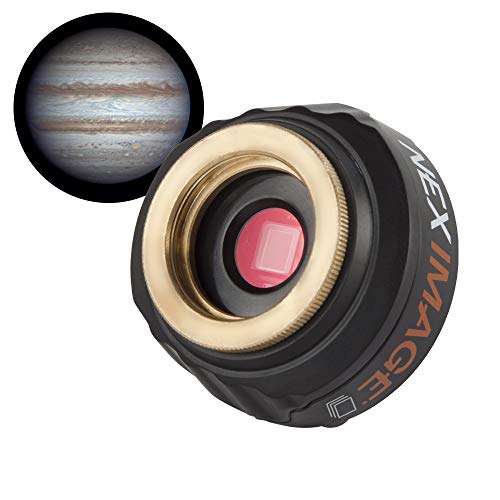
- 10.7MP color sensor for planetary detail
- Includes capture and stacking software
- Standard 1.25-inch telescope barrel
Best For: Beginners imaging the Moon, Sun, and planets
High-Dynamic-Range Pick

- 4/3-inch 11.7MP back-illuminated sensor
- Cooling up to 30°C below ambient
- USB 3.0 with 256MB frame buffer
Best For: Deep-sky imaging, focusing, and EAA
Entry-Level Planetary Pick

- 2.1MP IMX662 color sensor
- ROI, BIN2×2, and SharpCap modes
- 1.25-inch interface for lunar, planetary, and EAA imaging
Best For: Beginners shooting the Moon, planets, and EAA targets
Cooled Deep-Sky Choice
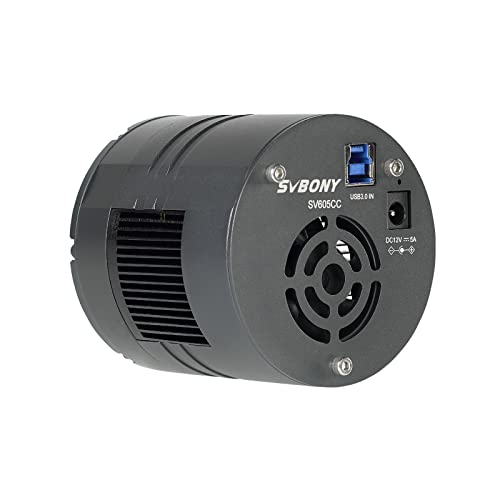
- 30°C-below-ambient double-layer TEC cooling
- 9MP IMX533 square sensor
- USB 3.0 and glow suppression
Best For: Deep-sky, panoramic, meteor, and lucky-imaging projects
Beginner Plug-and-Play Pick
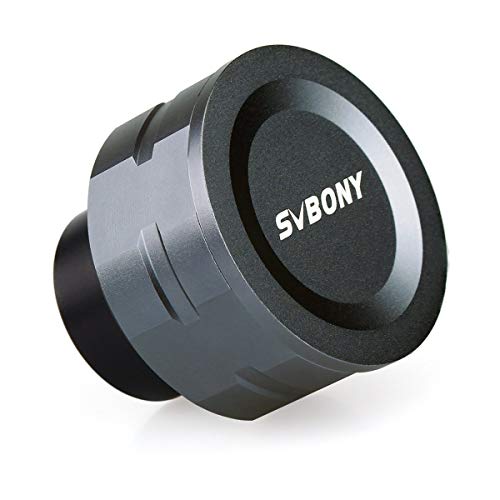
- 1/2.8-inch IMX307 color sensor
- Up to 30 fps at 1920×1080
- 1.25-inch threaded telescope connection
Best For: First-time lunar, planetary, and terrestrial imaging
APS-C Deep-Sky Pick – SVBONY SC571CC
The SVBONY SC571CC is one of the more capable cooled astronomy cameras for deep-sky imaging. Its 26MP APS-C IMX571 sensor, 16-bit ADC, zero amp-glow design, and dual-stage TEC cooling are geared toward capturing faint nebulae and other extended targets with reduced noise.
Best For: Deep-sky imagers who want a high-resolution color camera for nebulae, Ha regions, and longer exposures.
Pros:
- 26MP APS-C back-illuminated sensor with 3.76 μm pixels and high QE.
- Cooling reaches 35°C below ambient to help reduce dark current and noise.
- 16-bit ADC, up to 14 stops of dynamic range, and zero amp glow support clean tonal detail.
- Front-window heater, USB 3.0, and 512MB DDR3 buffer improve session reliability.
Cons:
- Its deep-sky-oriented feature set may be more than needed for basic planetary imaging.
- The APS-C body is relatively substantial at 1.31 pounds.
Choose the SC571CC if your priority is detailed, low-noise color imaging across compatible APO, Newtonian, RC, or catadioptric telescopes. The broad sensor and cooling make it especially appealing for medium- to long-focal-length deep-sky setups.
Planetary Starter – Celestron NexImage 20
The Celestron NexImage 20 is a straightforward option for shoppers comparing cooled astronomy cameras with dedicated planetary imagers. Its 20MP BSI CMOS sensor, ROI sub-framing, USB-C connection, and included iCap software make it practical for recording lunar, planetary, and filtered solar video.
Best For: Beginners and planetary imagers focused on the Moon, planets, and solar-system video capture.
Pros:
- 20MP sensor records detailed lunar, planetary, and solar images.
- ROI cropping can increase frame rate and reduce file sizes for small targets.
- Plug-and-play USB-C connectivity and included iCap capture software simplify setup.
- Built-in autoguiding support adds usefulness for deep-sky tracking.
Cons:
- This model is designed for solar-system imaging rather than cooled long-exposure deep-sky work.
- It requires a telescope with a 1.25-inch eyepiece holder or a suitable C-thread adapter.
- Manual focus and no image stabilization may require careful telescope adjustment.
For users primarily interested in high-resolution planetary videos, the NexImage 20 offers a focused feature set and simple computer connection. Consider another camera if active sensor cooling is essential for extended deep-sky exposures.
Integrated Imaging System – ZWO ASI585MM Air
The ZWO ASI585MM Air combines a cooled monochrome camera with built-in guiding and ASIAir control hardware. For buyers seeking cooled astronomy cameras that can simplify an entire imaging rig, its 256GB eMMC storage, dual-band connectivity, live stacking, and cooling to 30–35°C below ambient are notable advantages.
Best For: Imagers who want an integrated camera, guide system, and wireless rig-control solution.
Pros:
- Combines imaging, guiding, and control functions in one system.
- STARVIS 2 technology, zero amp glow, and read noise as low as 0.7e support clean imaging.
- 256GB eMMC storage plus support for external storage provides substantial recording capacity.
- Cooling to 30–35°C below ambient helps reduce sensor noise during extended exposures.
Cons:
- The integrated feature set may be excessive for users who only need a basic camera.
- Its monochrome configuration may require a more involved imaging workflow than a color camera.
- The supplied details list a one-year warranty.
The ASI585MM Air is compelling when reducing equipment complexity matters as much as image capture. Its wireless control, built-in storage, guiding capability, and active cooling make it suited to organized, remotely managed astrophotography setups.
High-Speed Planetary Value – SVBONY SC715C
The SVBONY SC715C is a lightweight planetary camera built around a 1.45 μm pixel IMX715 color sensor. While it is not a cooled model, its 4K detail, 45.5 fps full-resolution transfer rate, 512MB cache, and ST4 guiding interface make it a useful alternative to cooled astronomy cameras for high-speed solar-system capture.
Best For: Planetary imagers who prioritize fine pixel detail, high frame rates, and a lightweight setup.
Pros:
- Small 1.45 μm pixels and 4K resolution are suited to detailed planetary imaging.
- USB 3.0 supports up to 45.5 fps at full resolution for smooth video capture.
- 512MB DDR3 cache helps minimize delays and frame interruptions.
- ST4 autoguiding and compatibility with SharpCap, AstroDMX Capture, and NINA add flexibility.
Cons:
- It is not cooled, so it is less suited to long-exposure, low-noise deep-sky imaging.
- Focusing must be done with the telescope focuser because the camera has no built-in focus adjustment.
- It is not compatible with smartphones and requires dedicated software.
For lunar and planetary work, the SC715C’s small pixels, fast transfer, and low 147g weight can make alignment and high-speed capture easier. Deep-sky buyers should instead prioritize a model with active cooling and longer-exposure features.
Deep-Sky Filtered Pick – SV605CC Cooled Astronomy Camera
For photographers seeking cooled astronomy cameras for nebulae and galaxies, the SVBONY SV605CC combines a 9MP square IMX533 color sensor with two-stage TEC cooling and a bundled 2-inch dual-band filter. Its 3008 x 3008 resolution, claimed 80% quantum efficiency, and glow suppression are aimed at extracting cleaner deep-sky data, especially from light-polluted locations.
Best For: Advanced deep-sky astrophotographers who want a color camera and dual-band nebula filter in one package.
Pros:
- IMX533 sensor offers a square 3008 x 3008 frame, 3.76μm pixels, and high sensitivity.
- Two-stage TEC cooling can reach up to 30°C below ambient temperature.
- Included SV220 filter transmits OIII and H-alpha emission lines while reducing skyglow.
- USB 3.0 connectivity and multiple adapters support varied telescope setups.
Cons:
- The bundled filter is focused on nebula work, so it is less specialized for general planetary imaging.
- The complete kit weighs about 1,418 g, making it less compact than a basic planetary camera.
This is a feature-rich choice when cooled long-exposure imaging and light-pollution control matter more than simplicity. The included filter adds value for emission nebulae, while the square sensor provides a distinctive framing option.
Beginner Planetary Pick – NexImage 10 Solar System Imager
The Celestron NexImage 10 is a straightforward option among cooled astronomy cameras alternatives for beginners focused on the Moon, Sun, and planets. Its 10.7MP color sensor, 1.25-inch barrel, and included capture and stacking software create a practical setup for recording planetary video and selecting sharper frames.
Best For: Beginners who want an easy-to-use planetary camera for lunar and solar-system imaging.
Pros:
- 10.7MP color sensor is designed to capture detailed lunar and planetary images.
- Included software supports live viewing, capture, frame stacking, and manual adjustments.
- Standard 1.25-inch barrel fits many telescopes and accepts eyepiece filters.
- Integrated IR-cut window, region-of-interest framing, and 2×2 binning add flexibility.
Cons:
- It is designed for solar-system imaging rather than cooled, long-exposure deep-sky work.
- The supplied notes do not identify a TEC cooling system.
Choose this camera when ease of use and planetary video capture are the priorities. It is a more focused tool than a deep-sky cooled model, but its included software and standard nosepiece make it approachable for first-time astroimagers.
High-Dynamic-Range Pick – SV405CC IMX294 Cooled Camera
The SVBONY SV405CC is one of the more capable cooled astronomy cameras for deep-sky capture, pairing a back-illuminated 4/3-inch IMX294 sensor with 4.63μm pixels, 14-bit output, and a 63ke- full-well capacity. Two-stage TEC cooling, HCG mode, and a fast USB 3.0 interface make it suited to long exposures as well as focusing and electronically assisted astronomy.
Best For: Deep-sky imagers who need broad dynamic range, low-noise cooling, and fast data transfer.
Pros:
- 11.7MP IMX294 sensor provides strong light capture and a wide dynamic range.
- Cooling can lower the sensor temperature by up to 30°C below ambient.
- Automatic HCG mode reduces read noise while retaining dynamic range at higher gain.
- USB 3.0 and a 256MB DDRIII buffer support up to 19fps in RAW8 at full resolution.
Cons:
- At about 3.08 pounds, it is relatively heavy for a telescope camera.
- The supplied notes do not mention a bundled filter or accessories beyond the camera’s software compatibility.
This model makes the most sense for users who will take advantage of cooled long exposures, high-quality 14-bit data, and software integration. Its combination of dynamic range and rapid readout also suits users who switch between deep-sky imaging, focusing, and EAA.
Entry-Level Planetary Pick – SV305C Color Astronomy Camera
The SVBONY SV305C is a practical starting point among cooled astronomy cameras alternatives for planetary, lunar, and electronically assisted astronomy (EAA) imaging. Its 2.1MP IMX662 color sensor, low read noise, and selectable capture features make it suited to bright targets and introductory imaging workflows.
Best For: Beginners who want a color camera for lunar, planetary, and EAA use.
Pros:
- IMX662 sensor offers low read noise, no glow, and improved red-band sensitivity.
- Planetary high-speed and deep-sky long-exposure modes can be set in SharpCap.
- ROI and BIN2×2 modes can improve capture rates or sensitivity.
- Includes a 1.25-inch astronomical interface and detachable protective glass.
Cons:
- USB 2.0 is less suited to high-bandwidth capture than USB 3.0.
- This is an uncooled camera, so it is less targeted at long-exposure deep-sky imaging.
- The built-in UV/IR-cut filter is not removable.
The SV305C is a flexible color planetary camera with helpful software and sensor controls. Choose it when ease of use and bright-target performance matter more than dedicated cooling.
Cooled Deep-Sky Choice – SV605CC 9MP Color Camera
The SVBONY SV605CC is the most directly relevant option here for shoppers seeking cooled astronomy cameras for deep-sky work. Its 9MP, square-format IMX533 color sensor combines a stated 80% quantum efficiency with double-layer TEC cooling rated to 30°C below ambient.
Best For: Deep-sky astrophotographers, panoramic astronomy, meteor monitoring, and lucky imaging.
Pros:
- TEC cooling can reduce the sensor temperature to 30°C below ambient.
- IMX533 sensor provides a 3008×3008 square frame and 9MP resolution.
- Glow suppression is designed to help preserve signal-to-noise performance.
- USB 3.0 supports a modern high-speed connection.
Cons:
- Cooling and the larger camera body make it less of a simple beginner setup.
- The supplied notes identify USB connectivity but do not specify included control software.
- Its 1.6 kg listed weight may require attention to mount balance.
Among these three models, the SV605CC is the clearest fit for cooled, long-exposure-oriented imaging. Its square sensor and temperature control are especially appealing when reducing thermal effects is a priority.
Beginner Plug-and-Play Pick – SV105 Telescope Camera
The SVBONY SV105 is a straightforward entry point for buyers comparing cooled astronomy cameras with simpler planetary cameras. Its 1/2.8-inch IMX307 color sensor records up to 30 frames per second at 1920×1080 and connects to a telescope through a standard 1.25-inch format.
Best For: Beginners recording the Moon, bright planets, and terrestrial targets from a laptop or PC.
Pros:
- Plug-and-play design requires no driver according to the supplied notes.
- Supports up to 30 fps at 1920×1080 for lunar and planetary video.
- Standard 1.25-inch barrel and M28.5×0.6 thread support telescope filters.
- Compatible capture options are listed for Windows, Linux, and macOS computers.
Cons:
- It is not cooled, making it a weaker choice for long-exposure deep-sky imaging.
- USB 2.0 limits connection bandwidth.
- Apple phones and tablets running iOS are not supported.
The SV105 keeps the setup simple and affordable for first attempts at electronic astronomy imaging. It is best viewed as a bright-target video camera rather than a cooled deep-sky specialist.
How We Picked These Cooled Astronomy Cameras
We selected cameras across several common astrophotography needs rather than treating one specification as universally best. The lineup includes cooled color cameras for nebulae and galaxies, a cooled monochrome model with integrated imaging support, dedicated lunar and planetary cameras, and entry-level USB cameras for beginners. We considered sensor size and resolution, pixel size, cooling capability, connection options, included accessories, guiding support, and likely telescope compatibility.
Because imaging priorities vary, a camera designed for high-frame-rate planetary capture may be a better fit for the Moon or planets than a larger cooled deep-sky sensor. Conversely, deep-sky photographers generally benefit more from regulated cooling, low read noise, a suitable field of view, and dependable capture software.
Quick Comparison
- Best for cooled color deep-sky imaging: Models using larger Sony sensors, such as the IMX571, IMX533, or IMX294, offer a strong balance of resolution and low-noise performance.
- Best for monochrome workflows: The ZWO ASI585MM AIR adds a monochrome sensor, built-in guiding capability, and ASIAir integration for a streamlined setup.
- Best for lunar and planetary work: Celestron NexImage cameras and small-pixel SVBONY models are suited to high-magnification targets and short video captures.
- Best for beginners: Uncooled USB cameras are simpler and less expensive, making them useful for learning basic capture and focusing.
Key Buying Factors for Cooled Astronomy Cameras
Sensor Size and Pixel Size
A larger sensor can capture a wider field of view, but it may require a telescope with a larger corrected image circle. Smaller pixels can record fine detail when paired with sufficient focal length, while larger pixels may be more forgiving of tracking and seeing conditions. Use a field-of-view calculator before buying.
Cooling and Exposure Type
Two-stage or regulated semiconductor cooling helps control sensor temperature and reduce thermal noise during long exposures. This matters most for faint deep-sky targets. Planetary imaging uses short exposures and high frame rates, so cooling is usually less important than USB bandwidth, software support, and reliable capture performance.
Color Versus Monochrome
Color cameras simplify acquisition and are convenient for one-shot-color imaging. Monochrome cameras can deliver greater flexibility with separate red, green, blue, and narrowband filters, but they require a filter wheel or filter drawer and more processing.
Connectivity and Software
Check whether the camera works with your preferred capture application, operating system, drivers, and guiding platform. USB 3.0 is valuable for high-frame-rate planetary video, while integrated control systems can reduce cable clutter. Also verify that the included power supply and adapters match your setup.
Who Should Buy Which Cooled Astronomy Cameras?
Choose a cooled APS-C or medium-format color camera if you primarily photograph nebulae, galaxies, and clusters and want efficient one-shot-color processing. A cooled IMX533 or IMX294 model is often a practical compromise for users who want low-noise performance without the larger field and image-circle demands of APS-C.
Choose the ZWO monochrome system if you want a more advanced, automation-focused workflow with guiding and ASIAir control. Planetary specialists should prioritize small pixels, fast readout, and high-frame-rate video over deep-sky cooling. Beginners should start with an affordable USB camera if they are still learning polar alignment, focusing, tracking, and capture software before investing in a regulated cooled system.