Architectural work demands more than a fast processor. CAD drafting, BIM coordination, rendering, and large model handling all benefit from a desktop built for sustained performance.
This roundup focuses on the best desktop computer for architects in 2026, with options that balance CPU speed, GPU capability, memory headroom, and upgrade potential for real-world design workloads.
Best 10 Desktop Computer for Architects Picks for 2026
Premium Workstation Pick
Lenovo ThinkStation P3 Tower with RTX 2000 Ada

- Ultra 9 285 vPro processor
- 64GB DDR5 and 2TB SSD
- RTX 2000 Ada 16GB graphics
Best For: Architects needing a dependable workstation for CAD and modeling
Space-Saving Office Choice
Dell Precision 3460 SFF for CAD

- Core i9-14900 processor
- Compact small form factor chassis
- 32GB DDR5 with 512GB SSD
Best For: Architects who want a compact workstation for drafting and office design work
High-End Graphics Choice
Lenovo ThinkStation P3 with RTX 4000 Ada
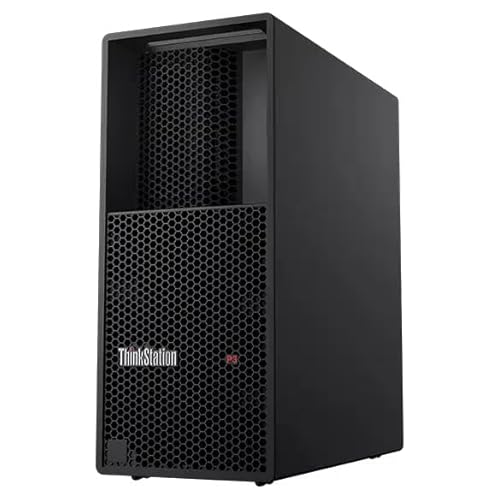
- Ultra 9 285 vPro processor
- RTX 4000 Ada 20GB graphics
- 64GB DDR5 with 1TB SSD
Best For: Architects working on large models, visualization, and graphics-heavy tasks
Budget-Friendly Business Tower
MSI PRO DP180 for Office Design
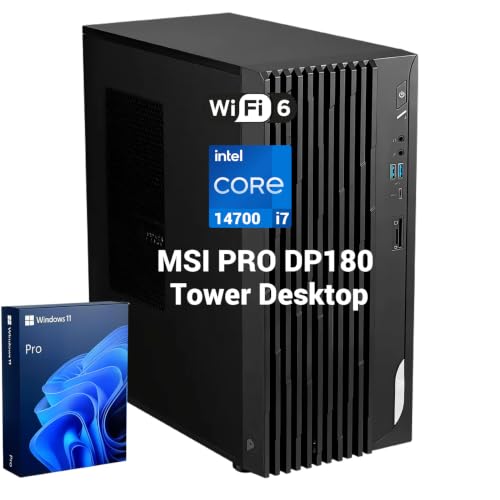
- Core i7-14700 processor
- 32GB DDR5 memory
- Supports multi-display up to 8K
Best For: Architects needing a business desktop for productivity and lighter CAD
Workstation-Grade Pick
Lenovo ThinkStation P3 Tower Workstation
- Ultra 9 285 vPro CPU
- 64GB DDR5 and 2TB SSD
- RTX 4000 Ada 20GB graphics
Best For: Architects needing top-tier CAD and rendering performance
Practical Multi-Monitor Choice

- Core Ultra 7-265 processor
- Supports up to four FHD monitors
- 32GB DDR5 RAM
Best For: Architects who need a reliable multi-monitor office tower
Budget-Friendly Starter
ASUS V500 Business Tower Desktop

- Core i7-13620H processor
- Dual-monitor HDMI + DisplayPort support
- Upgradeable to 64GB RAM
Best For: Budget-minded architects with lighter workloads
AI-Ready Office Tower
Dell Pro Tower Plus Core Ultra 7 Desktop
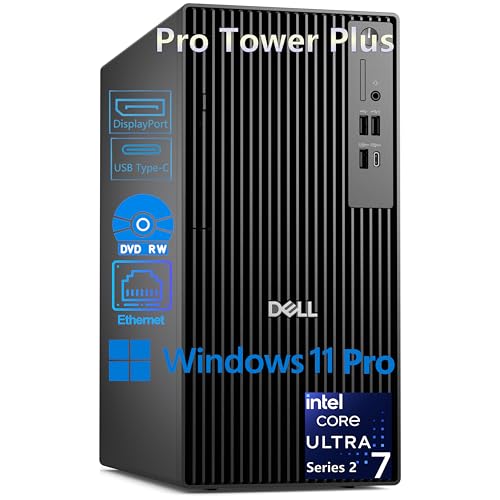
- Core Ultra 7 265 with AI Boost
- Triple 4K DisplayPort support
- 1TB SSD with 16GB DDR5 RAM
Best For: Architects who need a wired, multi-monitor desktop for productivity
Space-Saving Dual-Display Desktop
HP ProDesk SFF Business Desktop
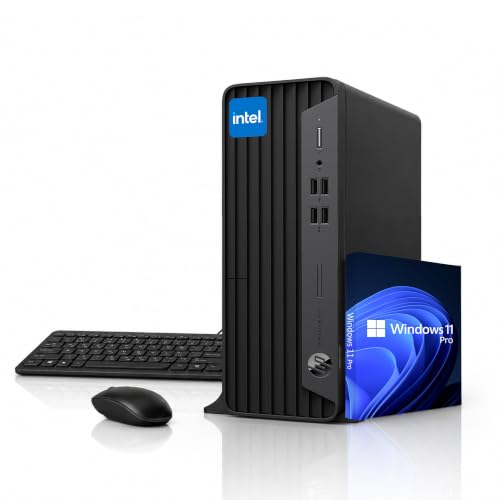
- Compact SFF design for small desks
- Dual 4K outputs with WiFi and Bluetooth
- 32GB RAM and 1TB SSD included
Best For: Space-limited offices and basic productivity with dual monitors
Performance-First Business Tower

- Core i7-12700K with 12 cores
- 32GB DDR5 RAM and 1TB SSD
- Dual 4K support with WiFi and Bluetooth
Best For: Architects wanting stronger multitasking in a business tower
Premium Workstation Pick – Lenovo ThinkStation P3 Tower with RTX 2000 Ada
If you want a desktop computer for architects that leans toward workstation reliability, this Lenovo ThinkStation P3 Tower is built for demanding design workflows. The Intel Core Ultra 9 285 vPro, 64GB of DDR5 memory, and NVIDIA RTX 2000 Ada 16GB give it a strong foundation for CAD work, 3D modeling, and multi-app productivity.
Best For: Architects and designers who want a balanced workstation for professional CAD and modeling with solid graphics memory.
Pros:
- Intel Core Ultra 9 285 vPro processor for high-end workstation performance
- 64GB DDR5 RAM and 2TB SSD provide plenty of memory and fast local storage
- NVIDIA RTX 2000 Ada 16GB is well suited to graphics-heavy professional work
- Windows 11 Pro and workstation-focused tower design support business use
Cons:
- Large tower chassis takes more desk or floor space than a small form factor PC
- 1-year warranty is shorter than some buyers may prefer for a premium machine
This is a strong fit if you prioritize workstation-class parts and memory headroom over compact size. It looks especially practical for architects who need a dependable office tower for day-to-day production work.
Space-Saving Office Choice – Dell Precision 3460 SFF for CAD
Dell Precision 3460 SFF Core i9-14900 - 32GB - 512GB SSD - Windows11P - Desktop
Check Price On AmazonThe Dell Precision 3460 SFF is a practical desktop computer for architects who need a compact system for office-based design work. With an Intel Core i9-14900, 32GB of DDR5 memory, and support for professional AMD or NVIDIA graphics configurations in the Precision line, it is positioned for smooth CAD and design productivity in a small footprint.
Best For: Architects who need a compact workstation for drafting, review, and general design productivity.
Pros:
- Small form factor design saves space on or under the desk
- Intel Core i9-14900 and 32GB DDR5 provide strong everyday performance
- DisplayPort and HDMI outputs support 4K-capable workflows
- Windows 11 Pro is a good fit for business and office use
Cons:
- 512GB SSD is modest if you store large project files locally
- 32GB maximum RAM is lower than some higher-end workstation alternatives
If space is tight, this Precision model makes a lot of sense for architects who want serious CPU power in a compact chassis. It is better suited to streamlined office workflows than to the most memory-intensive visualization setups.
High-End Graphics Choice – Lenovo ThinkStation P3 with RTX 4000 Ada
For architects who work with heavier models and more demanding visuals, this desktop computer for architects adds more graphics muscle than a typical office tower. The ThinkStation P3 Tower pairs an Intel Core Ultra 9 285 vPro with 64GB of DDR5 memory and an NVIDIA RTX 4000 Ada 20GB card, which is the most powerful graphics option in this roundup.
Best For: Architects handling larger CAD files, visualization work, and graphics-intensive professional tasks.
Pros:
- NVIDIA RTX 4000 Ada 20GB offers the strongest graphics headroom in this list
- Intel Core Ultra 9 285 vPro and 64GB DDR5 support demanding multitasking
- 1TB SSD is a solid middle ground for project storage and speed
- Windows 11 Pro and workstation-class design suit professional use
Cons:
- 1TB storage may still feel limited for very large local archives
- Full tower size and 30-pound weight make it less portable
This is the best pick if graphics performance matters as much as CPU power. Architects who regularly move between modeling, rendering, and presentation work should appreciate the extra VRAM and workstation focus.
Budget-Friendly Business Tower – MSI PRO DP180 for Office Design
The MSI PRO DP180 is a business tower that can work as a desktop computer for architects who focus on office tasks, reviews, and lighter design workflows. It uses an Intel Core i7-14700 processor, 32GB of DDR5 memory, and support for multi-display output up to 8K, making it useful for productivity-heavy workstations.
Best For: Architects who need a business desktop for presentations, multitasking, and lighter CAD use.
Pros:
- Intel Core i7-14700 provides strong general-purpose performance
- 8K and multi-display support help with productivity setups
- 32GB DDR5 RAM is adequate for office work and lighter design tasks
- Small 16.7-pound tower is easier to place than larger workstation systems
Cons:
- Integrated graphics are less suitable for demanding 3D visualization
- 32GB RAM maximum limits upgrade room compared with full workstations
This MSI model makes sense when you need a capable business desktop more than a graphics-dedicated workstation. It is a practical option for architects who spend more time on planning, coordination, and presentation than on heavy rendering.
Workstation-Grade Pick – Lenovo ThinkStation P3 Tower Workstation
If you need a desktop computer for architects that can handle demanding design software and heavy multitasking, the Lenovo ThinkStation P3 Tower is built for serious work. Its Intel Core Ultra 9 285 vPro processor, 64GB DDR5 memory, and NVIDIA RTX 4000 Ada 20GB graphics make it a strong fit for large projects, 3D modeling, and visual workflows.
Best For: Architects and design professionals who want a workstation-class tower for complex CAD, rendering, and multitasking.
Pros:
- Intel Core Ultra 9 285 vPro processor for high-end productivity and demanding workloads
- 64GB DDR5 RAM and 2TB PCIe Gen4 SSD for fast multitasking and generous project storage
- NVIDIA RTX 4000 Ada 20GB dedicated graphics for graphics-heavy architecture and visualization work
- Windows 11 Pro plus business-focused tower design
Cons:
- Large 30-pound tower may be more machine than casual users need
- 1-year warranty is shorter than what some buyers may expect on a premium workstation
- Best suited to professional workloads rather than basic office use
This is the most capable option here for architects who prioritize workstation performance over compact size or simplicity. If your workflow includes detailed modeling, rendering, and lots of open files, this system is the most future-ready pick in the group.
Practical Multi-Monitor Choice – Dell Tower Desktop
For a desktop computer for architects that focuses on everyday productivity and multi-monitor work, the Dell Tower Desktop is a practical middle ground. It pairs an Intel Core Ultra 7-265 processor with 32GB RAM and supports up to four FHD displays or two 4K displays, which is helpful for plans, reference material, and communication tools.
Best For: Architects who want a straightforward tower for drafting, presentations, and multi-monitor productivity.
Pros:
- Intel Core Ultra 7-265 with built-in AI features for productivity-focused workloads
- Supports up to four FHD monitors or two 4K displays for expanded workspace
- 32GB DDR5 RAM is well-suited to everyday professional use
- Tool-less entry and removable side panel make upgrades easy
Cons:
- Integrated Intel UHD Graphics are less capable for heavy rendering or advanced 3D work
- Windows 11 Home lacks the Pro-focused setup of higher-end business systems
- 32GB RAM maximum limits future memory expansion
This Dell is a sensible pick if your architecture workflow is more about design organization, office productivity, and display space than intensive visualization. It offers the multi-monitor flexibility many professionals need without jumping to workstation-level hardware.
Budget-Friendly Starter – ASUS V500 Business Tower Desktop
The ASUS V500 is a compact business tower that can work as a desktop computer for architects who mainly need dependable day-to-day performance. Its Intel Core i7-13620H processor, 16GB DDR5 memory, and dual-display support make it a solid choice for light design work, admin tasks, and office productivity.
Best For: Architects on a tighter budget who need a basic business desktop for light drafting and everyday work.
Pros:
- Intel Core i7-13620H with 10 cores and 16 threads for responsive general performance
- Dual-monitor support via HDMI and DisplayPort helps with productivity setups
- Wi‑Fi 6, Bluetooth 5.4, and 7 USB ports provide flexible connectivity
- Upgradeable up to 64GB DDR5 RAM and up to 4TB PCIe M.2 SSD storage
Cons:
- Integrated graphics are not ideal for heavy rendering or advanced 3D modeling
- 16GB RAM is modest for large architecture files and demanding multitasking
- Includes Windows 11 Home rather than a business-oriented Pro edition
This ASUS model makes sense for lighter architecture workflows where cost, connectivity, and simple usability matter more than graphics power. It is the least specialized option here, but its upgrade path leaves room to grow.
AI-Ready Office Tower – Dell Pro Tower Plus Core Ultra 7 Desktop
If you want a desktop computer for architects that can handle heavy multitasking and multi-monitor workflows, this Dell Pro Tower Plus is built around a Core Ultra 7 processor with AI acceleration and triple 4K display support. It’s aimed at professionals who need a fast, wired office tower for CAD-style productivity, large files, and day-to-day business work.
Best For: Architects and design professionals who want strong multitasking, triple-monitor workspace support, and business-grade connectivity.
Pros:
- Intel Core Ultra 7 265 with 20 cores and Intel AI Boost for demanding productivity workloads
- Supports up to three 4K displays through DisplayPort, which helps with multi-window workflows
- 1TB NVMe SSD and 16GB DDR5 RAM for quick boot times and responsive app loading
- Windows 11 Pro adds BitLocker, Remote Desktop, and Hyper-V support
Cons:
- No HDMI port; display connections are DisplayPort only
- No built-in WiFi, so wired Ethernet or an adapter is needed
- 16GB RAM may feel modest for especially large architectural projects
This Dell tower is a practical fit for office-based architecture work where display expansion, fast storage, and business features matter more than flashy extras. It’s especially appealing if your workflow stays plugged into a desk and depends on reliable multi-monitor productivity.
Space-Saving Dual-Display Desktop – HP ProDesk SFF Business Desktop
This desktop computer for architects is more about compact practicality than raw workstation power. The HP ProDesk SFF offers dual 4K display support, a small footprint, and Windows 11 Pro, making it a tidy option for office tasks, collaboration, and light design-related work where desk space is limited.
Best For: Architects who need a space-saving desktop for everyday office work and dual-monitor setups.
Pros:
- Small Form Factor chassis saves desk space in tight offices
- Dual 4K display support via HDMI and DisplayPort
- 32GB RAM and 1TB SSD provide strong everyday responsiveness
- Built-in WiFi, Bluetooth, keyboard, and mouse make setup easier
Cons:
- Intel Pentium Gold G5905 is modest for demanding architectural software
- Integrated graphics are best suited to basic visual workloads
- Less ideal if you need a more powerful machine for heavy rendering
For architects who mainly need a compact office desktop rather than a high-end rendering machine, this HP keeps the workspace clean and the setup simple. It stands out for dual-display convenience and plenty of memory, but its processor choice makes it better for everyday productivity than intense design tasks.
Performance-First Business Tower – Dell Core i7 Dual 4K Desktop
For buyers looking for a desktop computer for architects with stronger performance headroom, this Dell tower pairs a Core i7-12700K with DDR5 memory and dual 4K monitor support. It’s a solid choice for handling busy design workflows, large files, and everyday office tasks with a more responsive feel than entry-level business desktops.
Best For: Architects who want a faster business tower with room for multitasking and dual-monitor productivity.
Pros:
- Intel Core i7-12700K with 12 cores and 20 threads for stronger multitasking
- 32GB DDR5 RAM and 1TB PCIe SSD for fast, responsive performance
- Dual 4K monitor support through HDMI and DisplayPort
- WiFi, Bluetooth, USB-C, and included keyboard and mouse add convenience
Cons:
- Integrated graphics are not intended for serious GPU-heavy rendering
- Maximum RAM is listed at 32GB in the supplied details
- Still more of a business tower than a dedicated workstation
This Dell strikes a useful middle ground for architecture offices that need speed, clean connectivity, and a dual-display setup without moving into full workstation territory. Its stronger CPU and DDR5 memory make it the most balanced option here for general architectural productivity.
How We Picked the Best Desktop Computer for Architects
We prioritized desktops that make sense for architectural workflows: strong multi-core CPUs, professional or high-end discrete graphics, ample RAM, fast SSD storage, and chassis designs that support cooling and future upgrades. We also looked for systems that can handle demanding software like Revit, AutoCAD, SketchUp, Rhino, 3ds Max, and Adobe Creative Cloud without feeling underpowered.
Because a Desktop Computer for Architects should stay useful for years, we favored models with room for memory expansion, additional storage, and stronger graphics options where available.
Quick Comparison
For the heaviest BIM and rendering loads, workstation-class towers with RTX Ada graphics are the safest choice. For mixed drafting, coordination, and office productivity, high-end business towers can offer excellent value. Small-form-factor systems are best when desk space matters, but they usually trade away some cooling and expansion room.
Key Buying Factors for Desktop Computer for Architects
CPU Performance
Look for a modern Intel Core Ultra, Core i7, or workstation-oriented processor with strong single-core speed for modeling and enough cores for multitasking, exports, and rendering. Architectural software often benefits from both.
GPU Capability
For 3D viewports, real-time visualization, and GPU-accelerated rendering, a discrete NVIDIA RTX card is a major advantage. Entry-level graphics can work for drafting, but larger models and visual presentation work are much better with workstation GPUs or higher-tier RTX options.
Memory and Storage
32GB RAM is a practical starting point for many architects, while 64GB is better for larger projects and heavy multitasking. A fast SSD helps with boot times, project loading, and cache performance; 1TB or more is preferable if you store active project files locally.
Cooling, Expansion, and Ports
Architectural desktops should remain stable under long sessions. A tower with solid cooling and upgrade headroom is usually more future-proof than a compact system. Also check for enough USB ports, multiple display outputs, and support for dual 4K monitors if your workflow uses multiple screens.
Who Should Buy Which Desktop Computer for Architects?
If you work mainly in 2D drafting and light 3D, a value-focused tower with a strong CPU and 32GB RAM is often enough. If your day includes large BIM files, rendering, or presentation-ready visualization, prioritize a workstation tower with more powerful graphics and at least 64GB RAM. If you need a compact office footprint, a small-form-factor model can still work well, provided your projects are not extremely graphics-heavy.
In short, the best choice depends on whether your workload is mostly drafting, mixed design coordination, or full-scale visualization. Match the machine to the size of your models, the complexity of your renderings, and how much room you have to expand later.