Choosing homeschool math supplies is easier when you focus on tools that make abstract concepts visual, tactile, and repeatable. The right set can support everything from early counting to fraction work and geometry.
Below, you’ll find practical options for different ages and skill levels, plus a simple guide to help you match materials to your child’s needs, budget, and curriculum goals.
Best 10 Homeschool Math Supplies Picks for 2026
Hands-On Counting Starter
Learning Resources MathLink Cubes

- Counts, patterns, and basic operations
- Snaps together for tactile STEM play
- Supports colors, shapes, and fine motor skills
Best For: Early learners needing a versatile math manipulative
Portable Number Sense Board
SCRIBBLEDO Dry Erase Number Line Board
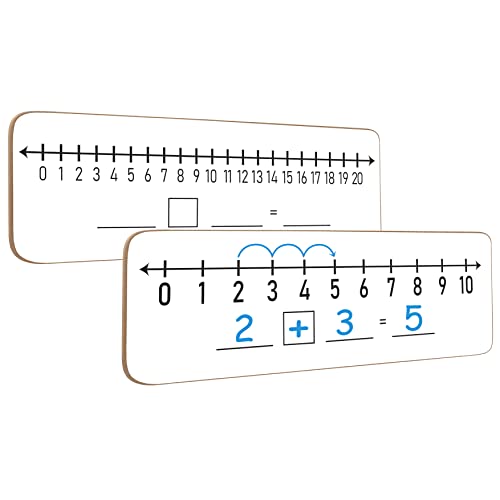
- Double-sided 0-10 and 0-20 layouts
- Reusable surface resists ghosting
- Lightweight board for lap or desk use
Best For: Grades 1-2 learners practicing number sense and operations
Colorful Linking Cube Set

- 100 cubes in 10 colors for sorting and counting
- Soft-click links are easy for small hands
- Embossed shapes add patterning options
Best For: Preschool and kindergarten hands-on math practice
Place-Value Builder Pack
Learning Resources Base Ten Blocks Smart Pack

- 121-piece set for base-10 concepts
- Sized for small-group or individual instruction
- Supports early place-value learning
Best For: Grade 1+ learners studying base-10 and place value
Flexible Dry-Erase Practice
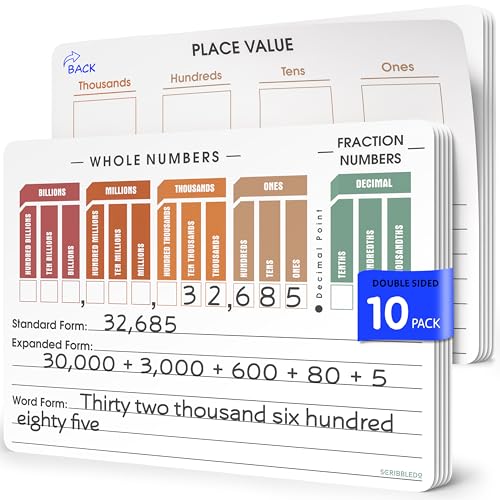
- Pack of 10 reusable 9"x12" sheets
- Flexible and easy to store
- Useful for place value and arithmetic practice
Best For: Homeschool and classroom math practice
Bulk Geometry Builders
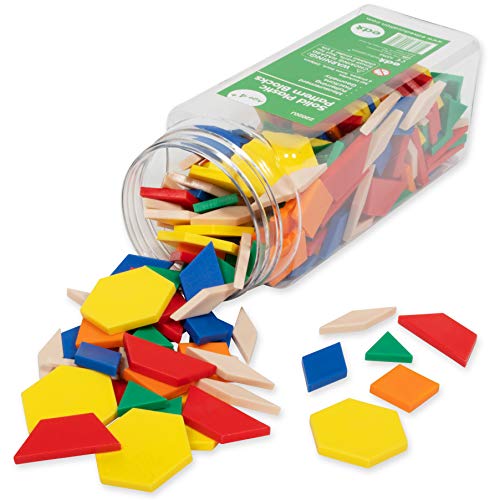
- 250-piece set with six geometric shapes
- Works for geometry, symmetry, and fractions
- Handled jar makes storage and travel easier
Best For: Early math and geometry practice
Fraction Focus Set
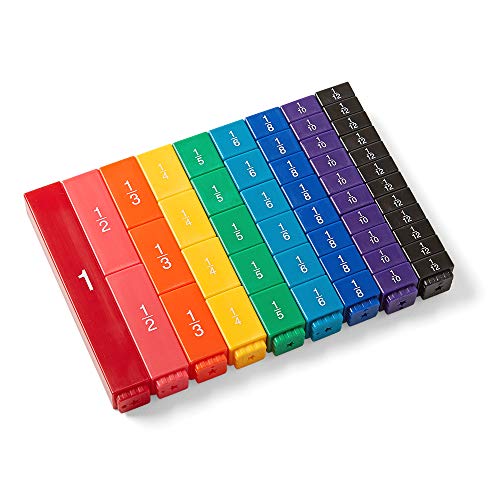
- Nine color-coded fraction values
- Helps compare and model fractions
- Durable and easy to clean
Best For: Visual fraction instruction and comparison
Portable Math Practice Kit
Hands-On Multiplication & Fractions

- Portable storage kit with charts, cubes, and a fun facts wheel
- Supports multiplication, division, fractions, and more
- Built for grades 4-5, ages 9-11
Best For: Upper-elementary homeschool math practice
Fraction Visual Learning Set
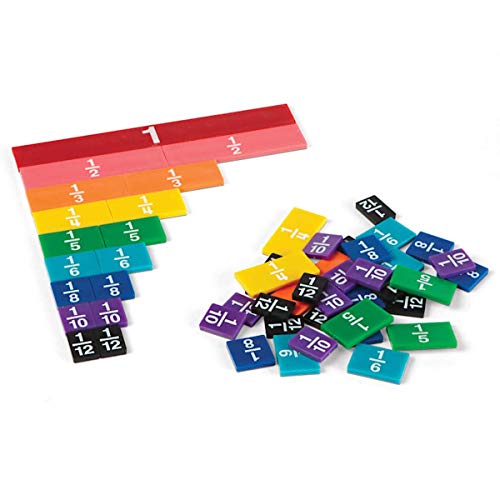
- 51 plastic tiles cover wholes through twelfths
- Helps with comparing, ordering, and modeling fractions
- Colorful, durable, and easy to clean
Best For: Kids who learn fractions best with hands-on visuals
3D Geometry Exploration Set
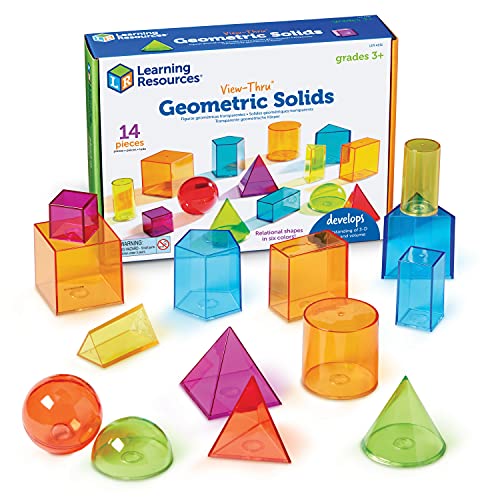
- 14 transparent shapes for geometry and spatial reasoning
- Removable bases and fill holes support volume experiments
- Works for grades K-8 in homeschool or classroom use
Best For: Visual geometry lessons and volume exploration
Hands-On Counting Starter – Learning Resources MathLink Cubes
If you want homeschool math supplies that make early concepts more concrete, these MathLink Cubes are a flexible place to start. They support counting, addition, subtraction, skip counting, patterning, sorting, and even simple graphing while also building fine motor skills through hands-on play.
Best For: Early learners who need a versatile manipulative for counting, patterning, and basic operations.
Pros:
- Supports a wide range of math skills, including counting to 100, making 10, and simple subtraction.
- All-sided snapping design helps with building, patterning, and tactile STEM practice.
- Also reinforces color and shape identification plus eye-hand coordination.
- Useful for homeschool, classroom, or Montessori-style activities.
Cons:
- Best suited to younger math learners rather than advanced elementary work.
- Hands-on cubes require active guidance for structured lessons.
Overall, this is a strong all-purpose manipulative if you want one set that covers several early math goals at once. It works well for daily homeschool practice and open-ended skill building.
Portable Number Sense Board – SCRIBBLEDO Dry Erase Number Line Board
For homeschool math supplies that keep practice focused and reusable, this dry erase number line board is a simple, practical tool. With 0-10 on one side and 0-20 on the other, it gives first- and second-grade learners a dedicated surface for counting, number sense, addition, and subtraction work.
Best For: Individual number line practice for grades 1-2 at home, in tutoring, or in the classroom.
Pros:
- Double-sided layout offers two practice ranges: 0-10 and 0-20.
- Reusable dry erase surface is designed to be easy to clean and resist ghosting.
- Lightweight, slim size makes it easy to use on a desk or lap.
- Sturdy hardboard construction is built for repeated lessons and everyday use.
Cons:
- Designed for a narrow math focus rather than broad manipulatives practice.
- Single-board format is best for one learner at a time.
This is a smart pick if your child needs repeated number line work without wasting worksheets. It keeps practice tidy, portable, and easy to reuse during homeschool sessions.
Colorful Linking Cube Set – edxeducation Math Cubes
If you need homeschool math supplies for sorting, building, and early number work, this 100-piece cube set offers a lot of flexibility. The cubes link on all sides and include embossed shapes, making them useful for counting, patterning, color sorting, and simple problem solving.
Best For: Preschool and kindergarten math practice centered on sorting, patterning, and counting.
Pros:
- 100 cubes in 10 colors provide plenty of material for hands-on activities.
- Soft-click connections make them easy for small hands to link together.
- Embossed geometric shapes add extra sorting and patterning options.
- Includes an activity guide for ready-made lesson ideas.
Cons:
- Most useful for early learners rather than older elementary students.
- Manual, hands-on use means they work best in guided activities.
These cubes are a practical choice if you want a colorful, open-ended manipulative for early math. They cover core preschool and kindergarten skills while leaving room for creative play.
Place-Value Builder Pack – Learning Resources Base Ten Blocks Smart Pack
When homeschool math supplies need to support place value and base-10 understanding, this smaller base ten block set is a focused choice. The 121-piece pack is sized for individual or small-group instruction and is geared toward building core math skills through tactile practice.
Best For: Grade 1+ learners working on base-10 concepts and place-value foundations.
Pros:
- Supports base 10 concepts and related math skill development.
- Smaller pack is handy for one-on-one lessons or small-group work.
- Designed to support Standards for Mathematical Practice according to CCSS.
- Compact set is easy to keep organized for homeschool use.
Cons:
- More specialized than open-ended manipulatives like cubes or counters.
- Best suited to learners already ready for base-10 instruction.
This set makes sense if you want a dedicated tool for place-value lessons instead of a general classroom bin. It is compact, practical, and aligned with early elementary math instruction.
Flexible Dry-Erase Practice – Place Value Chart Math Sheets
If you want homeschool math supplies that make daily practice easier, these flexible dry-erase place value sheets are a practical pick. The 9″x12″ format gives students room to work, while the reusable surface supports repeated practice in addition, subtraction, multiplication, division, and place value work.
Best For: Homeschool families, classroom use, and students who need reusable math practice sheets for hands-on learning.
Pros:
- Pack of 10 reusable dry-erase sheets for repeated math practice
- Flexible, lightweight design is easier to store and carry than bulkier boards
- Useful for place value and broader arithmetic practice
- Suitable for homeschool, classroom, and on-the-go learning
Cons:
- Best suited to practice and manipulatives, not full whiteboard lessons
- Single-purpose layout may be less versatile than blank dry-erase boards
This is a solid choice if you want a reusable, space-saving tool that supports hands-on math work without adding clutter. It fits especially well into a homeschool setup where flexible materials need to cover multiple skills.
Bulk Geometry Builders – Plastic Pattern Blocks
For homeschool math supplies that support visual learning, this 250-piece pattern block set gives kids plenty of shapes to explore. The pieces are standard colors and sizes, fit together cleanly, and can be used for geometry, symmetry, fractions, measurement, and patterning.
Best For: Families and teachers looking for a large, reusable set of pattern blocks for early math and geometry lessons.
Pros:
- Large 250-piece set with six geometric shapes
- Standard sizes and colors fit together without awkward gaps
- Supports geometry, symmetry, fractions, and shape attributes
- Comes in a handled storage jar for easy packing and travel
Cons:
- Pieces are small and need organized storage after use
- Geared toward hands-on learning rather than advanced math study
This set works well when you want a versatile manipulative that can be reused across multiple early math topics. It is especially useful in a homeschool environment where one resource needs to cover both structured lessons and open-ended exploration.
Fraction Focus Set – Rainbow Fraction Tower Cubes
Among homeschool math supplies, these fraction tower cubes are a hands-on way to make fraction lessons more visual. The set includes nine color-coded fraction values and is designed to help kids compare, order, and model fractions, improper fractions, mixed numbers, and decimals.
Best For: Students who need a concrete, visual tool for learning fraction equivalency and comparison.
Pros:
- Includes 9 fraction values from whole to twelfths
- Supports comparing, ordering, and modeling fraction concepts
- Durable plastic cubes are easy to clean
- Bright colors help make fraction relationships easier to see
Cons:
- Focused mainly on fractions rather than broad math practice
- Best for guided instruction, not independent drill work
If fractions are a pain point, this set gives learners a concrete way to see how parts relate to a whole. It is a strong addition to a homeschool math shelf when you want materials that make abstract concepts easier to understand.
Portable Math Practice Kit – Hands-On Multiplication & Fractions
If you want homeschool math supplies that keep upper-elementary lessons hands-on, this Carson Dellosa kit gives grades 4-5 a portable way to practice core concepts. It includes charts, a reference sticker, number cubes, and a fun facts wheel to support multiplication, division, fractions, and more.
Best For: Homeschool families looking for a compact, manual math manipulatives set for grades 4-5.
Pros:
- Includes 6 double-sided math charts, a reference sticker, 6 number cubes, and a fun facts wheel
- Supports multiplication, division, fractions, and related math practice
- Portable storage kit makes it easy to use at home or on the go
- Designed for ages 9-11 with a hands-on, student-friendly format
Cons:
- Focused on grades 4-5, so it is less useful for younger learners
- Paper-based components may be less durable than plastic manipulatives
This is a practical pick if you want an all-in-one set that turns review time into active practice. It is especially useful for families who want structured support for upper-elementary math without a lot of setup.
Fraction Visual Learning Set – Visual Fraction Learning
Among homeschool math supplies, fraction tiles are one of the clearest ways to help kids see how fractions compare and fit together. This 51-piece rainbow set is designed for hands-on work with decimals, equivalents, improper fractions, mixed numbers, and other fraction skills.
Best For: Homeschool students who need a visual, tactile way to understand fractions.
Pros:
- Shows fractions from wholes through twelfths in proportionally sized tiles
- Supports comparing, ordering, naming, and modeling fraction operations
- Durable plastic tiles are easy to clean
- Bright rainbow colors make the set engaging for kids
Cons:
- Primarily focused on fraction and decimal learning rather than broader math topics
- Small tile sizes may be less ideal for large-group demonstrations
This set is a strong choice if your child needs concrete visuals to move beyond abstract fraction lessons. It works well for independent practice, guided instruction, and Montessori-style learning at home.
3D Geometry Exploration Set – See-Through Shape Exploration
If your homeschool math supplies need a geometry upgrade, these transparent solids make 3D concepts easier to see and explore. The 14-piece set includes prisms, pyramids, spheres, cubes, cylinders, and cones, with removable bases and fill holes for hands-on volume and measurement activities.
Best For: Homeschool geometry lessons that benefit from visual and tactile 3D shape exploration.
Pros:
- Transparent acrylic design helps students see inside geometric solids
- Includes 14 shapes for geometry, spatial reasoning, and mathematical understanding
- Removable bases and fill holes support volume and measurement experiments
- Useful for grades K-8 and a wide range of homeschool activities
Cons:
- More specialized for geometry than for general math practice
- Best suited for indoor use and supervised hands-on learning
This set is ideal when you want geometry lessons to feel more concrete and interactive. It gives visual learners a clear way to connect shape names, volume, and measurement concepts with real objects.
How We Picked These Homeschool Math Supplies
We focused on materials that are hands-on, durable, and flexible enough to support multiple lessons. Priority went to sets that help children build number sense, practice place value, compare fractions, and explore geometry without needing constant replacement. We also considered age range, versatility, and whether the pieces can be reused across several grades.
Quick Comparison: What Each Type Does Best
Counting cubes and base ten blocks are best for early addition, subtraction, and place value. Number lines and dry-erase boards help with visual problem-solving and daily practice. Pattern blocks, fraction tiles, and fraction towers are better for geometry, symmetry, and fraction equivalency. If you want an all-purpose option, a mixed math manipulative set can support both skill-building and review.
Key Buying Factors for Homeschool Math Supplies
Age and Skill Level
Match the tool to the learner’s stage. Preschool and early elementary students usually benefit most from counting cubes, shape blocks, and simple boards. Older learners need stronger emphasis on base ten, fractions, and geometry models.
Concept Coverage
Think about what your child is studying now and what comes next. A good set of Homeschool Math Supplies should reinforce current lessons while also supporting future topics like regrouping, fraction equivalency, and spatial reasoning.
Durability and Reusability
Look for sturdy plastic pieces, clear markings, and wipe-clean surfaces. Since these tools are likely to be used often, durable materials can save money over time.
Storage and Organization
Small pieces are easy to lose, so storage matters. Kits with containers or compact packaging are easier to keep organized and ready for daily use.
Who Should Buy Which Homeschool Math Supplies?
If you’re teaching younger children, start with counting cubes, number lines, and pattern blocks. For first and second grade, add base ten blocks and place value tools to support foundational arithmetic. For upper elementary, fraction tiles, fraction towers, and geometry sets are the best fit. Families teaching multiple children may want a mix of general manipulatives and grade-specific tools so one purchase can serve several lessons.
The best Homeschool Math Supplies are the ones your child will actually use. Choose versatile, visual tools that fit your curriculum, and you’ll make math practice more concrete, efficient, and effective.