The best jigsaw puzzles for classrooms give students a hands-on way to practice visual reasoning, fine-motor skills, patience, and teamwork. This roundup compares 10 multi-pack, wooden, map, and themed options for different ages and learning settings.
Use the guide below to match piece count, materials, subject matter, and storage needs with your classroom routines and student skill levels.
Best 10 Jigsaw Puzzles for Classrooms Picks for 2026
Best Multi-Theme Set
Maps & Space 100-Piece Puzzle Pack
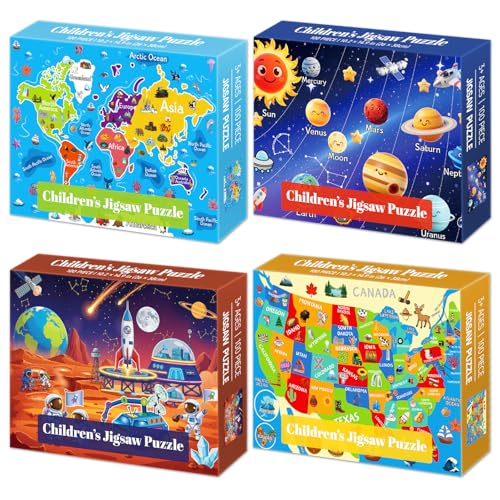
- Four USA, world map, and space themes
- 100 pieces per puzzle with reference posters
- Thick cardboard and letters on backs
Best For: Mixed-age classrooms covering geography and space
Best Wooden Variety

- Six wooden puzzles with varied themes
- Includes 48- and 60-piece formats
- Large pieces with smooth rounded corners
Best For: Durable early-elementary puzzle centers
Best Geography Focus
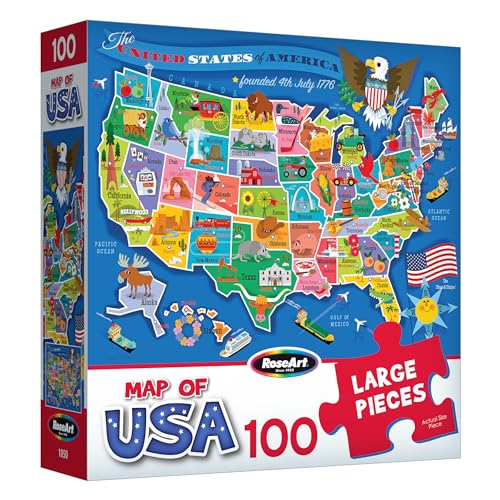
- 100 large pieces depict all 50 states
- Finished puzzle measures 24 by 18 inches
- Supports map skills and spatial awareness
Best For: Hands-on U.S. geography activities
Best Animal-Themed Set
Four 60-Piece Search-and-Find Puzzles

- Four detailed animal-scene puzzles
- Unique shapes add an observational challenge
- Frame words and images support learning
Best For: Beginner puzzle centers and animal units
Best Value Multipack
14-Pack Wooden 30-Piece Puzzles

- Fourteen varied themes for classroom rotation
- Wooden pieces with rounded, smoothed edges
- Beginner-friendly 30-piece format
Best For: Preschool classrooms and independent learning centers
Best for Group Variety

- Four animal-themed classroom puzzles
- Large floor-friendly finished size
- Individual storage boxes included
Best For: Floor-puzzle stations and small-group activities
Best Framed Wooden Set

- Six colorful themes for varied practice
- Wooden trays help contain pieces
- Picture guides support beginners
Best For: Preschool stations and guided tabletop learning
Best Classroom Value
Four-Pack 100-Piece Kids Puzzles

- Four colorful themes for rotating activities
- 400 total pieces across four puzzles
- Includes reference posters
Best For: Small-group stations and collaborative play
Best Durable Set
Six-Pack Large Wooden Jigsaw Puzzles

- Six reusable 60-piece wooden puzzles
- Frames help keep pieces in place
- Themes include dinosaurs, space, and sea life
Best For: Repeat-use preschool and early-elementary stations
Best Beginner Option
Four-Pack 24-Piece Wooden Puzzles

- Beginner-friendly 24-piece format
- Four animal and dinosaur designs
- Visual guides beneath the pieces
Best For: Preschool puzzle centers and early skill practice
Best Multi-Theme Set – Maps & Space 100-Piece Puzzle Pack
For classrooms seeking versatile jigsaw puzzles for classrooms, this four-pack combines USA and world maps with solar-system and Mars themes. Each 100-piece cardboard puzzle measures 15 by 10 inches when complete and includes a reference poster, making it practical for rotating individual or small-group activities.
Best For: Classrooms that want geography and space-themed puzzles for children ages 3–10.
Pros:
- Four educational themes support varied interests.
- Reference posters and letters on the backs can make assembly easier.
- Thickened cardboard, precision cutting, and bright printing support repeated use.
Cons:
- Each puzzle has only 100 pieces, so it may not challenge older or advanced students.
- The 15-by-10-inch finished size is smaller than some classroom floor puzzles.
This is a flexible choice when one purchase needs to cover map activities, space units, and mixed-age independent work. Its four separate boxes also make theme rotation and storage straightforward.
Best Wooden Variety – Six-Puzzle Animal & Space Set
This six-pack is a durable option for jigsaw puzzles for classrooms serving children ages 4–8. It includes three 48-piece and three 60-piece wooden puzzles, with undersea, dinosaur, safari, insect, farm, and space themes. The larger 11.8-by-8.85-inch format and included references suit tabletop stations.
Best For: Early-elementary classrooms needing reusable puzzles at two difficulty levels.
Pros:
- Wood construction is designed for repeated use.
- Six themes offer variety for classroom centers.
- Smooth, rounded corners are intended to be safer for children.
- Includes both 48- and 60-piece challenges.
Cons:
- The set has fewer pieces per puzzle than advanced classroom puzzles.
- Wooden pieces may be heavier than cardboard alternatives.
Choose this set when durability and variety matter more than a single subject focus. The two piece counts allow teachers to match the activity to different learners while keeping the format familiar.
Best Geography Focus – Oversized USA Map Puzzle
For a focused geography station, this USA map is one of the more classroom-ready jigsaw puzzles for classrooms. Its 100 large pieces form a 24-by-18-inch map featuring all 50 states, major landmarks, and regional illustrations, giving students a hands-on way to practice map recognition.
Best For: Geography lessons, homeschool settings, and classrooms for children ages 6 and up.
Pros:
- All 50 states and regional artwork reinforce geography learning.
- Large pieces are designed for little hands.
- The oversized finished puzzle provides a highly visible classroom activity.
- Supports spatial awareness, memory, and problem-solving.
Cons:
- It offers only one theme and one puzzle.
- The 24-by-18-inch footprint needs more table or floor space.
This is a strong pick when the goal is to connect puzzle play directly to U.S. geography. Its large format can work well for partner activities, provided the classroom has enough assembly space.
Best Animal-Themed Set – Four 60-Piece Search-and-Find Puzzles
This four-pack adds an observation element to jigsaw puzzles for classrooms. Each 60-piece puzzle uses animal scenes with unique, irregular shapes, words, and images on the frame. The finished puzzles measure about 13.8 by 9.8 inches, making them suitable for tabletop or floor activities.
Best For: Beginner and early-elementary learners who enjoy animal themes and search-and-find play.
Pros:
- Four animal scenes provide variety for repeated center use.
- Unique piece shapes offer a different challenge from standard puzzles.
- Words and images on the frame can support guided learning.
- Supports concentration, logical thinking, memory, and patience.
Cons:
- All four puzzles use an animal-focused theme.
- At 60 pieces, the set may be too simple for advanced older students.
This set works well for classrooms that want puzzles to support both assembly and visual observation. The manageable piece count and frame clues make it approachable, while the detailed scenes add interest beyond basic matching.
Best Value Multipack – 14-Pack Wooden 30-Piece Puzzles
For classrooms seeking variety, this 14-pack offers beginner-friendly jigsaw puzzles for classrooms with animal, dinosaur, vehicle, space, and insect themes. The wooden puzzles are sized for small hands and support tabletop or portable activities.
Best For: Preschool classrooms, homeschool shelves, and rotating independent learning centers for children ages 4–6.
Pros:
- Fourteen themed puzzles provide plenty of variety for classroom rotation.
- Wooden construction, rounded edges, and bright non-toxic printing.
- Thirty-piece designs encourage hand-eye coordination, fine motor skills, and problem-solving.
- Portable 8.8-by-5.8-inch finished size is convenient for tabletop or travel use.
Cons:
- Small parts require supervision and are not suitable for children under 3.
- Each puzzle is designed for one player.
This is a practical choice when a classroom needs many themed activities in one purchase. Its beginner-level format suits younger learners, while the wooden pieces are a durable-feeling alternative to thin cardboard.
Best for Group Variety – Four 48-Piece Animal Puzzles
These four 48-piece cardboard puzzles give classrooms a larger floor-puzzle format with insect, African animal, Amazon, and ocean themes. Their bright artwork and storage boxes make them useful for structured puzzle time or collaborative play.
Best For: Early-learning classrooms that want themed floor puzzles and opportunities for children to work alone or with classmates.
Pros:
- Four distinct 48-piece puzzles offer repeat-use variety.
- Large 13.8-by-9.8-inch completed size works well on the floor.
- Unique, irregular shapes are designed to fit together and support problem-solving.
- Four storage boxes help keep classroom sets organized.
Cons:
- Cardboard construction may be less robust than wood for heavy classroom use.
- The 48-piece count may be more challenging for younger beginners.
Choose this set when floor space and thematic variety matter more than compact tabletop storage. The multiple boxes and animal-focused designs make it easy to assign different puzzles to small groups.
Best Framed Wooden Set – Six 24-Piece Tray Puzzles
For classrooms needing contained activities, this six-pack pairs 24-piece wooden jigsaw puzzles with sturdy trays and removable picture guides. The sea, dinosaur, forest, farm, transportation, and space themes provide varied jigsaw puzzles for classrooms serving preschool and early elementary learners.
Best For: Preschool puzzle stations, Montessori-inspired activities, and children who benefit from a tray that keeps pieces in place.
Pros:
- Six different themes support classroom rotation and choice.
- Wooden frames help keep pieces contained during tabletop play.
- Removable illustrations under the pieces provide visual guidance.
- Twenty-four-piece layouts practice fine motor skills, spatial awareness, and problem-solving.
Cons:
- Six puzzles provide less quantity than larger multipacks.
- The tray-based format is primarily intended for tabletop use.
The built-in trays make this set especially convenient for younger students who are still learning how to organize pieces. It is a strong classroom option when cleanup, visual support, and manageable puzzle sizes are priorities.
Best Classroom Value – Four-Pack 100-Piece Kids Puzzles
For classrooms seeking jigsaw puzzles for classrooms, this four-pack offers 400 total pieces across four colorful themes: dogs, cats, donuts, and cupcakes. Each 100-piece puzzle includes a reference poster and is designed to support problem-solving, logical thinking, and hand coordination during tabletop activities.
Best For: Small-group classroom stations, collaborative play, and children who are ready for a more involved 100-piece challenge.
Pros:
- Four themed puzzles provide variety for rotating classroom activities.
- Thick recycled cardboard is described as sturdy, odorless, and non-toxic.
- Reference posters and unique grid designs can support independent completion.
- Can accommodate up to four players working on separate themed puzzles.
Cons:
- At 100 pieces per puzzle, this set may be demanding for younger or beginning puzzlers.
- Cardboard pieces may be less durable than wooden classroom puzzles with repeated heavy use.
This set is a practical choice when a classroom needs multiple engaging activities in one purchase. Its varied themes and four separate puzzles make it especially useful for small groups, though teachers should match the piece count to students’ skill levels.
Best Durable Set – Six-Pack Large Wooden Jigsaw Puzzles
This six-pack is a strong option for jigsaw puzzles for classrooms that need reusable materials. The 60-piece wooden puzzles feature dinosaur, farm, construction vehicle, steppe animal, sea life, and outer-space themes, with frames and removable reference illustrations to guide assembly.
Best For: Preschool and early-elementary puzzle stations where sturdy, repeat-use materials and varied subject themes matter.
Pros:
- Six puzzles offer a broad mix of classroom-friendly themes.
- Wooden pieces have polished edges and are designed for repeated use.
- Each puzzle has a frame to help keep pieces in place.
- Large finished dimensions and reference illustrations support guided play.
Cons:
- With 60 pieces each, these may be too challenging for some very young beginners.
- The set is described for one to two players, so it may not suit larger groups at one table.
Teachers wanting a durable, theme-rich collection should consider this set. Its wooden construction, frames, and six distinct designs make it well suited to recurring classroom use and skill-building stations.
Best Beginner Option – Four-Pack 24-Piece Wooden Puzzles
For younger learners beginning with jigsaw puzzles for classrooms, this four-pack uses 24-piece wooden puzzles with bright animal and dinosaur designs. The pieces are intended to interlock smoothly, while removable illustrations beneath the pieces provide a visual guide for developing puzzlers.
Best For: Preschool classrooms, introductory puzzle centers, and children building early matching, color-recognition, and spatial-reasoning skills.
Pros:
- Lower 24-piece count is approachable for early puzzle practice.
- Four puzzles provide variety for classroom rotation.
- Wooden pieces are described as sturdy and suitable for repeated use.
- Under-piece illustrations offer helpful visual guidance.
Cons:
- The supplied details contain inconsistent material and item-count specifications.
- Its beginner-level piece count may not challenge older or more experienced students.
This is the most accessible choice of the three for early learners. The manageable piece count and built-in visual references can help children work more independently, while the four designs add variety to a preschool puzzle station.
How We Picked the Best Jigsaw Puzzles for Classrooms
We focused on puzzles that can support repeated classroom use, small-group centers, indoor recess, early-finisher activities, or curriculum-connected lessons. The selection includes multiple packs for sharing, wooden designs for younger learners, larger piece counts for developing puzzlers, and educational themes such as maps and space.
We also considered age guidance, piece size, variety, likely durability, and whether a set offers enough puzzles for several students or groups. Because classroom needs vary, no single option is best for every grade or learning environment.
Quick Comparison
- For preschool and kindergarten: Choose 24- to 48-piece wooden or large-piece sets that are easy to handle.
- For developing puzzlers: Consider 60-piece puzzles or varied multi-packs for guided practice and independent work.
- For older elementary students: Select 100-piece puzzles, maps, or detailed themed scenes that provide greater challenge.
- For learning centers: Multi-packs make it easier to run several stations at once and reduce waiting.
- For curriculum connections: Map and solar-system designs can reinforce geography and science vocabulary.
Key Buying Factors for Jigsaw Puzzles for Classrooms
Piece Count and Age Range
Match difficulty to students’ developmental levels. Younger children typically benefit from fewer, larger pieces, while older students may enjoy 60- or 100-piece puzzles. Sets with several difficulty levels can accommodate mixed abilities.
Materials and Durability
Wooden pieces and sturdy puzzle boards can withstand frequent handling, but check how pieces are stored and whether the finish is easy to wipe clean. Cardboard puzzles may offer more artwork variety and lower cost, yet they need organized storage to prevent bent or missing pieces.
Quantity and Classroom Logistics
Multi-packs are often more practical than one large puzzle. They allow pairs or small groups to work simultaneously and make it easier to separate activities by difficulty. Count the included puzzles and plan labeled bags or bins for cleanup.
Educational Relevance
Choose images that support your goals without making the activity unnecessarily frustrating. Maps, animals, space, food, and everyday scenes can encourage vocabulary, categorization, observation, and conversation.
Who Should Buy Which Jigsaw Puzzles for Classrooms?
Preschool classrooms should prioritize large wooden pieces and 24- to 48-piece sets. Kindergarten and early elementary teachers may prefer 48- to 60-piece multi-packs that support independent practice and partner work. Teachers seeking curriculum reinforcement should consider map or space-themed puzzles. Classrooms with mixed skill levels will benefit from collections offering several designs and piece counts. For frequent center rotations, select a multi-pack with sturdy construction, clear age guidance, and a storage plan that keeps each puzzle complete.