Finding the right LCR meter can make inductor testing faster, more repeatable, and easier to troubleshoot. The best choice depends on measurement frequency, accuracy, component size, and whether you need a handheld tester or SMD tweezers.
We selected 10 LCR meters for inductors that cover everyday electronics work, repair benches, prototyping, and detailed component analysis. Use the guide below to compare features and choose the right fit.
Best 10 Lcr Meters for Inductors Picks for 2026
Best High-Frequency Choice

- Measures 1 µH–100 H inductors
- Test frequencies up to 100 kHz
- Sorting and Kelvin-style measurement features
Best For: Detailed bench testing and component screening
Best Compact Precision Meter
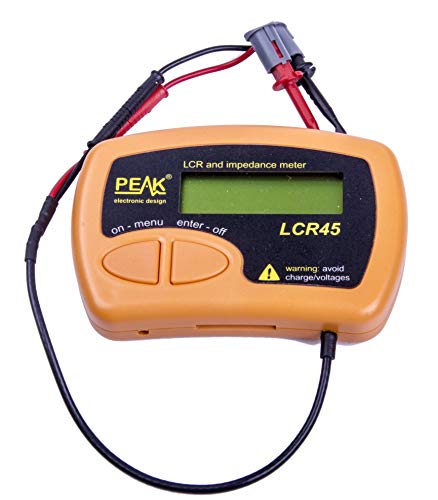
- 0.2 µH stated measurement resolution
- Automatic or manual component selection
- Test frequencies up to 200 kHz
Best For: Portable, menu-driven component testing
Best Simple Pocket Tester

- Auto-ranging inductance measurement
- Backlit LCD for dim work areas
- Overload protection and auto shutoff
Best For: Quick checks and field repairs
Best Versatile Bench Meter

- Displays Q, D, phase, and ESR
- Five frequencies from 100 Hz–100 kHz
- Open/short calibration and limit settings
Best For: Configurable bench testing and diagnostics
Best Bench-Ready Pick
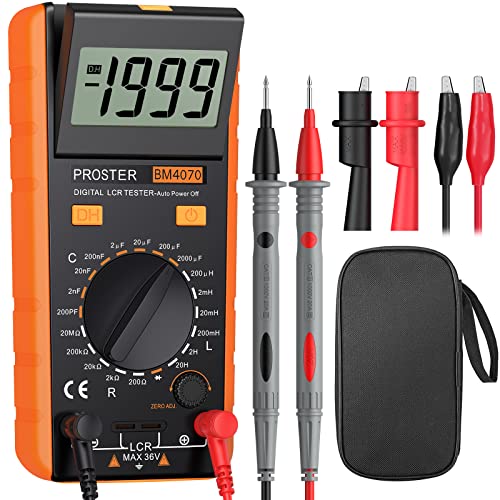
- 200 μH–20 H inductance range
- Rotatable LCD and data hold
- Includes clips, case, and 9V battery
Best For: Hobbyists and general bench component testing
Best for SMD and Frequency Testing
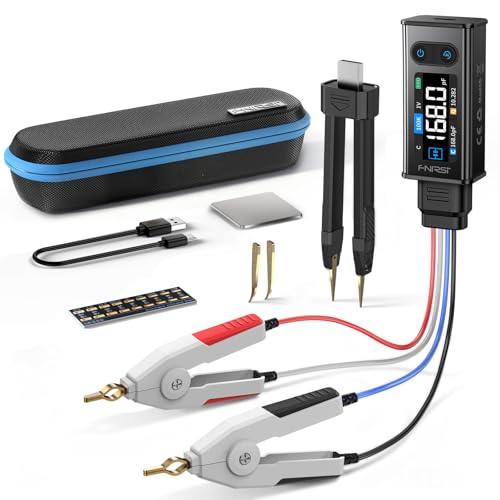
- Scans from 100 Hz to 100 kHz
- Tests 1 μH–10 H inductors
- Includes tweezers and Kelvin clips
Best For: SMD work and multi-frequency diagnostics
Best Full-Featured Analyzer
FNIRSI LC1020E Component Analyzer
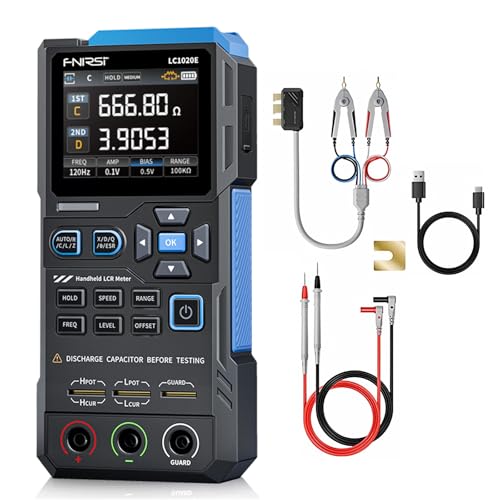
- Automatic and manual ranging
- Tests inductors and many other components
- Color TFT display with SMD tweezers
Best For: Broad component identification and troubleshooting
Versatile Component Analysis
FNIRSI LCR-P1 Transistor Tester

- Tests inductors plus R/L/C, ESR, transistors, diodes, and batteries
- Replaceable patch seat supports tiny and higher-power components
- Rechargeable USB-C design with automatic component identification
Best For: Mixed-component troubleshooting and general electronics testing
Wide-Frequency SMD Testing
FNIRSI LCR-ST2 100kHz Tweezer Meter

- Scans from 100 Hz to 100 kHz
- Measures 1 μH–10 H inductors with X, D, Q, and θ readings
- Includes interchangeable tweezer tips and a rechargeable battery
Best For: SMD, RF-oriented, and detailed component verification
Portable Board Repair
FNIRSI LCR-ST1 10kHz Tweezer Tester

- Measures 1 μH–10 H inductors at 100 Hz, 1 kHz, or 10 kHz
- Reads D, Z, Q, R, and ESR values
- Saves records for PC/Excel export and includes two tweezer heads
Best For: Portable SMD repair and circuit-board troubleshooting
Best High-Frequency Choice – FNIRSI LC1020E
For shoppers comparing lcr meters for inductors, the FNIRSI LC1020E offers broad inductance coverage, multiple test frequencies, and useful secondary readings. Its display and calibration features make it a versatile choice for bench testing and component sorting.
Best For: Technicians and hobbyists who want detailed, adjustable testing and component screening.
Pros:
- Measures inductors from 1 µH to 100 H across frequencies up to 100 kHz.
- Displays primary and secondary values such as Q, D, θ, X, and ESR together.
- Includes open/short calibration, sorting mode, and adjustable test voltage.
- Uses four-terminal Kelvin-style connections for precise measurements.
Cons:
- Requires calibration and careful component preparation before testing.
- Its many settings may be more than casual users need.
The LC1020E stands out when you need frequency flexibility, detailed analysis, and repeatable screening rather than a basic inductance reading.
Best Compact Precision Meter – Peak Atlas LCR45
The Peak Atlas LCR45 is a compact option for lcr meters for inductors when portability and straightforward operation matter. It supports automatic or manual component identification and offers several selectable test frequencies, including 200 kHz.
Best For: Users who want a small, menu-driven meter for portable component testing.
Pros:
- Measures inductance with stated resolution down to 0.2 µH.
- Offers automatic or manual component type selection.
- Provides DC, 1 kHz, 15 kHz, and 200 kHz test-frequency options.
- Includes a hold function and a one-year manufacturer warranty.
Cons:
- The supplied notes do not specify an inductance measurement range.
- It is corded electric rather than battery powered.
Choose the LCR45 if you value a compact form factor, high stated resolution, and flexible frequency selection, while accepting less published range information.
Best Simple Pocket Tester – Pocket LCD Inductance Meter
This pocket circuit-board tester is a practical entry-level pick among lcr meters for inductors. Its auto-ranging design reduces setup work, while the backlit display and automatic power-off suit quick checks at a workbench or in the field.
Best For: Hobbyists, repair technicians, and engineers needing quick inductance checks.
Pros:
- Automatically selects the measurement range for inductors.
- Designed for inductance testing from 1 µH to 100 mH according to the supplied notes.
- Backlit LCD digits improve visibility in dim work areas.
- Includes overload protection and a 10-minute power-off function.
Cons:
- Its stated inductance range is narrower than some full-featured LCR meters.
- The notes do not list secondary readings such as Q, D, or ESR.
- Supplied details do not specify calibration functions or test frequencies.
This tester prioritizes convenience and portability over advanced analysis, making it suitable for fast component identification and basic repair work.
Best Versatile Bench Meter – Extech LCR200
The Extech LCR200 is a well-rounded choice for lcr meters for inductors, combining inductance measurement with Q, D, phase, and ESR readings. Its selectable frequencies, calibration support, and limit settings make it useful for both analysis and pass/fail testing.
Best For: Bench users who need broad measurement functions and configurable component testing.
Pros:
- Measures inductance, capacitance, and resistance with secondary parameter display.
- Offers five test frequencies from 100 Hz to 100 kHz.
- Supports open/short calibration and series or parallel measurement modes.
- Includes a built-in fixture, external leads, and a dual backlit display.
Cons:
- Uses a 9 V battery rather than a rechargeable battery.
- At 0.43 kg, it is heavier than the compact Peak Atlas meter.
- The supplied notes do not state its inductance measurement range.
The LCR200 is a strong general-purpose option when you want adjustable testing, limit comparisons, and richer component diagnostics in one instrument.
Best Bench-Ready Pick – Proster BM4070 LCR Meter
If you want straightforward lcr meters for inductors, the Proster BM4070 covers a useful 200 μH to 20 H range across six inductance settings. Its rotatable LCD, zero adjustment, data hold, and included clips make it a practical choice for bench testing coils, chokes, transformers, and related components.
Best For: Hobbyists, repair work, and general-purpose bench testing where dedicated inductance, capacitance, and resistance ranges are useful.
Pros:
- Measures inductance from 200 μH to 20 H.
- Includes zero adjustment for capacitance and a rotatable display.
- Comes with leads, crocodile clips, battery, case, and an 18-month guarantee.
Cons:
- Uses a 3 1/2-digit display with a 1,999 maximum count.
- Requires a 9V battery rather than built-in rechargeable power.
The BM4070 is a conventional, dedicated LCR meter with broad component-testing coverage and a useful accessory bundle. Choose it when a simple bench instrument matters more than advanced frequency scanning or graphical analysis.
Best for SMD and Frequency Testing – FNIRSI LCR-ST2 100kHz Tester
The FNIRSI LCR-ST2 is one of the more versatile lcr meters for inductors, especially when you test both SMD and through-hole parts. It scans from 100 Hz to 100 kHz, supports inductors from 1 μH to 10 H, and combines tweezer tips with Kelvin clips for flexible component access.
Best For: Electronics diagnostics, SMD work, and users who need multiple test frequencies plus secondary readings such as Q, D, X, and phase angle.
Pros:
- Offers 100 Hz, 120 Hz, 1 kHz, 10 kHz, and 100 kHz scanning.
- Measures inductors from 1 μH to 10 H with selectable RMS test levels.
- Rechargeable USB-C battery, adjustable display, magnet, tweezers, and Kelvin clip included.
Cons:
- Its compact display is only 1.47 inches.
- Its broad feature set may be more than needed for simple pass/fail testing.
For inductor evaluation across different operating frequencies, the LCR-ST2 provides more analytical flexibility than a basic range-based meter. The interchangeable probe setup also makes it particularly convenient for small SMD components.
Best Full-Featured Analyzer – FNIRSI LC1020E Component Analyzer
The FNIRSI LC1020E suits shoppers seeking lcr meters for inductors alongside broader component analysis. It automatically identifies and measures inductors, capacitors, resistors, diodes, transistors, and MOSFETs, while dual ranging modes help balance quick readings with more controlled measurements.
Best For: Hobbyists and professionals who want one battery-powered analyzer for component identification, sorting, and troubleshooting.
Pros:
- Supports automatic and manual ranging.
- Tests inductors, capacitors, resistors, diodes, transistors, and MOSFETs.
- Includes a color TFT display and a 3-pin SMD tweezers clip.
Cons:
- The supplied notes list a 2.4-inch TFT display, while the product title states 2.8 inches.
- Specific inductance measurement limits are not provided in the supplied details.
The LC1020E emphasizes component recognition and broad troubleshooting capability rather than a narrowly specified inductor range. It is a strong fit when identifying unknown parts and checking multiple component types are central to your workflow.
Versatile Component Analysis – FNIRSI LCR-P1 Transistor Tester
For shoppers comparing lcr meters for inductors, the FNIRSI LCR-P1 is a versatile choice when you also need transistor, diode, capacitor, resistor, battery, and ESR testing. Its replaceable patch seat accommodates both small precision components and higher-power devices.
Best For: Electronics troubleshooting, mixed-component testing, and users who want a rechargeable handheld tester with broader diagnostic functions.
Pros:
- Automatically identifies component pins and parameters.
- Supports inductors alongside R/L/C, ESR, transistor, diode, and battery tests.
- Includes a replaceable patch seat, test hooks, color screen, and USB-C charging.
- Automatically discharges undischarged capacitors to help prevent accidental damage.
Cons:
- Its notes do not specify an inductance measurement range or test-frequency selection.
- The compact 1.44-inch display may provide less viewing area than larger instruments.
The LCR-P1 stands out as an all-around component tester rather than a dedicated inductance analyzer. Choose it when versatility, automatic identification, and transistor testing matter as much as checking inductors.
Wide-Frequency SMD Testing – FNIRSI LCR-ST2 100kHz Tweezer Meter
The FNIRSI LCR-ST2 is a strong option for shoppers seeking lcr meters for inductors with wide frequency coverage. It measures inductors from 1 μH to 10 H and offers scans from 100 Hz through 100 kHz, making it suitable for testing components across varied applications.
Best For: SMD work, RF-related checks, component verification, and users who want primary and secondary impedance parameters.
Pros:
- Offers five test frequencies, including 100 kHz, for broad component analysis.
- Measures inductors from 1 μH to 10 H and displays L with X, D, Q, or θ values.
- Provides four RMS test levels and series/parallel modes to help reduce parasitic effects.
- Includes straight and angled tweezer tips, a storage pouch, rechargeable battery, and rear magnet.
Cons:
- Kelvin clips are not included.
- Its listed diode and voltage functions are limited to diode measurements of up to 0.7 V and voltage of ±30 V.
With its 100 kHz upper test frequency, adjustable test levels, and detailed secondary readings, the LCR-ST2 is the most analysis-focused option here. It is particularly appealing when SMD access and frequency flexibility are priorities.
Portable Board Repair – FNIRSI LCR-ST1 10kHz Tweezer Tester
For straightforward board-level work, the FNIRSI LCR-ST1 is a compact pick among lcr meters for inductors. It measures 1 μH to 10 H inductors at 100 Hz, 1 kHz, or 10 kHz, while its tweezer format is designed for SMD repairs and circuit-board fault finding.
Best For: Portable SMD repair, recovering components from used boards, and users who want automatic recognition with record export.
Pros:
- Measures resistance, capacitance, inductance, and diodes across three test frequencies.
- Displays D, Z, Q, R, and ESR values in addition to primary measurements.
- Automatically saves test records and can export data to a PC via Excel.
- Includes pointed and hook tweezer heads, carrying case, and Type-C charging.
Cons:
- Its maximum listed test frequency is 10 kHz, below the LCR-ST2’s 100 kHz.
- The fixed screen does not support flipping or rotating.
- The notes do not mention voltage testing or a magnetic rear mount.
The LCR-ST1 balances essential inductance measurements with useful data logging and interchangeable tweezer heads. It is a practical choice for repair benches where portability and record keeping matter more than high-frequency testing.
How We Picked the Best Lcr Meters for Inductors
We focused on the specifications that matter most when measuring inductors: inductance range, test frequency, accuracy, display readability, automatic component identification, and support for related parameters such as Q factor, ESR, dissipation factor, impedance, and phase angle. We also considered form factor and workflow, including conventional handheld meters, compact component testers, and tweezer-style instruments for surface-mount parts.
Because the 10 selected models serve different users, this list is not based on one feature alone. A high-frequency meter may be better for modern components, while a simpler auto-ranging tester can be more convenient for quick identification and basic repairs.
Quick Comparison
- Best for broad bench testing: Choose a model with a 100 kHz test frequency, expanded parameter readings, and a clear color display.
- Best for SMD work: Tweezer-style LCR meters let you hold and test small components with one hand.
- Best for basic troubleshooting: Compact auto-ranging component testers are convenient for identifying unknown inductors, capacitors, resistors, and semiconductors.
- Best for professional component checks: Look for a dedicated LCR meter with dependable test leads, selectable frequencies, and stronger accuracy specifications.
Key Buying Factors for Lcr Meters for Inductors
Test Frequency
Test frequency affects the result, particularly with inductors whose impedance changes across operating frequencies. A 100 kHz instrument offers a useful advantage for many modern electronics applications, while a 10 kHz tester may be sufficient for general SMD identification and low-frequency work. If you are matching components for a specific circuit, choose a meter that can test near the circuit’s intended frequency.
Measurement Range and Accuracy
Check both the stated inductance range and the accuracy specification. A wide range helps when testing tiny SMD inductors and larger wound parts, but accuracy, resolution, and stable connections are just as important. Very small inductors may require short leads, careful fixture placement, and compensation to reduce stray effects.
Useful Readings and Controls
Inductance alone may not reveal a component’s condition. Q factor, ESR, impedance, dissipation factor, and phase angle can help evaluate losses and compare parts. Auto-ranging and automatic component detection save time, while manual range or frequency selection is valuable when you need repeatable measurements.
Physical Design
Choose a handheld or benchtop-style meter for versatile lead-based testing. Select tweezers when you regularly test loose SMD components. A readable display, accessible controls, rechargeable power, and included test accessories can make a noticeable difference during longer sessions.
Who Should Buy Which Lcr Meters for Inductors?
Hobbyists and repair technicians should prioritize automatic detection, simple controls, and a broad component range. Designers and advanced electronics users will benefit from higher test frequencies and readings such as Q, ESR, and impedance. SMD-focused builders should choose tweezer-style models for faster, more stable contact. Students and occasional users can save money with a compact tester that identifies common components without requiring extensive setup.
Before buying, confirm the meter’s included leads or tweezers, supported test frequencies, battery or power requirements, and stated accuracy. The best LCR meter is the one that matches both the component sizes you handle and the measurements your circuits actually require.