Montessori classrooms work best when materials are simple, durable, and easy for children to use independently. The right set can support fine motor development, early literacy, counting, sorting, and open-ended exploration.
Below, we focus on versatile options that fit preschool and early elementary learning spaces, with an emphasis on hands-on value, classroom durability, and age-appropriate skill building.
Best 10 Montessori Classroom Material Sets Picks for 2026
STEAM Magnet Board Kit
Metal Loose Parts Learning Kit

- Magnetic board and tray keep pieces organized
- Metal parts support pattern and shape play
- Montessori- and Reggio-inspired for ages 3+
Best For: Preschool and kindergarten STEAM centers
Jumbo Balancing Stones
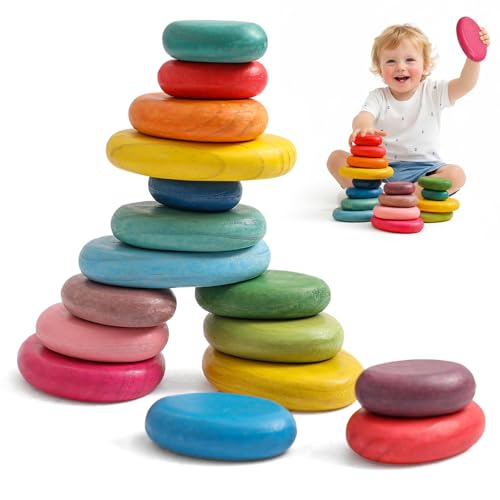
- 16-piece wooden set for balancing and stacking
- Smooth, BPA-free, water-based finish
- Good for fine motor and coordination practice
Best For: Toddlers and open-ended sensory play
Alphabet Match Puzzles

- 52 wooden pieces with labeled matches
- Self-correcting design supports independent learning
- Includes storage box for portability
Best For: Ages 4+ alphabet and letter recognition practice
Life Cycle Match Set

- Figures and flash cards teach life cycles
- Hands-on matching supports science learning
- Safety-certified and made for ages 3+
Best For: Early science lessons and storytelling
Alphabet Writing Aid
Montessori Alphabet Tracing Board

- Natural bamboo wood with smooth finish
- Double-sided uppercase and lowercase tracing
- Compact size for travel and practice
Best For: Early handwriting practice and letter tracing
Sorting and Counting Toy
Wooden Rainbow Bead Sorting Game
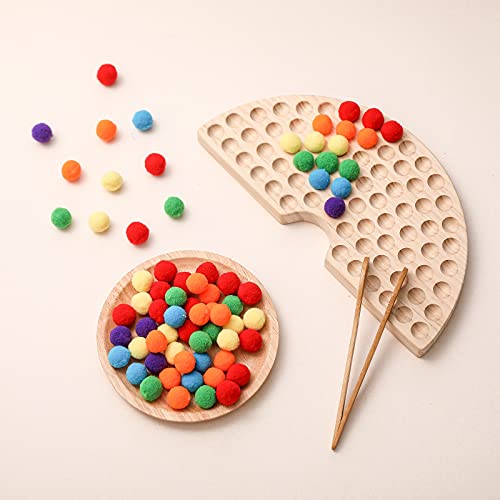
- Natural wood with water-based paint
- Helps with color sorting and counting
- Manual play supports fine motor skills
Best For: Early sorting, counting, and color recognition
Pattern and Shape Builder
142-Piece Wooden Pattern Blocks Set

- Includes 142 pieces plus storage bag
- Supports pattern matching and freestyle building
- Wooden, polished, and water-based painted pieces
Best For: Creative pattern play and fine motor development
Animal Sorting Math Kit
Counting Animals Montessori Toy Set

- 36 animal counters plus 6 sorting bowls
- Teaches counting, color matching, and grouping
- Includes tweezers and storage bucket
Best For: Ages 3-5 preschool math and classroom sorting
Wooden Balance Builder

- 48-piece wooden set with varied shapes
- Supports stacking, sorting, and balancing
- Helps build fine motor and coordination skills
Best For: Ages 3+ creative stacking and balance play
Sequencing and Lacing Set

- Combines sequencing, lacing, and stacking
- Includes 25 beads, stand, laces, and cards
- Builds fine motor, logic, and matching skills
Best For: Ages 3-5 guided preschool manipulation and pattern play
STEAM Magnet Board Kit – Metal Loose Parts Learning Kit
If you’re comparing montessori classroom material sets for hands-on STEAM work, this metal loose parts kit is a simple way to add open-ended exploration to preschool or kindergarten activities. The included magnetic board and tray make it easy to set up patterning, shape-building, and creative design tasks without extra prep.
Best For: Preschool and kindergarten classrooms that want a Montessori-inspired STEAM station for individual or small-group use.
Pros:
- Includes a black magnetic board and round tray for organized play and storage
- Metal pieces attach magnetically, supporting patterns, shapes, and design activities
- Designed for ages 3+ with a Montessori and Reggio-inspired approach
- Useful for fine motor practice and creative thinking during classroom sessions
Cons:
- Best suited to indoor tabletop play
- Set is focused on one style of activity rather than a broad multi-subject curriculum
- Works for one player at a time, so larger groups may need rotation
This is a practical choice if you want a compact, visually engaging classroom material set that supports exploratory learning. Its strength is the blend of organization and open-ended STEAM play in a Montessori-friendly format.
Jumbo Balancing Stones – Extra-Large Stacking Rocks
For Montessori classroom material sets that emphasize sensory play and early construction skills, these extra-large stacking rocks are a straightforward option for toddlers. The 16 wooden pieces are made for open-ended balancing, sorting, and stacking, giving young children a safe way to practice focus and coordination.
Best For: Toddlers ages 1-3 who need a large, tactile stacking toy for open-ended classroom or family play.
Pros:
- Extra-large wooden pieces are designed for small hands
- Supports fine motor skills, hand-eye coordination, and early STEM learning
- Made from solid wood with a smooth, eco-friendly finish
- Useful for classroom, therapy, or family game night settings
Cons:
- Limited to balancing and stacking-style play
- Target age is narrow, so older preschoolers may outgrow it quickly
- Best results come from guided open-ended use rather than structured lessons
This set works well when you want a calm, tactile classroom material that encourages repeated practice without screens or batteries. It’s especially appealing for very young learners who benefit from large, simple, hands-on pieces.
Alphabet Match Puzzles – Self-Correcting Wooden Set
If your goal is to round out montessori classroom material sets with a letter-learning activity, this self-correcting wooden puzzle set is a dependable pick. The 52 pieces and labeled matches help children practice alphabet recognition, vocabulary, and problem-solving through hands-on play.
Best For: Ages 4+ learners who need a portable, screen-free alphabet matching activity.
Pros:
- Self-correcting design helps children check their own matches
- Supports letter recognition, vocabulary building, and fine motor control
- Includes a sturdy storage box for portability and cleanup
- Wooden pieces offer tactile, tabletop learning
Cons:
- Focused mainly on alphabet matching rather than broader classroom play
- Recommended for ages 4+, so it’s not ideal for younger toddlers
- Works best as a one-child or small-table activity
This is a strong literacy-focused addition if you want a classroom material that makes independent practice easy. The self-correcting format gives children a clear way to learn by trial and error.
Life Cycle Match Set – Montessori Figurines Kit
For montessori classroom material sets that teach science through concrete objects, this life cycle figurine kit gives children a clear visual way to explore frogs, butterflies, ladybugs, and plants. The matching cards and 3D figures are built for storytelling, sorting, and discovery-based learning.
Best For: Preschoolers ages 3+ who are learning early life science concepts through matching and storytelling.
Pros:
- Includes animal and plant figures plus flash cards for matching activities
- Designed to show life cycles in a hands-on, visual format
- Supports imagination, creativity, and discovery learning
- Passed Children’s Product Certificate for safety
Cons:
- Topic-specific, so it’s less flexible than a general classroom materials set
- Best for guided science play rather than open-ended building
- Smaller scope may not suit children who need a broader activity mix
This kit is a good fit when you want science content that children can touch, match, and narrate. It works especially well for homeschool or classroom lessons that introduce life cycles in a concrete, memorable way.
Alphabet Writing Aid – Montessori Alphabet Tracing Board
If you’re comparing montessori classroom material sets for early handwriting practice, this wooden alphabet tracing board is a simple, hands-on option. The double-sided layout gives toddlers and preschoolers both uppercase and lowercase letter practice, while the engraved grooves and directional arrows support correct stroke formation.
Best For: Toddlers and preschoolers learning letter tracing, handwriting direction, and fine motor control.
Pros:
- Made from natural solid bamboo wood with a smooth, eco-friendly finish.
- Double-sided board includes uppercase and lowercase letters with arrows for writing direction.
- Compact 9 x 7 inch size works well for portable practice and travel.
- Supports fine motor control, hand-eye coordination, and visual memory.
Cons:
- Only one board is included, so it’s not a full classroom set by itself.
- Focuses on alphabet tracing rather than broader math or sorting activities.
This is a practical pick for families or classrooms that want a focused Montessori writing aid. It’s best viewed as a skill-building supplement rather than a multi-activity learning kit.
Sorting and Counting Toy – Wooden Rainbow Bead Sorting Game
For shoppers browsing montessori classroom material sets that build sorting and counting skills, this rainbow wooden bead game is a straightforward hands-on choice. It is designed to help children recognize colors, count and sort beads, and practice logical thinking through a manual matching activity.
Best For: Preschoolers building color recognition, counting, sorting, and basic fine motor skills.
Pros:
- Made from 100% natural wood with water-based paint and a smooth, burr-free finish.
- Supports color recognition, counting, sorting, grasping, and concentration.
- Manual play encourages parent-child interaction and independent learning.
- Compact single-set format is easy to use at home or in a learning corner.
Cons:
- Designed for one player, so it is less suited to group classroom play.
- Focused on sorting and counting rather than broader language or writing work.
This set fits well as an early STEM-style Montessori activity. It offers a clear developmental focus without adding screens or batteries.
Pattern and Shape Builder – 142-Piece Wooden Pattern Blocks Set
If you want montessori classroom material sets that encourage pattern building and open-ended construction, this 142-piece wooden stick and ring set is a strong fit. The included cards, base, and storage bag support guided activities, while the colorful pieces also invite children to create their own shapes and designs.
Best For: Preschool and early elementary children practicing creativity, problem solving, and fine motor coordination.
Pros:
- Large 142-piece set includes sticks, rings, cards, a wooden base, and storage bag.
- Supports pattern matching, freestyle building, hand-eye coordination, and logical thinking.
- Made from environmental-friendly wood with hand-polished edges and non-toxic water-based paints.
- Storage bag makes it easier to keep pieces organized for home or classroom use.
Cons:
- Smaller pieces may require supervision for younger children.
- Best suited to structured pattern play, so it is not a complete all-in-one learning set.
This set offers more variety than a single-skill toy and works well for quiet, hands-on learning. It’s a practical option when you want a classroom-friendly Montessori activity with room for both guided and creative play.
Animal Sorting Math Kit – Counting Animals Montessori Toy Set
If you want Montessori classroom material sets that make early math hands-on, this counting animal set gives children a simple way to sort, count, and match colors. With 36 multi-colored animals, 6 rainbow bowls, and 2 tweezers, it fits preschool learning and small-group activities where kids need a clear, tactile task.
Best For: Preschoolers, teachers, and parents looking for a compact sorting and counting activity for ages 3-5.
Pros:
- Includes 36 animal counters, 6 sorting bowls, and 2 tweezers for multiple play modes.
- Supports counting, color matching, and animal sorting in one set.
- Useful for home, kindergarten, and classroom practice.
- Made with non-toxic, washable materials and includes a storage bucket.
Cons:
- Best suited to early math and sorting rather than advanced learning.
- Small pieces require supervision for younger children.
This is a practical choice if you need a straightforward manipulatives set that keeps early learners engaged while building foundational number and sorting skills. The included tweezers also add a fine-motor challenge without making the activity complicated.
Wooden Balance Builder – 48 Pcs Stacking Rocks
For Montessori classroom material sets focused on stacking and balance, this 48-piece wooden rocks set gives children an open-ended building activity with enough variety to stay interesting. The irregular shapes, different sizes, and Morandi colors support hands-on play that reinforces concentration, coordination, and spatial awareness.
Best For: Kids ages 3 and up who enjoy stacking challenges, fine motor practice, and creative building.
Pros:
- 48 wooden pieces in varied shapes, sizes, and colors for repeated play.
- Designed to support counting, sorting, stacking, and balancing.
- Helps develop fine motor skills, hand-eye coordination, and spatial awareness.
- Made from natural wood with water-based paint and smooth, hand-polished edges.
Cons:
- Open-ended play may feel less structured than card-based learning sets.
- Stacking difficulty can be challenging for younger toddlers.
This set works well when you want a durable manipulative that can be used for both solo play and cooperative building. It is a strong pick for classrooms or home learning spaces that value creative problem-solving alongside motor-skill practice.
Sequencing and Lacing Set – Wooden Beads Montessori Toy
If you need Montessori classroom material sets that combine sequencing, lacing, and shape matching, this wooden bead set packs several activities into one kit. The 25 colorful beads, wooden stand, lace sticks, and double-sided pattern cards give preschoolers guided practice with matching, threading, and building patterns.
Best For: Preschoolers ages 3-5 who need a multi-skill manipulatives set for sequencing and fine motor work.
Pros:
- Includes beads, a wooden stand, laces, and pattern cards for varied play.
- Supports sequencing, threading, stacking, sorting, and color matching.
- Helps develop logical thinking, observation, hand-eye coordination, and dexterity.
- Made from non-toxic wooden material and sized for small hands.
Cons:
- Small parts mean it is better suited to supervised play.
- Pattern-based activities may be less appealing to children who prefer fully open-ended toys.
This set is a strong all-in-one option when you want both guided learning and hands-on manipulation in a single classroom tool. The mix of lacing and sequencing makes it especially useful for keeping young children focused while practicing core preschool skills.
How We Picked the Best Montessori Classroom Material Sets
We looked for Montessori Classroom Material Sets that encourage independent play, repeated use, and clear skill progression. Priority went to sets with strong educational value, safe child-friendly materials, and enough flexibility for group or individual learning.
We also favored materials that support core classroom goals: practical life, sensory exploration, pre-writing, counting, matching, patterning, and early STEM thinking. For classroom use, storage, size, and durability matter almost as much as the activity itself.
Quick Comparison: What These Sets Are Best for
Some sets are strongest for fine motor practice, such as tracing boards, peg boards, and lacing toys. Others are better for math readiness and classification, like counting bears, sorting sets, and pattern blocks. A few are designed for open-ended construction, which makes them useful for both quiet work and small-group centers.
If you need a single classroom shelf to cover multiple skills, choose a more versatile set with sorting, stacking, or patterning. If you are filling a specific gap, such as alphabet work or sequencing practice, a focused material set may be the better buy.
Key Buying Factors for Montessori Classroom Material Sets
Age Range and Skill Level
Match the material to the children who will use it most often. Toddlers usually need larger pieces, simpler tasks, and more sensory feedback. Preschoolers can handle more precise matching, tracing, counting, and pattern replication.
Open-Ended Vs. Skill-Specific
Open-ended sets support creativity and multiple classroom uses, while skill-specific materials are ideal for targeted lessons. The best classrooms often use both: one type for exploration and one for direct concept practice.
Durability and Safety
Look for smooth finishes, sturdy construction, and pieces that can withstand repeated handling. For shared classroom use, avoid materials that feel flimsy or that require constant supervision to remain practical.
Storage and Organization
Good organization saves time and helps children build independence. Trays, boxes, and clearly separated parts make it easier to reset centers and reduce lost pieces.
Versatility Across Centers
The strongest Montessori Classroom Material Sets can move between math, language, sensorial, and fine motor centers. That kind of flexibility gives better long-term value than a toy with only one narrow use.
Who Should Buy Which Montessori Classroom Material Sets?
If you teach younger toddlers, choose large-piece stacking, sorting, or sensory materials that build coordination safely. For preschool classrooms, alphabet, counting, pattern, and tracing sets usually deliver the most daily use. For mixed-age groups, versatile open-ended sets are often the smartest starting point because they scale easily across abilities.
For special education rooms or children who benefit from tactile learning, materials that support repetition, manipulation, and visual matching can be especially effective. In short, the best choice depends on whether you need broad classroom coverage or a focused tool for a specific developmental goal.