Choosing the right scope can make electronics troubleshooting faster, clearer, and far less frustrating. The best oscilloscopes for electronics repair balance bandwidth, channel count, sampling speed, and ease of use for the kind of faults you actually chase.
In this roundup, we focused on practical options for bench technicians, hobbyists, and field repair work, from capable entry-level handheld units to more serious desktop instruments.
Best 10 Oscilloscopes for Electronics Repair Picks for 2026
Bench-Grade 4-Channel Pick
Siglent SDS1104X-E 100MHz 4-Ch Scope
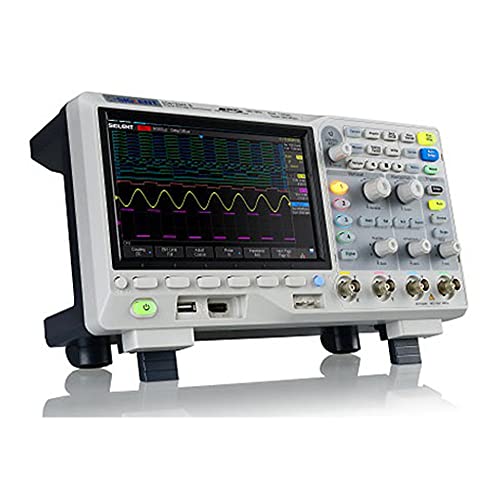
- 4 channels for multi-point troubleshooting
- 100MHz bandwidth with serial decoders
- Includes 4 passive probes and USB cable
Best For: bench repair work with mixed analog and digital signals
Handheld All-in-One Tool

- 50MHz 2-channel handheld oscilloscope
- 19999-count multimeter and signal generator
- Battery powered with Type-C charging
Best For: portable field troubleshooting and quick diagnostics
Deep-Memory 2-Channel Bench Pick

- 200MHz scope with 1GSa/s sampling
- 24Mpts deep memory and 30,000 wfms/s
- Built-in RS232/UART, I2C, and SPI decode
Best For: long-capture troubleshooting and embedded debugging
Touchscreen Repair Combo
FNIRSI 2D15P 100MHz 3-in-1 Scope

- 100MHz handheld oscilloscope with 500MS/s sampling
- Includes TRMS multimeter and 10MHz DDS generator
- 4.3-inch IPS touchscreen with waveform save/export
Best For: hands-on repair work that benefits from an all-in-one touchscreen tool
Bench-Ready 150MHz Pick
Hantek DSO2D15 150MHz 2CH Bench Scope

- 150MHz bandwidth with 1 GSa/s sampling
- 8M memory depth and 32 auto measurements
- Built-in 25MHz waveform generator
Best For: Bench repair work needing higher bandwidth and signal generation
Portable Meter-Scope Combo
FNIRSI DST-210 3-in-1 Handheld Scope Meter

- 10MHz handheld scope with 48 MSa/s sampling
- 19999-count multimeter with temperature support
- DDS generator for up to 50kHz waveform output
Best For: Mobile repair and automotive diagnostics with one compact tool
High-Speed Field Analyzer
FNIRSI DPOS350P 350MHz Handheld Scope

- 350MHz bandwidth with 1 GSa/s sampling
- FFT spectrum and frequency response analysis
- DDS generator up to 50MHz
Best For: Advanced repair and signal analysis in a portable format
Budget Portable Upgrade
FNIRSI DSO510 2-in-1 Scope/Generator
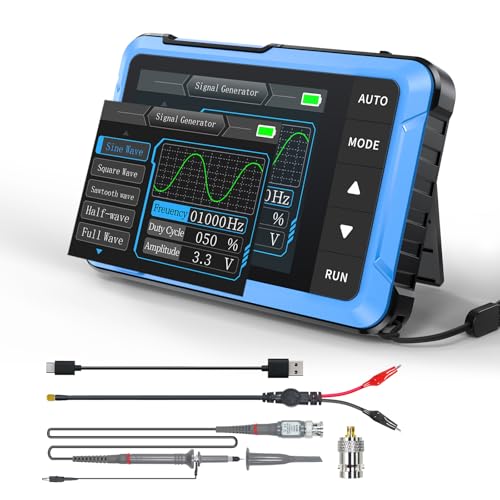
- 10MHz bandwidth and 48MS/s sampling
- Built-in DDS generator with 13 waveforms
- Includes 10X probe for up to 400V measurement
Best For: Repair techs wanting a compact scope with signal generator support
Simple Pocket Diagnostic

- 200kHz bandwidth with 2.5MS/s sampling
- Auto, Normal, and Single trigger modes
- Pocket-sized with Type-C charging and 4-hour battery life
Best For: Beginners and field repairs where portability matters
All-in-One Repair Tool

- 15MHz bandwidth and 60MS/s sampling
- Scope, multimeter, and signal generator in one
- SD card storage for waveform saving
Best For: Technicians who want a compact multi-tool for repair work
Bench-Grade 4-Channel Pick – Siglent SDS1104X-E 100MHz 4-Ch Scope
Siglent Technologies SDS1104X-E 100Mhz Digital Oscilloscope 4 Channels Standard Decoder, Grey
Check Price On AmazonFor oscilloscopes for electronics repair, the Siglent SDS1104X-E is the most bench-focused option here: a 100MHz, 4-channel desktop scope with standard serial decoders and four included passive probes. It gives you the channel count and decode support that make it easier to trace power rails, compare signals, and troubleshoot embedded devices without constantly swapping leads.
Best For: Repair technicians and hobbyists who want a full-size 4-channel bench oscilloscope with built-in protocol decoding.
Pros:
- 4 analog channels for comparing multiple test points at once
- 100MHz bandwidth with standard decoders for I2C, SPI, UART/RS232, CAN, and LIN
- Includes 4 passive probes, USB cable, and calibration certificate
- Desktop form factor suits a permanent electronics repair bench
Cons:
- Bulkier and less portable than handheld repair scopes
- MSO and USB AWG features are optional on this series, not included by default
This is the strongest all-around bench choice if your repair work involves mixed analog and digital troubleshooting. The extra channels and decoder support make it especially useful when you need to see how signals interact across a board.
Handheld All-in-One Tool – FNIRSI 2C53T Scope Multimeter
If you want a compact option among oscilloscopes for electronics repair, the FNIRSI 2C53T combines a 50MHz, 2-channel oscilloscope, a 19999-count multimeter, and a DDS signal generator in one battery-powered handheld unit. It is geared toward field troubleshooting and quick diagnostics when you need scope, meter, and signal source functions without carrying separate tools.
Best For: Mobile technicians, students, and hobbyists who want a portable 3-in-1 diagnostic tool.
Pros:
- 3-in-1 design combines oscilloscope, multimeter, and signal generator
- 50MHz bandwidth with 250MSa/s sampling and math/cursor features
- Built-in 3000mAh battery for up to 6 hours of standby time
- Includes Type-C charging and waveform save/export support
Cons:
- 2 channels only, so it is less flexible than a 4-channel bench scope
- 1Kpts record depth is modest for deeper capture needs
This model is a practical grab-and-go repair tool when portability matters more than lab-level depth. Its combined functions make it especially useful for quick checks, automotive-style work, and general troubleshooting on the move.
Deep-Memory 2-Channel Bench Pick – RIGOL DS1202Z-E 200MHz Scope
For electronics repair work that benefits from capturing longer events, the RIGOL DS1202Z-E offers a 200MHz, 2-channel platform with up to 1GSa/s sampling and deep memory up to 24Mpts. Its high waveform capture rate and intensity-graded display are useful when you need to spot intermittent glitches, noise, or jitter during board-level troubleshooting.
Best For: Repair benches that need strong capture performance, serial decoding, and long-record analysis.
Pros:
- 200MHz bandwidth with up to 1GSa/s real-time sampling
- Deep memory up to 24Mpts for longer captures
- Up to 30,000 wfms/s capture rate helps reveal intermittent problems
- Supports RS232/UART, I2C, and SPI decoding plus LAN connectivity
Cons:
- Only 2 channels, so simultaneous multi-point checking is limited
- Bench scope design is less portable than handheld repair tools
This is the best choice here if your repair workflow depends on seeing both fast transients and long captures. The memory depth, capture speed, and decode tools make it especially well suited to debugging embedded and digital circuits.
Touchscreen Repair Combo – FNIRSI 2D15P 100MHz 3-in-1 Scope
For oscilloscopes for electronics repair where you want a more modern handheld layout, the FNIRSI 2D15P combines a 100MHz 2-channel oscilloscope, a 19,999-count TRMS multimeter, and a 10MHz DDS generator in one compact touchscreen device. Its 4.3-inch IPS touchscreen, afterglow, cursor measurement, and save/export functions are aimed at faster day-to-day fault finding.
Best For: Technicians who want a touchscreen handheld scope with stronger bandwidth and built-in test utilities.
Pros:
- 100MHz bandwidth with 500MS/s sampling
- 3-in-1 design adds a TRMS multimeter and 10MHz DDS signal generator
- 4.3-inch IPS touchscreen makes operation fast and intuitive
- Includes memory depth options up to 1M for waveform capture
Cons:
- Still limited to 2 channels for multi-signal comparison
- Handheld format may not replace a full bench scope for heavy lab use
This model sits in a strong middle ground between portability and capability. It is a sensible choice if you want a single tool for repair, measurement, and signal generation without moving up to a full desktop scope.
Bench-Ready 150MHz Pick – Hantek DSO2D15 150MHz 2CH Bench Scope
Hantek DSO2D15 Digital Storage Oscilloscope 150MHz 1GSa/s 8M,2 Channel,2CH+1CH with Signal Source
Check Price On AmazonFor oscilloscopes for electronics repair, the Hantek DSO2D15 is a strong bench choice when you want more bandwidth, memory, and measurement features than a basic handheld can offer. Its 150MHz bandwidth, 1 GSa/s sampling, and 8M memory depth make it a practical fit for tracing faster signals, while the built-in waveform generator and protocol decode tools help round out day-to-day troubleshooting.
Best For: Bench repair work that benefits from higher bandwidth, deeper capture memory, and built-in signal generation.
Pros:
- 150MHz bandwidth with 1 GSa/s real-time sampling for more demanding repair tasks.
- 8M memory depth plus 32 auto measurements and statistics for detailed signal checks.
- Built-in 25MHz waveform generator with arbitrary and burst output support.
- Protocol decoding for RS232/UART, I2C, SPI, CAN, and LIN.
Cons:
- Bench-sized design is less portable than handheld options.
- Features may be more than needed for very simple electronics repair.
This model stands out if you want a more capable repair scope with analysis tools built in. It combines display size, capture depth, and signal-source functionality in one unit, which can reduce the need for extra test gear.
Portable Meter-Scope Combo – FNIRSI DST-210 3-in-1 Handheld Scope Meter
If you want oscilloscopes for electronics repair that also cover multimeter duties, the FNIRSI DST-210 is built for field work and quick diagnostics. It combines a 10MHz handheld oscilloscope, a 19999-count digital multimeter, and a DDS signal generator in one compact unit, making it useful when you need to measure, verify, and simulate signals without carrying separate tools.
Best For: Mobile repair, automotive diagnostics, and quick troubleshooting with one handheld device.
Pros:
- 3-in-1 design with oscilloscope, multimeter, and DDS generator functions.
- 19999-count multimeter with AC/DC voltage, current, resistance, capacitance, frequency, diode, and temperature measurement.
- 10MHz bandwidth and 48 MSa/s sampling for basic circuit diagnosis.
- Rechargeable 3000mAh battery and 2.8-inch color TFT screen for portable use.
Cons:
- 10MHz bandwidth is modest for more advanced repair work.
- Smaller display and handheld layout are less expansive than a bench scope.
This is a practical grab-and-go option when versatility matters more than raw performance. It makes sense for technicians who want one tool to handle scope checks, meter readings, and simple signal output in the field.
High-Speed Field Analyzer – FNIRSI DPOS350P 350MHz Handheld Scope
For oscilloscopes for electronics repair that need more speed and more analysis tools, the FNIRSI DPOS350P is the most feature-rich option in this group. It offers 350MHz bandwidth, 1 GSa/s sampling, a 7-inch touchscreen, FFT spectrum analysis, frequency response testing, and a DDS generator, so it goes well beyond basic waveform viewing for troubleshooting and tuning.
Best For: Advanced repair, signal integrity checks, and lab or field work that benefits from a high-bandwidth handheld scope.
Pros:
- 350MHz bandwidth with 1 GSa/s sampling and digital phosphor display.
- FFT spectrum analysis plus spectrum waterfall views for EMI and signal checks.
- Frequency response analyzer for gain, phase, and Bode-style testing.
- Built-in DDS generator with up to 50MHz output and adjustable duty cycle.
Cons:
- More advanced than many basic repair jobs require.
- Handheld design may not replace a full bench instrument for every workflow.
This model is a strong pick when you need both speed and analysis depth in a portable format. Its mix of high bandwidth, touchscreen controls, and test functions makes it well suited to more serious electronics diagnostics.
Budget Portable Upgrade – FNIRSI DSO510 2-in-1 Scope/Generator
If you want oscilloscopes for electronics repair that stay portable without giving up useful extras, the FNIRSI DSO510 is a practical step up from basic handheld models. It adds a 10MHz bandwidth, 48MS/s sampling rate, and a built-in DDS signal generator, so it can handle quick checks on common repair tasks while also helping with simple signal output and testing.
Best For: Repair techs and hobbyists who want a compact oscilloscope with a built-in signal generator for everyday troubleshooting.
Pros:
- 10MHz bandwidth and 48MS/s sampling for broader handheld-use capability
- Includes a 10X probe, with support for measuring voltages up to 400V
- 2-in-1 design combines oscilloscope and DDS signal generator with 13 waveforms
- One-key AUTO function helps speed up waveform setup and measurement
Cons:
- 2.8-inch display is compact for detailed waveform review
- Best suited to lighter repair and diagnostic work rather than advanced bench use
Overall, the DSO510 is a handy portable option if your repair work benefits from both scope readings and basic signal generation in one device. Its upgraded specs and included probe make it a solid value-focused choice for routine electronics checks.
Simple Pocket Diagnostic – FNIRSI DSO152 Handheld Scope
The FNIRSI DSO152 is a straightforward choice if you need oscilloscopes for electronics repair in a small, easy-to-carry format. With 200kHz bandwidth, 2.5MS/s sampling, and one-key AUTO setup, it’s built for quick waveform checks and basic troubleshooting without a complicated learning curve.
Best For: Beginners, field use, and everyday repair checks where portability and simplicity matter most.
Pros:
- 200kHz bandwidth and 2.5MS/s sampling for basic repair diagnostics
- Supports Auto, Normal, and Single trigger modes
- 10X probe can measure up to 400V, with a 2.8-inch HD display
- Built-in 1000mAh battery offers about 4 hours of use and Type-C charging
Cons:
- Lower bandwidth than more capable handheld models
- Best for simpler signals rather than demanding electronics work
For quick checks on the bench or in the field, the DSO152 keeps the essentials easy to access. It’s a compact handheld scope that favors convenience and basic diagnostic utility over advanced performance.
All-in-One Repair Tool – ZYKYCX 3-in-1 Scope Meter
For electronics repair, this 3-in-1 handheld tool stands out by combining an oscilloscope, multimeter, and DDS signal generator in one device. With 15MHz bandwidth, 60MS/s sampling, and SD card storage, it gives you more flexibility when diagnosing waveforms, checking component values, and saving results for later review.
Best For: Technicians who want one portable tool to handle waveform testing, basic multimeter checks, and signal output.
Pros:
- Combines oscilloscope, 4000-count True RMS multimeter, and signal generator
- 15MHz bandwidth and 60MS/s sampling support more capable handheld troubleshooting
- Three trigger modes plus one-key AUTO for easier waveform capture
- SD card storage lets you save and review waveforms later
Cons:
- Multi-function layout may be more than you need for simple spot checks
- Portable 3.2-inch display is smaller than a bench scope screen
This model makes sense if you want fewer tools to carry without giving up key repair functions. It’s a versatile option for technicians and hobbyists who need both measurement and waveform generation in the same compact unit.
How We Picked the Best Oscilloscopes for Electronics Repair
We prioritized models that make real repair work easier: enough bandwidth to see common analog and digital signals, usable sampling rates for stable waveforms, and channel counts that help compare inputs and outputs side by side. We also favored scopes with built-in signal generators, decoding, or multimeter functions where those extras add genuine value.
For Oscilloscopes for Electronics Repair, the best choice is not always the highest spec sheet number. It is the model that gives you clean signal visibility, dependable triggering, and the right form factor for your workspace.
Quick Comparison: Bench Vs Portable
Bench scopes generally offer better displays, more stable controls, and stronger performance for repetitive diagnostics. Portable and handheld scopes are better when you need to work on cars, outdoor equipment, or cramped installs. Multi-function units can save money and bench space, but they usually trade away some ease of use compared with a dedicated oscilloscope.
Key Buying Factors for Oscilloscopes for Electronics Repair
Bandwidth and Sampling Rate
Match bandwidth to the signals you actually repair. Lower-frequency audio, power supply, and general appliance work can get by with modest bandwidth, while microcontroller, communications, and faster digital circuits benefit from more headroom. Sampling rate matters too, since it affects how accurately the scope captures edges, glitches, and narrow pulses.
Channels and Probe Compatibility
Two channels are enough for many repairs, but four channels can be valuable when comparing clocks, buses, or multiple rails. Check included probe quality and whether the scope supports standard 10X probes, since that affects both signal loading and usability.
Triggering, Storage, and Analysis Tools
Reliable triggering is essential for catching intermittent faults. Waveform storage, measurement readouts, and decode functions can speed up diagnosis, especially on modern digital boards. If you frequently troubleshoot serial buses, protocol decoding is a strong bonus.
Form Factor and Power
Desktop models suit a fixed bench and usually offer the smoothest workflow. Handheld units are easier to carry and often better for automotive or field repair. If you work in both settings, a compact portable model may be the most practical compromise.
Who Should Buy Which Oscilloscopes for Electronics Repair?
Beginners and hobbyists should look for a simpler scope with enough bandwidth for general troubleshooting and an interface that is easy to learn. Bench technicians who handle mixed-signal work should lean toward higher-bandwidth, multi-channel desktop models. Field repair users, automotive technicians, and anyone working away from a bench will usually be happier with a handheld or portable option.
If you want the most balanced path, choose the scope that best matches your signal range, workspace, and workflow rather than the one with the biggest headline specification.