Choosing the right storage can make editing feel fast and stable instead of sluggish and unpredictable. A good RAID enclosure for video editing helps you move large files, protect footage, and keep timelines responsive.
Below, we focus on enclosures that balance speed, capacity, connectivity, and RAID flexibility so you can match the right setup to your workflow.
Best 10 Raid Enclosure for Video Editing Picks for 2026
Fast 2-bay DAS

- 10Gbps USB 3.2 Gen 2 connection
- RAID 0, 1, JBOD, and Single modes
- Tool-free trays for easy drive installs
Best For: Small editing rigs needing quick direct-attached storage
Large-capacity 5-bay RAID
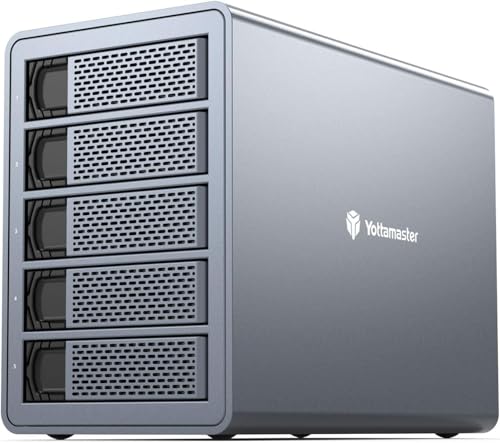
- Up to 120TB across five bays
- RAID 0/1/5/10, JBOD, and CLONE support
- Aluminum build with built-in cooling fan
Best For: Large video libraries and flexible multi-drive storage
Practical 5-bay RAID
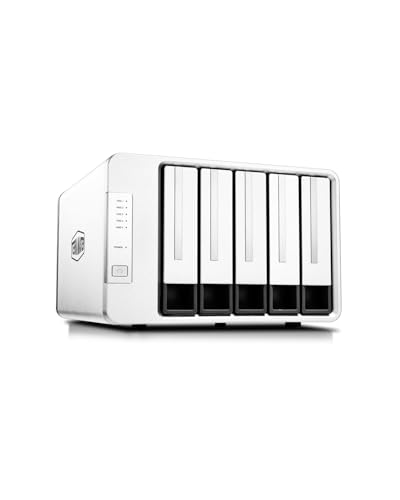
- Hardware RAID with RAID 5/0/1/10/Single
- Windows, macOS, and Linux compatible
- Tool-free bays and backup software included
Best For: Editors wanting simple hardware RAID and broad compatibility
Fastest 5-bay choice
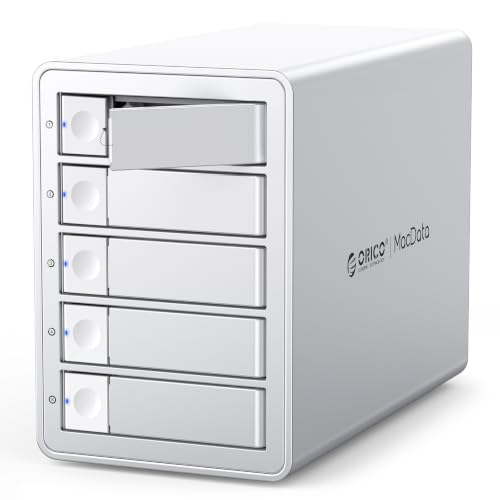
- USB 3.2 Gen 2x2 up to 20Gbps
- RAID 0/1/5/10, JBOD, and Normal modes
- Hot-swap support with aluminum cooling
Best For: High-throughput editing workflows and large file transfers
Hybrid High-Speed RAID
ACASIS 4-Bay USB4 Hybrid Enclosure

- Two SATA bays plus two NVMe bays in one unit
- USB4 40Gbps and Thunderbolt 3/4/5 compatibility
- Active cooling with 96W power supply
Best For: High-speed editing plus backup and archive storage
4-Bay Flexible RAID
4-Bay SATA DAS with Cooling Fan

- RAID 0/1/3/5/10 plus JBOD and Clone
- Up to 96TB with four 24TB drives
- Dual cooling fans for steady operation
Best For: Editors needing a flexible 4-bay SATA RAID enclosure for large media storage
5-Bay High-Capacity RAID

- RAID 0/1/3/5/10, JBOD, Clone, ClearMode
- Up to 110TB across five drives
- 150W PSU with 80mm cooling fan
Best For: Editors who need a five-drive desktop RAID enclosure with lots of storage
USB-C Editing RAID

- RAID 0/1/3/5/10, JBOD, and Clone
- Up to 110TB with 2.5/3.5-inch SATA drives
- USB-C with 80mm temperature-control fan
Best For: Editors wanting USB-C RAID storage with support for both HDDs and SSDs
Fast 2-bay DAS – TerraMaster D2-320
If you want a compact raid enclosure for video editing that prioritizes speed and simplicity, the TerraMaster D2-320 is a strong DAS option. It uses USB 3.2 Gen 2 for up to 10Gbps connectivity and supports RAID 0, RAID 1, JBOD, and Single mode, making it useful for fast project work or mirrored backups.
Best For: Editors who want a small, tool-free 2-bay enclosure for fast scratch storage or mirrored project backups.
Pros:
- USB 3.2 Gen 2 interface with up to 10Gbps transfer speed
- Supports RAID 0, RAID 1, JBOD, and Single modes
- Tool-free trays and push-lock design simplify drive swaps
- Works with 3.5-inch and 2.5-inch SATA HDDs plus 2.5-inch SSDs
Cons:
- Only 2 bays, so capacity is more limited than larger units
- Listed as a DAS rather than a NAS, so it is for direct attachment
For editors who value speed over scale, this enclosure covers the basics well: fast transfers, hardware RAID options, and easy installation. It is a practical fit for smaller editing setups, especially if you need a simple workspace drive or a mirrored backup set.
Large-capacity 5-bay RAID – Yottamaster FS5RU3 5-Bay
The Yottamaster FS5RU3 is a raid enclosure for video editing when storage capacity matters more than top-end interface speed. With five bays, up to 120TB of space, and hardware RAID modes including RAID 0, 1, 5, 10, JBOD, and CLONE, it is built for handling large media libraries and backups.
Best For: Editors who need a roomy 5-bay enclosure for large projects, backups, and multi-drive RAID setups.
Pros:
- Up to 120TB total capacity across 5 drives
- Supports RAID 0, 1, 5, 10, JBOD, CLONE, and Normal modes
- Aluminum body with built-in 80mm low-noise fan for cooling
- Compatible with 2.5-inch and 3.5-inch SATA HDDs and SSDs
Cons:
- USB 3.0 tops out at 5Gbps, which is slower than newer interfaces
- Tool-free installation is not the focus; drives are fixed with screws
This enclosure makes sense for editors managing a lot of footage, especially if you want more drives in one box and flexible RAID choices. It is not the fastest option here, but it offers a strong balance of capacity, cooling, and RAID flexibility for heavier storage needs.
Practical 5-bay RAID – TerraMaster D5-310
The TerraMaster D5-310 is a raid enclosure for video editing aimed at users who want a straightforward 5-bay hardware RAID box with broad OS compatibility. It supports RAID 5, 0, 1, 10, and Single modes, offers up to 120TB of storage, and uses a dedicated RAID knob for easy mode switching.
Best For: Editors who want a dependable 5-bay hardware RAID enclosure with simple controls and Windows, macOS, and Linux support.
Pros:
- Hardware RAID modes include RAID 5, 0, 1, 10, and Single
- Works with Windows, macOS, and Linux without extra drivers
- Tool-free bays support 3.5-inch, 2.5-inch SATA HDDs, and SSDs
- Includes temperature-controlled fans and power-on recovery
Cons:
- USB 3.1 Gen 1 is limited to 5Gbps
- Bulkier 5-bay design takes more desk space than smaller units
For editors who want a practical RAID box rather than the fastest interface, the D5-310 is easy to live with. The hardware RAID controls, cross-platform support, and backup software make it a solid choice for project storage and long-term media management.
Fastest 5-bay choice – ORICO 5-Bay 20Gbps RAID
If speed is the priority in a raid enclosure for video editing, the ORICO 5-bay model stands out with USB 3.2 Gen 2×2 and up to 20Gbps performance. It also supports RAID 0, 1, 5, 10, JBOD, and Normal modes, making it a strong fit for demanding workflows that move large files often.
Best For: Editors and media teams who need fast transfers, hot-swapping, and flexible RAID options in a 5-bay enclosure.
Pros:
- USB 3.2 Gen 2×2 interface with up to 20Gbps bandwidth
- Supports RAID 0, 1, 5, 10, JBOD, and Normal modes
- Built-in 150W power supply for stable multi-drive operation
- Aluminum alloy body with low-noise fan and hot-swap support
Cons:
- Full 20Gbps speed requires a USB4 connection; Thunderbolt is limited to about 10Gbps here
- Designed for 3.5-inch SATA drives, so it is less flexible than some mixed-form-factor enclosures
This is the most performance-focused option in the group, especially if your editing setup can take advantage of USB4. Between the faster interface, multiple RAID modes, and cooling-focused build, it is aimed at users moving a lot of footage and needing stable throughput.
Compact Dual-Bay RAID – QNAP TR-002-A-US 2-Bay USB-C DAS
If you need a straightforward raid enclosure for video editing, the QNAP TR-002-A-US is a compact two-bay DAS built around USB-C and hardware RAID. It works with Windows, macOS, and Linux, and gives you the flexibility to run RAID 0, RAID 1, JBOD, or use each drive individually.
Best For: Editors who want a simple, cross-platform dual-bay storage box for fast working storage or backup.
Pros:
- Hardware RAID 0, RAID 1, JBOD, and individual disk support
- Compatible with Windows, macOS, and Linux
- USB Type-C connection with included Type-A adapter cable
- Lockable drive bays add extra security
Cons:
- Only supports up to two SATA drives
- Diskless model means drives must be purchased separately
- Best suited to simpler workflows rather than large multi-drive arrays
The TR-002-A-US is a practical choice when you want dependable RAID behavior without a lot of setup complexity. It fits well as a small edit bay or a backup unit for a larger workflow.
Hybrid High-Speed RAID – ACASIS 4-Bay USB4 Hybrid Enclosure
This raid enclosure for video editing combines two HDD bays and two NVMe bays in one aluminum unit, so you can separate active project files from bulk storage. With USB4 40Gbps support, hardware RAID 1 on HDDs, and software RAID 0 on NVMe SSDs, it is built for users who want both capacity and speed in the same enclosure.
Best For: Editors who need a hybrid storage setup for fast active work, mirrored backups, and large archives.
Pros:
- Hybrid design with two SATA bays and two NVMe bays
- USB4 40Gbps interface for high-speed transfers
- Supports hardware RAID 1 and software RAID 0
- Active cooling and 96W power supply for demanding workloads
Cons:
- Full 40Gbps speed requires RAID mode and compatible ports
- Performance and capacity depend on the drives you install
- Larger, more complex setup than a basic dual-bay enclosure
If you want one enclosure that can handle editing, backup, and archive storage, this ACASIS model is the most flexible option here. Its hybrid layout makes it especially useful for workflows that mix fast scratch storage with larger hard-drive capacity.
Portable All-Flash RAID – ORICO 2.5-Inch 4-Bay RAID Enclosure
For a compact raid enclosure for video editing, the ORICO 2.5-inch all-flash model focuses on SSD-based speed and portability. It supports 2.5-inch drives only, offers seven RAID modes, and adds extra USB, SD, and TF expansion ports for creators working from laptops or on location.
Best For: Mobile editors and photographers who want a lightweight SSD-focused RAID box with extra card and USB expansion.
Pros:
- Supports seven RAID modes, including RAID 0, 1, 3, 5, 10, JBOD, and CLEAR
- USB 3.2 Gen 2 with up to 10 Gbps performance
- Four expansion ports, including two USB 10Gbps ports and SD/TF card slots
- Compact all-flash design is lighter and more shock resistant than 3.5-inch enclosures
Cons:
- Only supports 2.5-inch drives
- Not intended for 3.5-inch HDDs
- Top speed depends on whether you connect via PSSD or SATA interface
This ORICO enclosure makes sense when portability matters as much as speed. It is a strong fit for laptop-based editing setups and field backup workflows that rely on smaller SSDs.
4-Bay Flexible RAID – 4-Bay SATA DAS with Cooling Fan
If you need a raid enclosure for video editing with solid capacity and straightforward RAID options, the MAIWO 4-bay unit is built for flexible local storage. It supports RAID 0, 1/10, 3, 5, JBOD/Large, and Normal mode, plus it includes both USB-A to USB-C and USB-C to USB-C cables for easy hookup to a workstation.
Best For: Editors who want a 4-bay SATA DAS with multiple RAID modes and active cooling for media libraries and backups.
Pros:
- Supports RAID 0, 1/10, 3, 5, Clone, Large (JBOD), and Normal modes
- Up to 96TB total capacity with four 24TB drives
- Two built-in cooling fans help maintain operating temperatures during heavy use
- Includes USB-A to USB-C and USB-C to USB-C cables
Cons:
- USB interface is rated up to 5Gbps, so it is not the fastest option here
- Only supports 3.5-inch SATA HDDs according to the listing
- Cooling fans are switch-controlled rather than fully automatic
For editors who prioritize flexibility and capacity over raw interface speed, this MAIWO enclosure offers a practical RAID setup with plenty of room for large project files and backups.
5-Bay High-Capacity RAID – 5-Bay USB 3.0 RAID Dock
This raid enclosure for video editing is aimed at users who need large capacity and multiple RAID choices in one desktop unit. The ORICO 5-bay enclosure supports 2.5-inch and 3.5-inch SATA HDDs or SSDs, with RAID 0, 1, 3, 5, 10, JBOD, Clone, and ClearMode for different workflow needs.
Best For: Video editors who want a five-drive enclosure with high capacity, RAID flexibility, and built-in cooling.
Pros:
- Supports RAID 0/1/3/5/10, JBOD, Clone, and ClearMode
- Up to 110TB total capacity with 5 x 22TB drives
- USB 3.0 interface with quoted mechanical-drive speeds up to 230MB/s
- Built-in 150W power supply and 80mm cooling fan
Cons:
- Uses USB 3.0 Type-A rather than USB-C
- Best fit is for desktop-style setups, not portable use
- Mechanical-drive speed claims are specific to the listing and depend on drive type
Overall, this ORICO enclosure is a strong pick when your editing workflow demands a lot of room for source footage, backups, and RAID-based redundancy in one box.
USB-C Editing RAID – 5-Bay USB-C RAID DAS
For a raid enclosure for video editing that leans into USB-C convenience, the Yottamaster 5-bay model combines 110TB capacity with hardware RAID support. It works with both 2.5-inch and 3.5-inch SATA HDDs/SSDs, and the enclosure is designed for straightforward direct-attached storage workflows on Mac, Windows, and Linux systems.
Best For: Editors who want a USB-C RAID enclosure with quiet cooling and support for both HDDs and SSDs.
Pros:
- Supports RAID 0/1/3/5/10, JBOD, and Clone
- Up to 110TB total capacity across five 22TB drives
- USB 3.1 Type-C connection with up to 5Gbps transfer rate
- 80mm intelligent temperature-control fan and aluminum-alloy shell
Cons:
- Total drive power consumption should not exceed 78W
- New drives may need formatting and partitioning before use
- It is a 5-bay desktop enclosure, so it is not a portable solution
With its USB-C interface, broad drive support, and temperature-managed cooling, this Yottamaster enclosure fits well into a modern editing desk setup that needs both capacity and flexibility.
How We Picked the Best Raid Enclosure for Video Editing
For this roundup, we looked at real-world editing priorities: sustained transfer performance, RAID support, drive compatibility, connection type, cooling, and capacity headroom. We also favored models that make sense for a Raid Enclosure for Video Editing, where long file transfers and large project libraries matter more than raw burst speed.
Quick Comparison
Use 2-bay units if you want a compact desktop DAS for active projects, 4-bay options if you need a stronger balance of speed and redundancy, and 5-bay enclosures if your library is growing or you want more room for RAID 5-style setups. USB-C and faster USB 3.2 Gen 2/Gen 2×2 models are better suited to modern editing workstations, while basic USB 3.0 options can still work well for lighter workloads.
Key Buying Factors for Raid Enclosure for Video Editing
Speed and Interface
Match the enclosure to your editing resolution and workflow. For ProRes, BRAW, multicam, or 4K/8K timelines, faster USB-C implementations and higher-bandwidth interfaces reduce bottlenecks. If your drives are mechanical HDDs, the enclosure should still offer stable sustained throughput and not throttle under load.
RAID Mode and Data Protection
Decide whether you want capacity, redundancy, or a mix of both. RAID 0 can maximize speed and space but offers no protection. RAID 1, 5, or hardware RAID options are better when project safety matters. Remember that RAID is not backup; keep a separate copy of critical footage.
Drive Type and Capacity
3.5-inch HDDs deliver the best cost per terabyte for large archives, while 2.5-inch drives and SSDs can improve portability and responsiveness. Make sure the enclosure supports your preferred drive size and the total capacity you expect to grow into over time.
Cooling, Noise, and Build
Editing sessions can run for hours, so active cooling and a solid chassis matter. Better thermal management helps maintain transfer consistency and extends drive life, especially in multi-bay setups.
Who Should Buy Which Raid Enclosure for Video Editing?
If you want a compact desktop unit for a solo editing workstation, a 2-bay model is usually the simplest choice. If you manage current projects plus working backups, a 4-bay enclosure offers a strong middle ground. If you store large media libraries, collaborate frequently, or want more flexible RAID layouts, a 5-bay enclosure is the better fit.
In short, choose the smallest enclosure that still gives you enough speed, redundancy, and room to grow. That keeps your Raid Enclosure for Video Editing practical today without forcing an upgrade too soon.