The right saddle stool can make long drawing, painting, sculpting, or studio sessions more comfortable while keeping you mobile around your workspace. A saddle-shaped seat may also encourage a more upright posture than a traditional flat stool.
We compared 10 adjustable rolling models across seat design, back support, weight capacity, height range, materials, and practical features so you can choose a saddle stool that fits your body and creative setup.
Best 10 Saddle Stool for Artists Picks for 2026
Best Heavy-Duty Pick
VEVOR Ergonomic Rolling Saddle Stool

- Supports up to 450 pounds
- Thick 2.4-inch PU leather cushion
- Quiet wheels and 21.7–28-inch height range
Best For: Artists needing a sturdy, mobile stool for demanding work sessions
Best Comfort Features

- Wide 16-inch memory-foam seat
- Built-in circular footrest
- Quick assembly and 360-degree swivel
Best For: Artists seeking extra padding and leg support
Best Colorful Budget Option
KKTONER Pink Rolling Saddle Stool
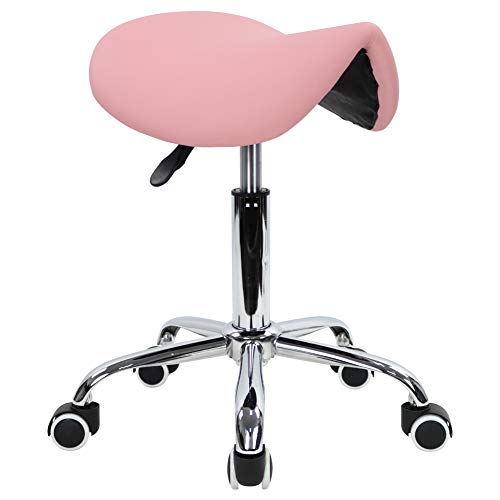
- Bright pink PU leather finish
- 360-degree swivel with five wheels
- Quick assembly and wipe-clean surface
Best For: Artists wanting a simple, colorful stool for hard-floor studios
Best With Back Support

- Tilting, lockable adjustable backrest
- 21–28-inch height range
- 400-pound weight capacity
Best For: Artists who need added lumbar support during long seated sessions
Precision Posture Pick
Ergonomic Saddle Chair with Forward Tilt
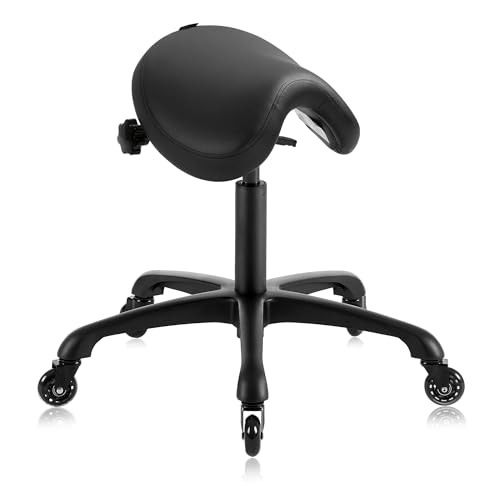
- Front-cut saddle seat with memory foam
- 20–26-inch height adjustment and forward tilt
- 400-pound capacity with aluminum base
Best For: Posture-focused artists doing detailed work
Classic Clinic-Style Pick
Professional Camel Saddle Stool

- Traditional ergonomic saddle seat
- Rolling design with adjustable height
- 400-pound capacity and camel leather finish
Best For: Artists wanting a classic rolling saddle stool
Wide-Range Value Pick

- 21–28-inch hydraulic height range
- Thicker cushion with swivel movement
- Metal base and 400-pound capacity
Best For: Mobile artists needing flexible stool height
Best Budget Pick
Adjustable Rolling Saddle Stool

- 18–26-inch adjustable height
- 360-degree swivel with five casters
- Ergonomic faux-leather saddle seat
Best For: Artists needing an affordable, mobile studio stool
Best With Footrest
Hydraulic Saddle Stool with Back

- 22–26-inch hydraulic adjustment
- Backrest and chrome ring footrest
- Five casters with 360-degree swivel
Best For: Artists working at elevated tables or counters
Best Simple Pick
VEVOR Saddle Stool with Back Support

- 450-pound weight capacity
- 21.7–28-inch height adjustment
- Thick cushion with quiet PU wheels
Best For: Artists wanting substantial support for extended work
Best Heavy-Duty Pick – VEVOR Ergonomic Rolling Saddle Stool
If you need a saddle stool for artists that can handle frequent movement and demanding workdays, the VEVOR rolling stool is a sturdy option. It combines a thick PU leather cushion, a 450-pound capacity, adjustable height, and quiet casters for flexible studio or professional use.
Best For: Artists and professionals who want a highly supportive, height-adjustable stool with a high weight capacity.
Pros:
- Supports up to 450 pounds with a widened metal base.
- Thick, high-density foam cushion with breathable, easy-clean PU leather.
- Height adjusts from 21.7 to 28 inches for varied work surfaces.
- Five 360-degree PU wheels roll quietly across carpet, tile, and hardwood.
Cons:
- The taller height range may be less suitable for low desks or tables.
- The supplied details list a 14.1-inch seat width, which may feel compact for some users.
With its strong capacity, thick cushioning, and quiet wheels, this VEVOR model is a practical choice when stability and mobility matter more than a compact footprint.
Best Comfort Features – YEEZEE Wide Saddle Stool
The YEEZEE is a saddle stool for artists who want extra seat padding and a little more leg support. Its wide memory-foam cushion, circular footrest, swivel function, and 19-to-24.5-inch height adjustment make it adaptable for seated studio tasks.
Best For: Artists who prioritize a wider padded seat, foot support, and simple setup.
Pros:
- Wide 16-inch seat uses thickened high-density memory foam.
- Circular footrest provides convenient leg support.
- 360-degree swivel and adjustable height support flexible positioning.
- Assembly is designed to take less than three minutes.
Cons:
- Its 350-pound capacity is lower than the VEVOR model in this roundup.
- The 19-to-24.5-inch height range may not suit taller work surfaces.
This YEEZEE stool stands out for comfort-oriented details rather than maximum capacity, making it a sensible choice for artists who appreciate a broad cushion and built-in footrest.
Best Colorful Budget Option – KKTONER Pink Rolling Saddle Stool
For artists who want a compact, colorful saddle stool for artists, the KKTONER offers a straightforward rolling design. Its pink PU leather seat, 360-degree swivel, five wheels, and adjustable height suit studio, office, spa, or other hard-floor settings.
Best For: Artists wanting an affordable-looking, easy-clean stool with a distinctive pink finish.
Pros:
- Waterproof, oil- and wear-resistant PU leather is easy to wipe clean.
- Five rolling wheels and a 360-degree saddle seat support easy movement.
- Height adjusts across multiple ranges from approximately 17.7 to 25.8 inches.
- Assembly is estimated at about two minutes.
Cons:
- The listed maximum capacity is 300 pounds, lower than several alternatives.
- The supplied notes specify rolling on hard floors, so surface compatibility may be more limited.
- No backrest or footrest is included.
The KKTONER is a simple pick for artists who value easy cleaning, mobility, and a bright finish, provided its capacity and basic seat-only design meet your needs.
Best With Back Support – Antlu Ergonomic Saddle Stool
The Antlu adds a backrest to the usual saddle-stool format, making it a compelling saddle stool for artists who spend extended periods seated. Its tilting, lockable back support, 21-to-28-inch height range, swivel movement, and 400-pound capacity are geared toward longer work sessions.
Best For: Artists who want lumbar support and a taller height range for desks, counters, or workbenches.
Pros:
- Adjustable backrest tilts from 80 to 110 degrees and can lock in position.
- Height adjusts from 21 to 28 inches for taller work surfaces.
- Supports up to 400 pounds.
- Swiveling seat and wheels allow unrestricted rotation and movement.
Cons:
- The backrest adds bulk compared with a backless saddle stool.
- Assembly takes about five minutes, longer than some options here.
- The supplied details do not specify wheel-surface compatibility.
Choose the Antlu when back support is a priority. Its adjustable backrest and broad height range make it especially useful for artists working at taller stations or sitting for lengthy sessions.
Precision Posture Pick – Ergonomic Saddle Chair with Forward Tilt
If you need a saddle stool for artists who spend hours on detailed work, this model emphasizes posture support and adjustability. Its front-cut saddle seat, memory foam construction, pneumatic height range, and forward-tilt function are suited to tattooing, beauty work, and other close-up tasks.
Best For: Artists and professionals who want forward tilt, memory-foam cushioning, and a 400-pound capacity.
Pros:
- Front-cut saddle design helps reduce pressure on the hips, hamstrings, and lower back.
- Memory foam top layer provides added cushioning for extended sitting.
- Adjusts from 20 to 26 inches and includes a forward-tilt function.
- Heavy-duty aluminum base, quiet casters, and a 400-pound capacity support active workspaces.
Cons:
- Its 20-to-26-inch height range may not suit users who need a very tall drafting stool.
- The faux-leather seat may require more care than fabric upholstery.
Among these saddle stools for artists, this is the most feature-rich option for posture-focused detail work. The forward tilt and pressure-relieving seat design make it particularly practical for long sessions at a workstation.
Classic Clinic-Style Pick – Professional Camel Saddle Stool
This professional saddle stool is a straightforward option for artists seeking a saddle stool for artists with rolling mobility and a traditional ergonomic shape. The camel leather seat, swivel design, adjustable height, and 400-pound capacity make it suitable for studios, salons, and other work areas.
Best For: Users who prefer a classic camel-colored leather saddle seat with smooth rolling movement.
Pros:
- Saddle seat design is intended to encourage a straighter sitting posture.
- Height adjusts approximately from 50 to 75 centimeters for different users.
- Wheels provide easy movement across workspaces and home floors.
- Supports up to 400 pounds and includes a metal frame.
Cons:
- The supplied specifications list a seat height of 29.5 inches, which may be tall for some users.
- It does not list a forward-tilt function or memory-foam construction.
- The camel finish may not coordinate with every studio setup.
This stool focuses on simple mobility and a conventional saddle profile rather than specialized tilt features. Check the height measurements carefully if your art table or workstation is lower than a clinic-style setup.
Wide-Range Value Pick – Antlu Rolling Saddle Stool
For artists who need a saddle stool for artists that can move easily around a room, the Antlu combines a swiveling seat, rolling wheels, and a broad 21-to-28-inch adjustment range. Its thicker cushion and metal base are useful for studios, salons, clinics, and other active workspaces.
Best For: Mobile artists who want a backless stool with a taller adjustment range and 400-pound capacity.
Pros:
- Adjusts from 21 to 28 inches, offering more height than many standard stools.
- Thicker seat cushion is designed for added comfort.
- Swivel seat and wheels allow unrestricted rotation and movement.
- Metal base supports up to 400 pounds.
Cons:
- It has no backrest, so it provides less upper-body support.
- The supplied details do not specify a forward-tilt feature or memory-foam padding.
- Its seat width is listed as 14 inches, which may feel compact for some users.
This is a practical choice when height flexibility and easy repositioning matter most. The backless design keeps movement unrestricted, but users wanting more cushioned or posture-specific support may prefer the first model.
Best Budget Pick – Adjustable Rolling Saddle Stool
For artists seeking a practical saddle stool for artists, the FIRAVOE model combines a body-contouring seat with smooth mobility and a useful 18- to 26-inch height range. Its compact, faux-leather design suits studios and other workspaces where you need to move frequently.
Best For: Artists who want an affordable, mobile stool for studio or detail work.
Pros:
- Adjusts from 18 to 26 inches for different work surfaces.
- 360-degree swivel and five casters support easy movement.
- Ergonomic saddle shape and high-density sponge provide supportive seating.
- Supports up to 300 pounds.
Cons:
- No backrest is included for users who prefer upper-back support.
- The seat is relatively narrow at 14 inches wide.
This is a versatile choice when mobility and adjustable height matter more than back support. The faux-leather upholstery is also easy to maintain with a dry cloth.
Best With Footrest – Hydraulic Saddle Stool with Back
This saddle stool for artists adds a supportive backrest and chrome ring footrest to a mobile, height-adjustable design. The 22- to 26-inch range works well for higher tables, counters, and drafting-style workstations.
Best For: Artists who want back support and a footrest for longer seated sessions.
Pros:
- Hydraulic height adjustment from 22 to 26 inches.
- Backrest encourages additional support during extended work.
- Ring footrest provides extra leg support and stability.
- Five heavy-duty casters and 360-degree swivel improve mobility.
Cons:
- Assembly is required.
- The listed maximum weight recommendation is 250 pounds.
- Its higher seat range may be less suitable for standard-height desks.
Choose this model if your workspace is counter-height or you value a backrest and foot support. Its rolling base makes it convenient for artists who regularly shift between tools or work areas.
Best Simple Pick – VEVOR Saddle Stool with Back Support
The VEVOR is a strong contender for a saddle stool for artists who need substantial support and a broad height range. It pairs a thickened PU-leather cushion with back support, quiet casters, and a metal base rated for up to 450 pounds.
Best For: Artists who prioritize cushioning, weight capacity, and a taller adjustable work position.
Pros:
- Thickened 2.4-inch high-density cushion is designed for extended comfort.
- Adjusts from 21.7 to 28 inches for varied workstations.
- 450-pound weight capacity with a widened metal base.
- Five PU wheels roll quietly across carpet, tile, and hardwood.
Cons:
- The larger base may take more floor space in compact studios.
- The taller height range may not suit low desks.
- Back support can limit the open-sided feel some artists prefer.
This model is the most robust option in the group, especially for users who want thicker cushioning and a higher load rating. Its no-assembly design and wipe-clean PU leather also simplify setup and upkeep.
How We Picked the Best Saddle Stool for Artists
We focused on the features that matter during extended creative work: a supportive saddle profile, smooth rolling movement, stable five-wheel bases, useful height adjustment, and upholstery that is reasonably easy to clean. We also considered whether each stool includes a backrest, foot ring, or forward-tilt mechanism, since artists work at different desk, easel, and drafting-table heights.
Weight capacity, seat padding, overall dimensions, and the likely amount of assembly were also important. No single stool suits every artist, so the comparison emphasizes practical trade-offs rather than treating one design as universally best.
Quick Comparison
| Feature | Why It Matters |
|---|---|
| Height range | Determines whether the stool fits your desk, easel, counter, or drafting surface. |
| Back support | Useful for longer sessions, though it may reduce freedom to lean and rotate. |
| Wheels and swivel | Make it easier to move between tools, canvases, and work surfaces. |
| Seat material | PU or faux leather is generally easy to wipe clean after studio messes. |
| Weight capacity | Provides a basic indication of frame and lift support, but does not replace checking dimensions. |
Key Buying Factors for a Saddle Stool for Artists
Match the Height to Your Work Surface
Measure the height of the seat you need rather than relying only on the product label. A lower setting may suit a desk, while an elevated range is more useful at a counter, standing desk, pottery bench, or tall drafting table. Leave enough clearance for your legs and tools.
Choose the Right Support Style
Backless stools allow easy movement and make it simple to turn toward supplies. Models with backrests provide extra support during long sessions but can take up more space. A forward-tilt design may help when leaning toward detailed work, provided the mechanism feels stable.
Check Mobility and Stability
Rolling wheels are convenient on hard floors and low-pile carpet, but they should move smoothly without making the stool feel loose. A broad five-wheel base, secure hydraulic lift, and a seat that swivels without wobbling are especially important when reaching sideways.
Consider Comfort and Cleanup
Look for adequate padding, a contoured saddle, and upholstery that suits your climate. PU and faux leather wipe clean easily, while breathable fabric may feel better during hot sessions. Confirm the seat width and depth, not just the advertised weight limit.
Who Should Buy Which Saddle Stool for Artists?
Choose a backless rolling saddle stool if you prioritize freedom of movement, compact storage, and quick access around a studio. Pick a model with back support if you regularly work for several hours and prefer a place to rest your lower back. A foot-ring design is useful at taller settings, while a higher-capacity VEVOR model may suit artists who want additional load margin. If your work involves frequent leaning and close-up detail, consider a forward-tilt stool—but verify that its range matches your table or easel.
Before ordering, measure your workspace, check floor compatibility, confirm the return policy, and read the assembly instructions. The best Saddle Stool for Artists is the one that supports your working posture without restricting the movement your creative process requires.