The best stereo microscopes with cameras combine comfortable three-dimensional viewing with digital imaging, making it easier to inspect, document, and share fine details. The models in this roundup range from compact HDMI systems to professional trinocular setups for demanding repair and laboratory work.
When choosing among them, consider magnification range, camera resolution, working distance, lighting, display options, and whether the optical system supports future upgrades. The right configuration depends as much on your workspace and subjects as on headline camera specifications.
Best 10 Stereo Microscopes with Cameras Picks for 2026
Best Professional Boom-Stand Pick
AmScope SM-3T-54S-5M Digital Trinocular Stereo Zoom

- 5MP camera with USB 2.0 and reduction lens
- 7X-45X continuous zoom
- Adjustable boom stand and 54-bulb LED ring light
Best For: Electronics, dental appliances, and larger specimens
Best High-Resolution Repair Setup
TBK-701A 48MP Stereo Microscope with Display
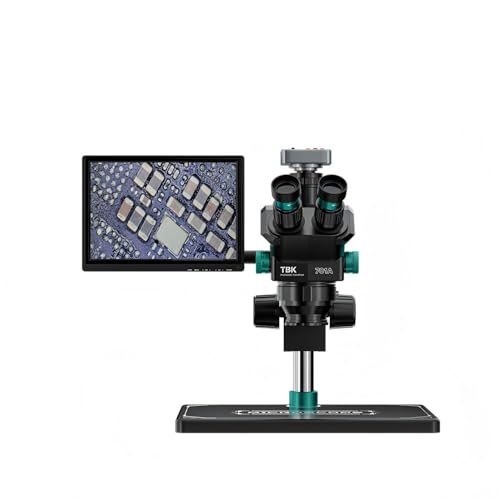
- 48MP camera with external-display support
- 7X-60X continuous zoom
- Heavy-duty metal base for repair work
Best For: Phone repair, PCB soldering, and industrial inspection
Best Versatile Digital Kit
Andonstar AD246S-M 3-Lens 2160P Microscope

- Three lenses for repair, general, and slide viewing
- 2160P video with HDMI output
- Boom arm, remote, software, and microSD card included
Best For: Multi-purpose projects, education, and soldering
Best Expandable Optical Option
SWIFT Trinocular Stereo Zoom Microscope
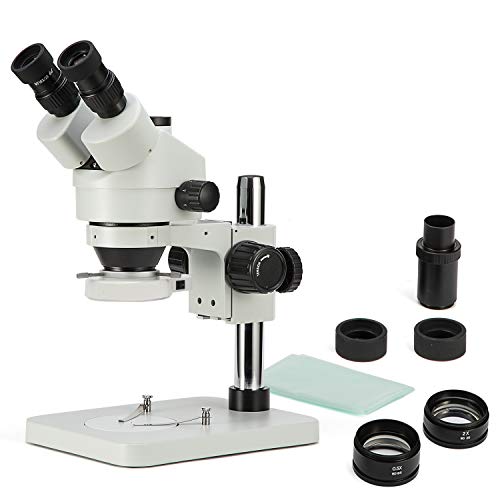
- Trinocular port supports camera attachment
- 3.5X-90X range with auxiliary objectives
- 100mm working distance and 56-bulb LED light
Best For: Professional inspection with a separately selected camera
Industrial Camera Pick
37MP 1080P 60FPS C-Mount Camera

- 1080P at 60FPS for inspection viewing
- HDMI and USB connectivity
- Brightness, color, zoom, and freeze controls
Best For: Industrial inspection and compatible C-mount microscope setups
Professional Zoom Pick
Trinocular Stereo Microscope With Camera Ports

- 3.5X-90X magnification range
- Trinocular head with camera adapters
- Stable boom stand and adjustable LED ring light
Best For: Professional inspection requiring high magnification and camera integration
Budget Digital Pick
AmScope SE306R-PZ-E Stereo Microscope

- 20X, 40X, and 80X listed settings
- Included 640x480 USB camera
- Top and bottom built-in illumination
Best For: Basic digital documentation, education, and hobby inspection
Best for Soldering
Kaisi Trinocular Stereo Microscope

- 7x-50x continuous zoom range
- Camera-ready trinocular viewing
- Includes exhaust fan, ring light, and soldering mat
Best For: Electronics repair and soldering benches
Best Value Camera Setup
ZTEEERS Trinocular Stereo Microscope

- 6x-45x zoom magnification
- Includes 0.5x CTV adapter
- 56-bulb LED ring light
Best For: Camera-ready inspection and documentation
Best for Large Workpieces
AmScope SM-3T Trinocular Microscope

- Long working distance for large items
- Adjustable 16-inch boom arm
- Trinocular head with 0.7x-4.5x zoom
Best For: Circuit boards, dental appliances, and large specimens
Best Professional Boom-Stand Pick – AmScope SM-3T-54S-5M Digital Trinocular Stereo Zoom
For buyers seeking stereo microscopes with cameras for electronics, dental appliances, or larger specimens, the AmScope SM-3T-54S-5M combines a trinocular viewing head, continuous zoom, and a built-in 5MP camera. Its boom stand and long working distance are especially practical when you need room to manipulate a workpiece.
Best For: Electronics repair, dental-appliance work, and users who need computer or projector imaging.
Pros:
- 5MP camera includes USB 2.0 output and a 0.5X reduction lens.
- 7X-45X continuous zoom with a long focal length suits larger specimens.
- Boom arm provides an 8-inch vertical working distance and 16-inch adjustable reach.
- Rheostat-controlled 54-bulb LED ring light offers adjustable, cool illumination.
Cons:
- Camera connectivity is limited to USB 2.0.
- The corded-electric system may be less convenient for mobile setups.
Choose this model when working distance, a stable boom stand, and straightforward computer imaging matter more than portability. The 5MP camera and 45-degree rotating trinocular head make it a capable documentation-focused workstation.
Best High-Resolution Repair Setup – TBK-701A 48MP Stereo Microscope with Display
The TBK-701A is one of the more display-oriented stereo microscopes with cameras, pairing a 48MP industrial camera with external-display support. Its 7X-60X continuous zoom is designed for moving from broad circuit-board views to detailed BGA, IC, and soldering inspection.
Best For: Phone repair, motherboard maintenance, PCB soldering, and technician training stations.
Pros:
- 48MP camera is designed for high-resolution imaging.
- External display support enables real-time viewing.
- 7X-60X continuous zoom covers overview and micro-level repair work.
- Heavy-duty metal base, adjustable column, and LED ring light support stable operation.
Cons:
- Its repair-focused design may be excessive for casual specimen viewing.
- The supplied warranty is one year.
- At 12.8 pounds, it is not a particularly lightweight workstation.
This is a strong fit for dedicated electronics benches where display-based inspection and high-resolution camera output are priorities. The stable base and broad zoom range should help during delicate, repeated repair work.
Best Versatile Digital Kit – Andonstar AD246S-M 3-Lens 2160P Microscope
For shoppers comparing stereo microscopes with cameras against more flexible digital systems, the Andonstar AD246S-M stands out for its three interchangeable lenses and 2160P video. It can cover soldering, coins, plants, stones, and biological slides, while HDMI output and a bundled display-oriented setup support demonstrations.
Best For: Multi-purpose viewing, soldering projects, education, and users who want recording and HDMI display options.
Pros:
- Three lenses address repair, general observation, and biological-slide viewing.
- 2160P recording supports HDMI output to a larger screen.
- Pro boom arm offers front-to-back, side-to-side, and angle adjustment.
- Includes measurement software compatibility, remote control, adjustable LEDs, and a microSD card.
Cons:
- It uses interchangeable lenses rather than a continuous stereo zoom objective.
- The listed maximum magnification depends on digital zoom and lens/output configuration.
- Its broad, multi-purpose design may be less specialized for professional stereo inspection.
This model makes sense when flexibility and screen-based documentation are more important than traditional binocular stereo viewing. The included lenses and accessories make it a practical all-purpose kit for home, classroom, and repair use.
Best Expandable Optical Option – SWIFT Trinocular Stereo Zoom Microscope
The SWIFT trinocular model is a useful choice among stereo microscopes with cameras when you want an optical platform that can accept a camera through its vertical trinocular port. It offers a 7X-45X primary range, included auxiliary objectives, and a broad working-distance setup for professional inspection.
Best For: Gemology, engraving, electronics, collecting, semiconductor work, and camera-ready laboratory inspection.
Pros:
- Vertical trinocular port supports camera attachment and image capture.
- Included 0.5X and 2.0X objectives expand the stated range from 3.5X to 90X.
- 100mm working distance provides room for hands-on work.
- 56-bulb LED ring light delivers bright, shadow-free, low-heat illumination.
Cons:
- A camera is not listed among the supplied built-in components.
- Camera imaging may require purchasing a compatible camera separately.
- The primary zoom objective is listed as 0.7X-4.5X, so auxiliary objectives are needed for the full range.
Consider this SWIFT when you prefer a flexible optical microscope and want to choose the camera separately. Its sturdy stand, ergonomic head, auxiliary objectives, and cool ring light make it well suited to precision work across several fields.
Industrial Camera Pick – 37MP 1080P 60FPS C-Mount Camera
For shoppers comparing stereo microscopes with cameras, this Goldmeet digital C-mount camera is a flexible option for adding live digital viewing and documentation to a compatible microscope setup. It supports 1080P at 60FPS, HDMI and USB connectivity, and image adjustments suited to inspection work.
Best For: Industrial quality control, electronics inspection, material analysis, and users who already have a compatible C-mount microscope.
Pros:
- Supports sharp 1080P, 60FPS viewing for detailed inspection work.
- HDMI and USB outputs allow connection to monitors, computers, and other devices.
- Offers automatic or manual brightness, RGB adjustment, digital zoom, freeze, and TF card support for HDMI output.
- Metal construction is designed for durability in demanding work environments.
Cons:
- This is a camera rather than a complete stereo microscope.
- Compatibility depends on having the appropriate C-mount setup and connections.
Choose this model when digital output and inspection documentation matter more than an all-in-one microscope package. Its broad connectivity and image controls make it practical for established lab or workshop systems.
Professional Zoom Pick – Trinocular Stereo Microscope With Camera Ports
Among stereo microscopes with cameras, this ZTEEERS trinocular model stands out for its wide 3.5X-90X magnification range and dedicated camera connection options. It combines a zoom optical system, boom stand, auxiliary lenses, and adjustable LED ring illumination for detailed hands-on observation.
Best For: Users who need high-magnification stereo inspection, a flexible working distance, and simultaneous eyepiece-and-camera observation.
Pros:
- Trinocular head includes two adapter configurations for electronic eyepieces and digital cameras.
- 0.7X-4.5X zoom with 0.5X and 2X auxiliary lenses expands magnification from 3.5X to 90X.
- Heavy-duty steel base and single-arm boom stand provide a stable, flexible platform.
- 56S LED ring light delivers adjustable, focused, shadow-free illumination.
Cons:
- The large 19.5-inch dimensions and 18-pound base weight require substantial bench space.
- Digital camera connection is supported through adapters, but a camera is not identified as included.
This is the strongest choice here for buyers building a complete professional stereo inspection station. Its broad magnification range and stable boom design offer flexibility, while the trinocular port leaves room for future digital imaging.
Budget Digital Pick – AmScope SE306R-PZ-E Stereo Microscope
For buyers seeking accessible stereo microscopes with cameras, the AmScope SE306R-PZ-E pairs 20X, 40X, and 80X settings with a forward-mounted binocular head and a 640×480 USB 2.0 camera. Its built-in top and bottom lighting also supports routine specimen viewing.
Best For: Basic documentation, educational use, hobby inspection, and Windows or Mac users who want an included USB camera.
Pros:
- Provides three listed stereo magnification settings: 20X, 40X, and 80X.
- Includes a 640×480 USB 2.0 digital camera for photos and videos.
- Built-in incident and transmitted lights support viewing from above and below.
- Windows software includes recording, measurement, stitching, and extended-depth-of-field features.
Cons:
- The included camera has a modest 640×480 resolution.
- Advanced software features are specified for Windows only.
- The listed maximum magnification details are inconsistent, so buyers should verify the intended configuration.
This AmScope is a practical entry point when an included camera and straightforward magnification options are more important than high-resolution imaging. It is best suited to routine observation rather than demanding industrial documentation.
Best for Soldering – Kaisi Trinocular Stereo Microscope
For shoppers comparing stereo microscopes with cameras, the Kaisi trinocular model is designed around electronics repair and soldering. Its 7x-50x zoom range, camera-ready third port, wide-field eyepieces, exhaust fan, LED ring light, and integrated work surface make it a practical workstation-style option.
Best For: Electronics repair, soldering, and bench work requiring camera compatibility and smoke management.
Pros:
- Trinocular design supports camera use while retaining the left eyepiece field of view.
- Continuous 7x-50x magnification suits a range of repair tasks.
- Includes a soldering exhaust fan, LED ring light, silicone mat, and parts trays.
- WF10x23 wide-field eyepieces are designed to help reduce eye and neck fatigue.
Cons:
- The included camera is not specified, so a camera may need to be purchased separately.
- Correct lens installation and working-distance adjustment are required for clear focus.
- The corded unit uses 120-volt power.
The Kaisi stands out when the microscope needs to double as a soldering station. Its accessories are especially useful for repair work, while the trinocular layout provides a straightforward path to adding a computer, laptop, smartphone, or tablet.
Best Value Camera Setup – ZTEEERS Trinocular Stereo Microscope
This ZTEEERS model is a camera-friendly choice among stereo microscopes with cameras, pairing a trinocular head with a 0.5x CTV adapter. Its 6x-45x range, 56-bulb LED ring light, and aluminum-alloy stand provide a balanced setup for detailed observation and documentation.
Best For: Users who want binocular viewing plus a camera port and a larger field of view through the included 0.5x CTV adapter.
Pros:
- Trinocular head allows simultaneous binocular observation and camera attachment.
- Provides 6x-45x zoom magnification with WF10x eyepieces.
- 56-bulb LED ring light delivers bright, uniform specimen illumination.
- Aluminum-alloy frame and pillar stand offer a stable base.
Cons:
- The supplied notes identify a 0.5x CTV adapter but do not specify a camera.
- Its maximum magnification is lower than the Kaisi model in this roundup.
- The 110-volt power specification may require attention when used outside compatible outlets.
The ZTEEERS is a sensible middle-ground option for inspection and documentation. The CTV adapter is useful for achieving a wider, clearer view, while the continuous handwheel zoom supports quick magnification changes during observation.
Best for Large Workpieces – AmScope SM-3T Trinocular Microscope
The AmScope SM-3T is a strong fit for buyers seeking stereo microscopes with cameras and generous workspace. Its trinocular head, 0.7x-4.5x continuous zoom objective, long working distance, and adjustable boom stand make it well suited to circuit boards, dental appliances, and other larger specimens.
Best For: Large workpieces and hands-on inspection where long reach and flexible positioning matter.
Pros:
- Trinocular viewing head supports camera compatibility and group viewing.
- Long working distance accommodates large items and manipulation beneath the lens.
- 8-inch vertical working distance and adjustable 16-inch boom provide positioning flexibility.
- 45-degree head inclination and adjustable interpupillary distance are designed for comfortable viewing.
Cons:
- The supplied notes do not identify an included camera or camera adapter.
- It uses ambient lighting rather than an included powered ring light.
- The boom-stand setup is substantially heavier than the other listed options.
The SM-3T prioritizes reach and workspace over built-in illumination. Its boom arm and long working distance make it the most suitable choice here for inspecting or manipulating sizable objects while retaining a trinocular path for camera documentation.
How We Picked the Best Stereo Microscopes with Cameras
We focused on the features that matter most in real inspection and repair work: usable zoom ranges, binocular or trinocular viewing, camera connectivity, illumination, working distance, ergonomic controls, and overall versatility. The selection includes complete microscope-and-camera systems as well as camera-ready trinocular microscopes and standalone C-mount options.
Because product specifications vary widely, we treated maximum digital resolution cautiously. Optical quality, sensor performance, software compatibility, stable focusing, and good lighting often have a greater effect on useful images than a large megapixel number alone.
Quick Comparison
| Best For | Look For | Why It Matters |
|---|---|---|
| Electronics repair | Long working distance, smooth zoom, bright ring light | Leaves room for tools and reduces eye strain |
| Documentation and teaching | Trinocular port, HDMI or USB output, external display support | Makes live viewing and image capture easier |
| Detailed inspection | Stable stand, fine focus, quality optics | Improves clarity at higher magnifications |
| Flexible upgrades | Standard C-mount compatibility and interchangeable lenses | Allows future camera or optical changes |
Key Buying Factors for Stereo Microscopes with Cameras
Optical Magnification and Working Distance
Check the practical range rather than relying only on the maximum figure. A broad zoom range is useful for switching between locating a component and examining a solder joint. Working distance is equally important: more space beneath the objective makes tweezers, probes, and repair tools easier to use.
Camera Resolution and Connection
USB cameras are convenient for computers and recording, while HDMI models can provide low-latency viewing on a monitor without requiring specialized software. High-resolution sensors can help with documentation, but image quality also depends on the lens, illumination, frame rate, and camera software. Confirm operating-system compatibility and whether the camera is included or sold separately.
Lighting and Ergonomics
An adjustable LED ring light gives even illumination for many subjects, but diffusers or auxiliary lighting may be helpful for reflective metal and glossy components. Look for a stable base, comfortable eyepieces, smooth focus, and controls that are easy to reach during long sessions.
Expandability
Trinocular designs are usually the best choice for simultaneous eyepiece viewing and camera use. Check the mount size, included adapters, auxiliary lenses, and whether accessories are proprietary. A compatible 0.5X lens can increase working distance and widen the field of view, while a higher-power auxiliary lens favors close detail.
Who Should Buy Which Stereo Microscopes with Cameras?
Choose a complete digital microscope with HDMI or an external display if you want a straightforward setup for demonstrations, inspection, or occasional documentation. A trinocular stereo zoom model is better for electronics technicians, makers, and professionals who need comfortable eyepiece viewing while capturing images or video.
For soldering and repair, prioritize long working distance, smooth zoom, a strong stand, and shadow-free lighting over extreme advertised magnification. For classrooms or shared workspaces, favor simple controls, live-display support, and included accessories. If you already own a suitable microscope body, a standalone USB or C-mount camera may be the most economical upgrade—but verify adapter compatibility before buying.