City lights do not have to end your astronomy hobby. The right telescope can make the Moon, planets, brighter star clusters, and selected deep-sky targets rewarding to observe from a balcony, backyard, or urban park.
These 10 picks cover smart telescopes, phone-guided models, compact travel scopes, and larger-aperture refractors. Weigh portability, light-pollution performance, ease of setup, and your observing goals before choosing.
Best 10 Telescopes for City Stargazing Picks for 2026
Best Smart Telescope
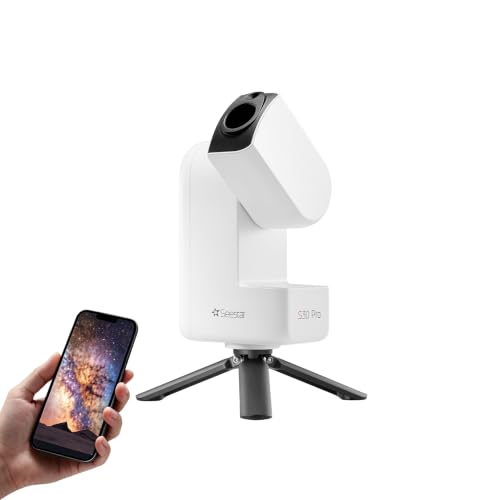
- Automatic GoTo targeting and tracking
- Light-pollution filtering for urban imaging
- Portable 3.6-pound design
Best For: Beginners focused on app-guided deep-sky astrophotography
Best Beginner Reflector
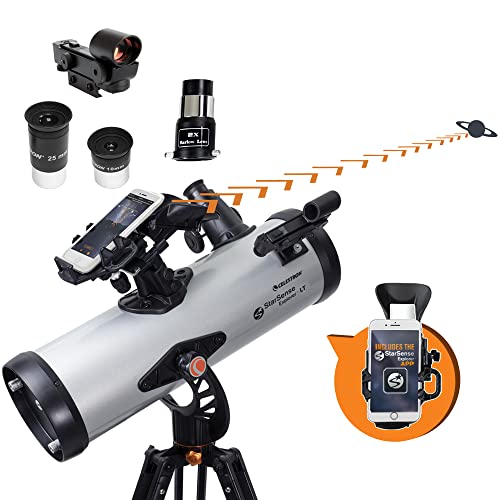
- Smartphone sky-recognition guidance
- 114mm aperture for bright targets
- Includes two eyepieces and 2x Barlow
Best For: Beginners wanting guided, traditional visual astronomy
Best Portable Value

- Backpack and adjustable tripod included
- 30x and 66x eyepiece options
- Moon filter and phone adapter included
Best For: Families and beginners viewing the Moon and bright planets
Best Light-Gathering Power
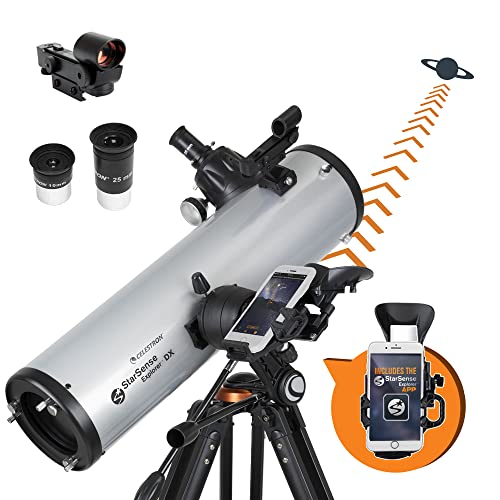
- Largest 130mm aperture in the roundup
- StarSense smartphone target guidance
- Dual-axis slow-motion controls
Best For: Observers wanting brighter visual views from a backyard or balcony
Stable Backyard Choice

- Fully coated 70mm optics
- Simple manual alt-azimuth mount
- Includes finder, eyepieces, and software
Best For: Families wanting easy backyard and daytime viewing
Travel-Friendly City Pick

- Lightweight 4.2-pound telescope kit
- Backpack and no-tool setup included
- 70mm optics for day or night use
Best For: Beginners who observe from balconies, yards, and trips
Large-Aperture City Explorer
MEEZAA 90mm Refractor Telescope

- 90mm aperture with fully multi-coated optics
- 32X–240X stated magnification range
- Tripod, phone adapter, and carry bag included
Best For: Beginners wanting a larger-aperture backyard telescope
Travel-Friendly Starter
ToyerBee 70mm Refractor Telescope

- Lightweight 3.5-pound beginner setup
- 15X–150X stated magnification range
- Phone adapter, remote, star chart, and tripod included
Best For: Families and travelers wanting an easy starter telescope
Long-Focal-Length Detail Seeker
Hawkko 90mm Refractor Telescope

- 90mm aperture with multi-coated optics
- 36X–270X stated magnification range
- Adjustable 28- to 46-inch AZ tripod
Best For: Beginners prioritizing aperture and a longer focal length
Best Smart Telescope – App-Controlled Stargazing
The ZWO Seestar S30 Pro is a streamlined choice for telescopes for city stargazing, especially if you want to capture images without manually locating and tracking every target. Its automatic GoTo targeting, tracking, built-in light-pollution filters, and app control make it practical for beginners observing from bright urban skies.
Best For: Beginners who prioritize app-guided deep-sky imaging and portability over traditional eyepiece viewing.
Pros:
- Automatic GoTo targeting and tracking simplify locating celestial objects.
- Built-in light-pollution filters and apochromatic optics are suited to urban imaging.
- Compact 3.6-pound design supports travel, camping, and extended sessions.
- One-tap imaging modes cover deep-sky objects, the Moon, Sun, Milky Way, and star trails.
Cons:
- Designed for deep-sky objects rather than planetary observation.
- Requires a smartphone or tablet and app-based operation.
- Deep-sky imaging works best when the device remains stationary.
The S30 Pro is the most automated option here for city observers who want processed astrophotography with minimal setup. It is less suitable if your main goal is conventional, through-the-eyepiece planetary viewing.
Best Beginner Reflector – Guided 114mm Newtonian
The Celestron StarSense Explorer LT 114AZ combines a 114mm Newtonian reflector with smartphone sky navigation, making it a practical entry point among telescopes for city stargazing. The app helps identify targets while the manual altazimuth mount keeps the viewing experience hands-on.
Best For: Beginners who want guided target-finding with traditional eyepiece views of the Moon, planets, and brighter deep-sky objects.
Pros:
- StarSense app uses sky recognition to guide you to suitable targets.
- 114mm aperture supports views of the Moon, Jupiter, Saturn, Orion Nebula, and Andromeda Galaxy.
- Includes 25mm and 10mm eyepieces plus a 2x Barlow lens.
- Manual altitude slow-motion adjustment helps with positioning.
Cons:
- Manual mount requires you to move and track the telescope yourself.
- At 10.4 pounds with a 24-inch optical tube, it is less compact than the smart telescope.
- Urban light pollution can limit visibility of fainter deep-sky targets.
This model offers a balanced introduction to visual astronomy, pairing useful smartphone guidance with a conventional reflector. It is a strong fit for city beginners who want to learn the sky while viewing bright targets directly through eyepieces.
Best Portable Value – 80mm Refractor Telescope
The Celticbird 80mm refractor is a straightforward option for telescopes for city stargazing, with a portable backpack, adjustable tripod, phone adapter, and moon filter included. Its simple manual setup makes it approachable for families and first-time observers interested in the Moon and brighter planets.
Best For: Families, kids, and beginners seeking a portable manual telescope for Moon and planetary viewing.
Pros:
- Portable package includes a backpack and adjustable 17.7-to-52-inch tripod.
- 80mm aperture and fully coated optics are designed for bright, clear views.
- Includes 20mm and 9mm eyepieces for 30x and 66x magnification.
- Moon filter, phone adapter, and 5×24 finderscope add useful starter accessories.
Cons:
- Manual focusing and altazimuth operation require hands-on target-finding and tracking.
- Its 80mm aperture is smaller than the Celestron reflector options.
- Best suited to brighter objects rather than challenging faint deep-sky targets.
The Celticbird emphasizes convenience and portability rather than maximum light-gathering power. For city use, it is a sensible starter choice when easy transport, family-friendly setup, and Moon or planet viewing matter most.
Best Light-Gathering Power – 130mm Guided Newtonian
The Celestron StarSense Explorer DX 130AZ offers the largest aperture in this roundup, making it a compelling option among telescopes for city stargazing when you want brighter views of accessible targets. Its StarSense smartphone guidance simplifies locating objects, while the dual-axis controls provide more precise manual adjustments.
Best For: Beginners and developing observers who want stronger light-gathering performance for visual viewing from a backyard or balcony.
Pros:
- 130mm parabolic Newtonian mirror gathers more light than the smaller scopes listed here.
- StarSense app guides users to stars, planets, nebulae, galaxies, and clusters.
- Dual-axis slow-motion controls support smoother manual adjustments.
- Includes 25mm and 10mm eyepieces and a StarPointer red-dot finderscope.
Cons:
- At 18 pounds, it is the heaviest and least convenient model for frequent transport.
- Manual operation still requires tracking targets yourself.
- Bright urban skies may reduce the visibility of the faintest deep-sky objects.
The DX 130AZ is the visual-performance pick for observers willing to accept a larger, heavier setup. Its combination of 130mm aperture and guided target-finding makes it well suited to expanding beyond basic Moon viewing while staying beginner-friendly.
Portable City Stargazing Pick – EACONN 80mm Refractor Telescope
For shoppers comparing telescopes for city stargazing, this EACONN refractor offers an 80mm aperture, fully multi-coated optics, and a portable backpack design. Its manual alt-azimuth mount, finder scope, and smartphone adapter make it a flexible choice for beginning observers.
Best For: Beginners and families who want a portable telescope for viewing the Moon, planets, landscapes, or wildlife.
Pros:
- Larger 80mm aperture is designed to gather more light.
- Includes 20mm and 9mm eyepieces, a 5×24 finder scope, and smartphone adapter.
- Backpack and adjustable tripod support travel and storage.
- Rough-adjustment and positioning gimbal helps with manual pointing.
Cons:
- Manual focusing and alt-azimuth controls require hands-on tracking.
- Included magnification range is limited to 30x–66x.
The EACONN stands out when portability and a larger beginner-friendly aperture matter. It is a practical option for city balconies, backyards, and trips where carrying the full kit easily is important.
Stable Backyard Choice – Celestron AstroMaster 70AZ
The Celestron AstroMaster 70AZ is a straightforward option for telescopes for city stargazing, with fully coated 70mm optics and a manual alt-azimuth mount. It is designed for bright views of the Moon, planets, star clusters, and daytime landmarks with minimal setup.
Best For: Adults and children seeking an easy-to-use telescope for backyard astronomy and daytime viewing.
Pros:
- Fully coated 70mm achromatic refractor optics.
- Manual panhandle mount makes up-and-down and side-to-side pointing intuitive.
- Includes 20mm and 10mm eyepieces plus a StarPointer red dot finder.
- Adjustable tripod and no-tool setup support family use.
Cons:
- At 10.8 pounds, it is less travel-focused than compact backpack models.
- Manual controls require users to track moving targets themselves.
Choose the AstroMaster 70AZ if you prioritize a recognizable brand, simple controls, and a stable full-size setup over maximum portability. Its included software and two-year warranty add useful support for first-time observers.
Travel-Friendly City Pick – Celestron Travel Scope 70
For telescopes for city stargazing that can move from a balcony to a darker-sky getaway, the Celestron Travel Scope 70 combines a 70mm fully coated refractor with a lightweight, backpack-ready kit. Its no-tool setup and dual-use design also make it suitable for daytime scenery and wildlife.
Best For: Beginners who want a lightweight telescope for city observing, travel, and daytime viewing.
Pros:
- Lightweight 4.2-pound design packs into the included backpack.
- Fully coated 70mm optics support lunar, planetary, and terrestrial viewing.
- 20mm and 10mm eyepieces offer wide and closer views.
- No-tool setup and included finder scope simplify first use.
Cons:
- Its 400mm focal length is shorter than some beginner refractors.
- The manual alt-azimuth mount does not provide automated tracking.
The Travel Scope 70 is a strong fit when portability is central to your buying decision. The backpack, preassembled mount, and included software make it easy to take observing beyond the city while retaining useful daytime versatility.
Large-Aperture City Explorer – MEEZAA 90mm Refractor Telescope
For city stargazing, the MEEZAA combines a light-gathering 90mm aperture with an 800mm focal length, making it a strong option for beginners who want clear lunar views from a backyard, balcony, or nearby campsite. Its fully multi-coated optics, included phone adapter, and carry bag add practical flexibility.
Best For: Adults and astronomy beginners who want a larger-aperture setup for moon viewing, casual planetary observation, and smartphone captures.
Pros:
- 90mm aperture and fully multi-coated optics are designed to improve brightness and clarity.
- Includes 10mm and 25mm eyepieces plus a 3X Barlow lens for a stated 32X–240X range.
- Comes with an adjustable 28- to 46-inch tripod, phone adapter, carry bag, finder scope, and accessory tray.
- Paper instructions are intended to support setup in about 10 minutes for most users.
Cons:
- The manual-focus altazimuth setup requires hands-on object tracking.
- Its 80cm optical tube and 90mm objective make it less compact than smaller travel telescopes.
The MEEZAA is a capable choice when city stargazing priorities include aperture, included accessories, and lunar detail rather than the smallest possible package. Its phone adapter also makes sharing observations easier.
Travel-Friendly Starter – ToyerBee 70mm Refractor Telescope
This ToyerBee refractor is a lightweight option for telescopes for city stargazing, especially when you also want a setup for camping or road trips. Its 70mm aperture, fully multi-coated optics, and beginner-focused accessories support moon, bright-planet, and daytime viewing.
Best For: Families, kids, and first-time users seeking a portable telescope with simple setup and smartphone accessories.
Pros:
- 70mm aperture and fully multi-coated optics are designed for sharper, brighter views.
- Includes 20mm and 6mm eyepieces with a 3X Barlow lens for stated 15X–150X magnification.
- Lightweight 3.5-pound design suits camping, travel, and outdoor use.
- Includes a 5×24 finderscope, phone adapter, wireless camera remote, tripod, and star chart.
Cons:
- The 300mm focal length and 70mm aperture provide less light-gathering capacity than the 90mm models in this roundup.
- The included tripod is described as sturdy, but the supplied notes do not specify its height range.
The ToyerBee stands out for portability and approachability. It is a practical entry point for city observers who want to view the moon and bright planets, then pack the telescope for darker-sky outings.
Long-Focal-Length Detail Seeker – Hawkko 90mm Refractor Telescope
The Hawkko is designed for observers who want a 90mm aperture and longer 900mm focal length in a manual altazimuth package. For city stargazing, its fully multi-coated optics, smooth 360-degree mount rotation, and phone adapter make it suited to backyard moon viewing and occasional outdoor sessions.
Best For: Beginners seeking a large-aperture refractor with a longer focal length, adjustable tripod, and complete starter accessory kit.
Pros:
- 90mm aperture and professional-grade full multi-layer coating are intended to improve light transmission and image clarity.
- Includes 10mm and 25mm eyepieces plus a 3X Barlow lens for a stated 36X–270X range.
- Adjustable 28- to 46-inch tripod offers 360-degree rotation and height flexibility.
- Includes finder scope, zenith mirror, phone adapter, carry bag, and accessory tray.
Cons:
- At about 5kg, it is heavier than the ToyerBee travel model.
- Manual focusing and an altazimuth mount require user adjustment while tracking objects.
- The 900mm optical tube is less convenient to transport than a shorter-focal-length design.
The Hawkko suits buyers who prioritize aperture and a longer focal length over minimum weight. Its adjustable mount and complete accessory package make it a well-equipped option for structured backyard observing.
How We Picked the Best Telescopes for City Stargazing
We focused on features that matter in urban observing: useful aperture, manageable size, stable mounting, simple alignment, and practical ways to locate targets under light-polluted skies. The selection includes traditional optical telescopes, smartphone-guided systems, and a smart telescope designed for app-controlled imaging.
We also considered beginner accessibility. A telescope that is technically powerful but difficult to assemble or aim may see less use than a simpler, portable model. Optical quality, included accessories, focusing control, and the availability of phone adapters all influence everyday value.
Quick Comparison
| Type | Best for | Main advantage | Trade-off |
|---|---|---|---|
| Smart telescope | App-based imaging | Automated targeting and captures | Higher cost and less traditional viewing |
| Phone-guided reflector | Finding Moon, planets, and brighter objects | Guided locating with larger apertures | Requires careful setup and collimation |
| Refractor | Beginners and casual observers | Low-maintenance optics and quick setup | Chromatic aberration can appear at high magnification |
| Portable travel scope | Balconies, trips, and storage-limited homes | Compact and easy to transport | Smaller apertures collect less light |
Key Buying Factors for Telescopes for City Stargazing
Aperture and Light Pollution
Aperture determines how much light the telescope gathers and how much detail it can resolve. In cities, larger aperture helps with planets and brighter deep-sky objects, but it also increases weight and setup demands. An aperture around 70–90mm is often a practical starting point for beginners, while larger reflectors can reveal more when the mount is stable.
Mount Stability and Usable Magnification
High advertised magnification is rarely the most important specification. A shaky mount can make even moderate power frustrating. Look for a sturdy tripod, smooth altitude and azimuth controls, and a mount that supports the optical tube without excessive vibration.
Finding Targets
Phone-guided telescopes can be especially helpful beneath bright urban skies, where fewer stars are visible for manual star-hopping. Smart systems simplify target selection further, while traditional scopes may suit observers who prefer hands-on learning.
Portability and Setup
Choose a telescope you will actually carry outside. Compact refractors are convenient for balconies and travel; larger Newtonians and long-tube refractors may provide more capability but need more storage and a steadier observing location.
Who Should Buy Which Telescopes for City Stargazing?
Choose a Smart Telescope If:
You want app-controlled operation, automated target finding, and an easier path into astrophotography. It is a strong fit for users more interested in recording and sharing images than manually tracking every object.
Choose a Phone-Guided Reflector If:
You want more light-gathering ability while retaining guided navigation. These models suit beginners who want to learn visual astronomy without relying entirely on printed charts.
Choose a Refractor If:
You value simple maintenance, fast setup, and dependable lunar and planetary viewing. Refractors are generally forgiving for first-time users and work well for casual family observing.
Choose a Portable Telescope If:
You have limited storage, observe from a balcony, or plan to travel. A smaller scope may show fewer faint objects, but its convenience can make it the better long-term purchase.