If you want crisp views of Saturn’s rings, Jupiter’s cloud bands, and the Moon’s cratered surface, the right telescope matters more than raw magnification. For telescopes for viewing planets, aperture, optics quality, and stable mounting usually beat marketing claims.
This roundup focuses on practical picks for different experience levels, from simple beginner refractors to computerized and larger-aperture options for more serious planetary observing.
Best 10 Telescopes for Viewing Planets Picks for 2026
Premium Automated Planet Hunter

- 8-inch SCT optics for bright planetary detail
- GoTo mount tracks 40,000+ objects
- SkyAlign speeds up setup and alignment
Best For: Users wanting a powerful computerized scope for planets
Beginner Refractor Value Pick
HUGERSTAR 90mm 800mm Telescope

- 90mm aperture with multi-coated optics
- 32X-240X viewing range with 3X Barlow
- Includes tripod, bag, moon filter, and phone adapter
Best For: Beginners wanting a simple planet-viewing refractor
Smartphone-Guided Planet Finder
Celestron StarSense Explorer LT 114AZ
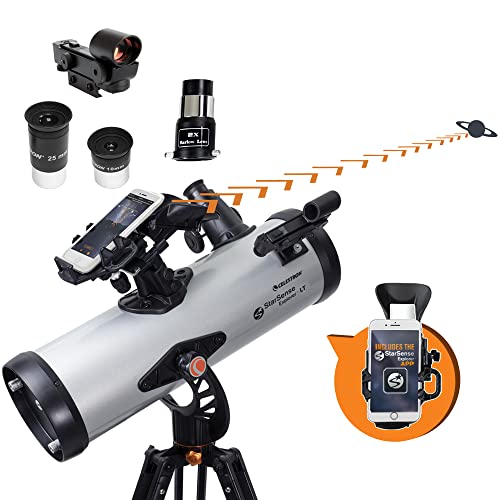
- App-guided navigation helps locate targets
- 114mm reflector supports Moon and planet viewing
- Curated target list based on time and location
Best For: Beginners who want smartphone help with manual observing
Portable Starter Refractor

- 90mm aperture with fully multi-coated optics
- Includes 2 eyepieces, 3X Barlow, and phone adapter
- Carry bag and adjustable tripod aid portability
Best For: Beginners wanting a portable, simple observing setup
Entry-Level Reflector Choice
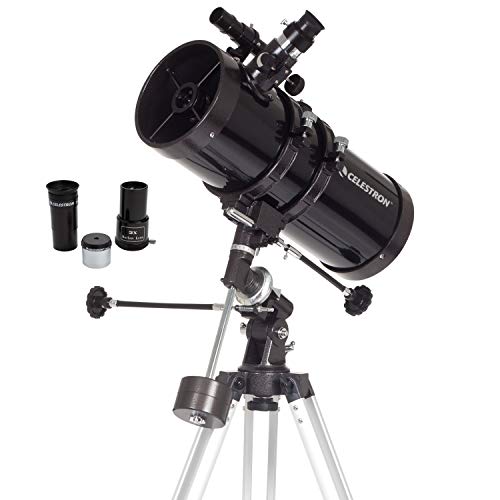
- 127mm reflector for planets, Moon, and brighter deep-sky targets
- German equatorial mount with slow-motion altitude rod
- Includes 20mm, 4mm, and 3x Barlow accessories
Best For: Beginners who want a portable reflector for learning planetary observing
Portable High-Magnification Pick

- 90mm aperture with fully multi-coated optics
- 36X to 270X magnification range for planetary looks
- Includes AZ tripod, carry bag, and smartphone adapter
Best For: Beginners who want a portable, accessory-packed telescope with higher magnification
Easy-to-Use Refractor Pick

- 70mm fully coated refractor for Moon and planet views
- Alt-azimuth mount with easy manual controls
- Quick setup with included eyepieces and red dot finder
Best For: Beginners who want simple setup and straightforward planetary viewing
Premium ED Refractor

- 102mm ED refractor with 714mm focal length
- S-FPL51 ED glass reduces color fringing
- Dual-speed focuser supports precise planetary focus
Best For: buyers seeking crisp, high-contrast planetary views
Large-Aperture Starter Reflector
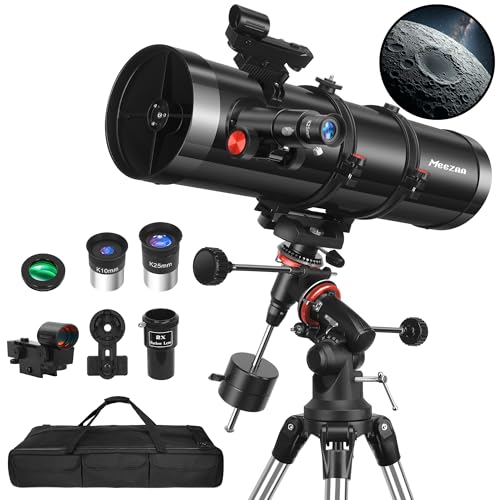
- 150mm aperture for bright Moon and planet views
- Includes eyepieces, 2X Barlow, moon filter, and phone adapter
- Equatorial mount supports manual tracking
Best For: beginners who want a feature-rich telescope for planets and the Moon
Portable Planet-Friendly Refractor

- 90mm aperture with 800mm focal length
- Includes 3× Barlow, phone adapter, tripod, and bag
- Quick setup and smooth focusing suit beginners
Best For: casual observers who want an easy portable scope for planets
Premium Automated Planet Hunter – Celestron NexStar 8SE
If you want one of the stronger telescopes for viewing planets and you also want convenience, the NexStar 8SE is built to deliver both. Its 8-inch Schmidt-Cassegrain optics and computerized GoTo mount make it a capable choice for resolving lunar detail, Jupiter’s cloud bands, and other bright targets without a lot of manual searching.
Best For: Observers who want a powerful, computerized scope for planets and deep-sky targets.
Pros:
- 8-inch aperture gathers plenty of light for planetary detail and deeper-sky viewing.
- Fully automated GoTo mount can slew to 40,000+ objects and track them.
- SkyAlign makes setup faster by aligning on any three bright stars or planets.
- Compact SCT design is more portable than many scopes with similar aperture.
Cons:
- More advanced than a simple beginner manual telescope.
- Power source is not included, so you’ll need batteries or an adapter.
- Better suited to users who are comfortable with a computerized setup.
For buyers comparing telescopes for viewing planets, this model stands out if you want larger optics plus automated pointing. It is less about simplicity and more about giving you a serious observing experience with minimal guesswork once aligned.
Beginner Refractor Value Pick – HUGERSTAR 90mm 800mm Telescope
This is a practical entry-level option if you’re shopping for telescopes for viewing planets without jumping into a complex setup. The 90mm aperture and 800mm focal length are aimed at bright, clear views, and the included 10mm, 25mm, and 3X Barlow lens give you a wide usable magnification range for Moon and planet observing.
Best For: Beginners who want an easy-to-assemble refractor for casual planetary viewing.
Pros:
- 90mm aperture and fully multi-coated lenses are designed for bright, clear images.
- Includes two eyepieces plus a 3X Barlow for 32X-240X magnification.
- Adjustable tripod and carry bag make it easy to move and store.
- Phone adapter and moon filter add useful starter accessories.
Cons:
- Manual altazimuth mount means you’ll be doing the tracking yourself.
- It’s more of a beginner-friendly all-around scope than a high-end planetary platform.
- Best results will still depend on steady setup and viewing conditions.
Overall, this telescope is a straightforward pick for first-time observers who want simple assembly and enough power to enjoy the Moon and brighter planets. It focuses on value and ease of use rather than advanced features.
Smartphone-Guided Planet Finder – Celestron StarSense Explorer LT 114AZ
If you want help finding targets without relying on a traditional computerized mount, this is one of the more approachable telescopes for viewing planets. The StarSense Explorer app uses your smartphone and sky recognition technology to guide you to objects, while the 114mm reflector gives you enough light for sharp views of the Moon, planets like Jupiter and Saturn, and some deep-sky favorites.
Best For: Beginners who want app-guided target finding with a manual telescope.
Pros:
- Smartphone-guided navigation helps you locate planets and other objects quickly.
- 114mm Newtonian reflector is suited to bright views of the Moon and planets.
- App offers curated targets based on your time and location.
- Manual altazimuth mount keeps the design simple and portable.
Cons:
- Still a manual telescope, so you’ll adjust tracking yourself.
- Requires a compatible smartphone for the guided experience.
- Not as aperture-heavy as larger telescopes for viewing fine planetary detail.
This model is a smart middle ground for buyers who want modern guidance without a fully automated telescope. It reduces the learning curve while still keeping the actual observing experience hands-on.
Portable Starter Refractor – MEEZAA 90mm 800mm Telescope
For shoppers comparing telescopes for viewing planets, this MEEZAA refractor keeps the formula simple: a 90mm aperture, 800mm focal length, and included eyepieces with a 3X Barlow lens. It is designed for beginners who want a travel-friendly setup for backyard astronomy, moon viewing, and casual planet observation.
Best For: New astronomy hobbyists who want a compact, easy-to-pack refractor.
Pros:
- 90mm aperture and fully multi-coated optics are aimed at brighter views.
- Includes 10mm and 25mm eyepieces plus a 3X Barlow lens.
- Tripod adjusts from 28 to 46 inches for flexible viewing.
- Carry bag and phone adapter make it practical for travel and sharing photos.
Cons:
- Manual altazimuth mount requires hands-on tracking.
- Like most starter refractors, it’s best for casual observing rather than advanced detail work.
- Performance will depend on stable setup and viewing conditions.
In use, this is a straightforward beginner telescope that focuses on convenience and portability. It gives you the basics needed to start observing planets without adding a lot of complexity or extra gear.
Entry-Level Reflector Choice – Celestron PowerSeeker 127EQ
If you want telescopes for viewing planets without jumping straight into a premium setup, the Celestron PowerSeeker 127EQ is a straightforward entry-level reflector. Its 127mm aperture and 1000mm focal length are aimed at bright views of the Moon, planets, and some deep-sky targets, while the manual German equatorial mount helps you track objects more smoothly.
Best For: Beginners who want a portable reflector with planetary viewing potential and manual tracking controls.
Pros:
- 127mm Newtonian reflector gathers enough light for planets, the Moon, and brighter deep-sky objects
- German equatorial mount with slow-motion altitude rod for smoother following of objects
- Includes 20mm and 4mm eyepieces plus a 3x Barlow lens
- Compact, lightweight design that’s easy to take to a backyard or campsite
Cons:
- Manual mount requires learning to operate and track targets
- Best results will depend on user setup and observing conditions
Overall, this is a practical starter telescope if your main goal is learning the sky and getting a first look at planets. It offers more aperture than many beginner refractors, but it still keeps the setup simple and portable.
Portable High-Magnification Pick – Hawkko 90mm 900mm Telescope
For telescopes for viewing planets, the Hawkko 90mm Aperture 900mm Telescope stands out with a 90mm aperture, 900mm focal length, and a 36X to 270X magnification range. The fully multi-coated optics are designed to improve light transmission, helping deliver clearer and brighter views when you’re looking at the Moon or trying higher-power planetary observation.
Best For: Beginners and casual observers who want a complete, portable kit with more magnification headroom.
Pros:
- 90mm aperture with full multi-layer coating for brighter, sharper images
- 36X to 270X magnification range gives more flexibility for planetary viewing
- Stable AZ mount tripod with smooth 360° rotation and height adjustment
- Includes smartphone adapter, carry bag, eyepieces, Barlow lens, and accessory tray
Cons:
- Manual setup and tracking still require user handling
- High magnification will be more sensitive to viewing conditions and alignment
This is a strong all-in-one option if you want a beginner-friendly telescope with a complete accessory kit. The combination of 90mm aperture and higher magnification range makes it appealing for users focused on planets, while the portable design keeps it easy to move around.
Easy-to-Use Refractor Pick – Celestron AstroMaster 70AZ
If you’re shopping telescopes for viewing planets and want something simple to use, the Celestron AstroMaster 70AZ is built around a 70mm fully coated achromatic refractor. It’s positioned for bright, clear views of the Moon, planets, and other easy-to-find targets, with an alt-azimuth mount that makes manual pointing feel familiar and easy.
Best For: Beginners who want a simple refractor for Moon, planet, and general nighttime viewing.
Pros:
- 70mm fully coated achromatic optics for crisp views of the Moon and planets
- Alt-azimuth mount with a panhandle for intuitive up/down and side-to-side aiming
- Quick setup with no tools required
- Includes 20mm and 10mm eyepieces, red dot finderscope, and erect image diagonal
Cons:
- Smaller aperture than the 90mm and 127mm options here
- Manual mount means you’ll still need to track targets yourself
This model is a solid pick if ease of use matters more than pushing for maximum aperture. It keeps the learning curve low while still giving you the basic accessories needed to start observing planets and the Moon right away.
Premium ED Refractor – SVBONY SV503 102mm F7
If you want telescopes for viewing planets that prioritize sharpness and color correction, this SVBONY SV503 is built around a 102mm ED refractor design with a 714mm focal length. The S-FPL51 ED glass and fully multi-coated optics are aimed at reducing color fringing and boosting contrast, which is especially useful when you want cleaner views of Jupiter, Saturn, and the Moon.
Best For: observers who want a higher-end refractor for crisp planetary viewing and dual-purpose visual use.
Pros:
- 102mm aperture and 714mm focal length support bright, detailed planetary views.
- S-FPL51 ED glass helps minimize chromatic aberration for more natural color.
- Dual-speed 1:10 focuser makes fine focusing easier on planets.
- 360° field rotator and 90mm focus travel add flexibility for accessories and setup.
Cons:
- OTA-only design means you still need a mount and eyepieces to use it.
- No finderscope is listed in the supplied details.
- Best results on planets will depend on pairing it with a solid mount.
This is a strong choice if your priority is image quality over portability. The optical design and focusing hardware make it better suited to observers who want a more refined planetary platform rather than a basic starter scope.
Large-Aperture Starter Reflector – 150EQ Newtonian Telescope
For shoppers comparing telescopes for viewing planets on a budget-friendly reflector layout, this 150EQ gives you a large 150mm aperture and 650mm focal length. That bigger light bucket is the main draw here, helping deliver bright views of the Moon and planets, while the included eyepieces and 2X Barlow lens let you experiment with different magnifications.
Best For: beginners and families who want a large-aperture telescope with manual tracking for Moon and planet viewing.
Pros:
- 150mm aperture gathers plenty of light for brighter planet and lunar views.
- Comes with 25mm and 10mm eyepieces plus a 2X Barlow lens.
- German equatorial mount with slow-motion controls helps track objects manually.
- Includes phone adapter, moon filter, tripod, and carry bag for a fuller starter package.
Cons:
- Newtonian reflector design can be less compact than a small refractor.
- Equatorial mounts take some practice for beginners to use smoothly.
- No detailed optical coating specs are provided in the notes.
This scope stands out for aperture and accessory count, not premium optical refinement. If your goal is to get strong visual impact on planets with a setup that can grow with your skills, it offers a practical place to start.
Portable Planet-Friendly Refractor – Dianfan 90×800 Refractor
If you want telescopes for viewing planets that are simple to set up and easy to carry, this 90mm refractor is a practical middle-ground option. Its 800mm focal length and fully coated optics are designed for brighter, clearer views, while the included eyepieces and 3× Barlow lens give you a wide magnification range for the Moon and bright planets.
Best For: beginners and casual observers who want a portable, easy-to-use telescope for planets, the Moon, and travel.
Pros:
- 90mm aperture and 800mm focal length provide a solid balance of brightness and reach.
- Fully coated optics are intended to improve contrast and color.
- Includes a 3× Barlow lens, phone adapter, tripod, and carry bag.
- Quick setup and smooth focusing make it beginner-friendly.
Cons:
- Altazimuth mount is simpler, but less suited to extended manual tracking than an equatorial mount.
- Finderscope is straight-through, which may be less comfortable for some users.
- The 45° zenith mirror is geared toward upright terrestrial viewing as well as astronomy.
This is the easiest scope in the group to live with day to day. It makes sense if you want a portable telescope that can handle casual planetary observing without demanding a complicated setup.
How We Picked the Best Telescopes for Viewing Planets
We selected models with a strong balance of aperture, optical quality, mount stability, and ease of use. For Telescopes for Viewing Planets, we prioritized instruments that can deliver contrast-rich, steady images rather than inflated power ratings. We also considered setup simplicity, portability, and whether a telescope is likely to stay useful as your skills improve.
Quick Comparison
Small refractors are typically the easiest to set up and use, making them a good fit for casual Moon and planet sessions. Larger reflectors and Schmidt-Cassegrain designs can reveal more planetary detail when the optics are well aligned and the mount is steady. Computerized or smartphone-guided systems can reduce the learning curve, while equatorial mounts can improve tracking for longer viewing sessions.
Key Buying Factors for Telescopes for Viewing Planets
Aperture and Optical Quality
Aperture controls how much light the telescope gathers and how much fine detail it can show. For planets, a well-made 70mm to 102mm refractor can be rewarding, while larger 114mm, 127mm, or 8-inch designs can show more detail if conditions are good. High-quality optics and good collimation often matter more than extreme magnification numbers.
Mount Stability
A shaky mount makes planetary observation frustrating. Alt-azimuth mounts are simple and beginner-friendly, while equatorial mounts can help with smoother tracking. GoTo mounts are helpful if you want easier object finding and less time spent searching.
Focal Length and Focal Ratio
Longer focal lengths often make it easier to achieve useful planetary magnification with common eyepieces. Slower focal ratios can also be more forgiving and easier to use for beginners, especially when paired with decent eyepieces.
Accessories and Ease of Use
Useful extras include a diagonal, finder scope, smartphone guidance, and a solid tripod. For Telescopes for Viewing Planets, a stable setup and manageable controls are often more valuable than a big accessory bundle.
Who Should Buy Which Telescopes for Viewing Planets?
If you are a beginner, a 70mm to 90mm refractor on a stable alt-azimuth mount is the easiest way to start. If you want guided navigation or less guesswork, a smartphone-assisted or computerized model may be a better fit. More experienced observers who want stronger planetary detail should look at larger aperture reflectors or an 8-inch Schmidt-Cassegrain, especially if they are comfortable with setup and alignment.
In short, choose the telescope that matches your patience, observing space, and typical sky conditions. The best planetary telescope is the one you will actually set up often and use consistently.