Portable NAS enclosures make it easier to build flexible, network-connected storage without committing to a full rack or bulky server.
Whether you want fast backup, shared family storage, or a compact setup for travel and small spaces, the right enclosure depends on drive support, connectivity, and future upgrade room.
Best 10 Portable Nas Enclosures Picks for 2026
Portable Backup Hub
PocketCloud Portable NAS with SSD and Battery Power

- Up to 8TB base capacity, 16TB with dock
- SD, USB, Wi-Fi 6, AP mode, and cloud backup
- Dual batteries for about six hours of use
Best For: Photographers and travelers needing mobile, secure backup
Desktop Storage Dock
WAVLINK 4-Bay USB-C Enclosure with HDMI

- Four SATA bays for HDDs and SSDs
- 10Gbps USB-C plus 4K HDMI support
- Dual fans and hot-swap drive switches
Best For: Desktop users needing high-capacity local storage
Starter Home NAS
Yxk Zero1 2-Bay NAS for Private Storage

- 2-bay private storage with Docker support
- 2.5GbE networking for faster transfers
- Remote access through app, desktop, or browser
Best For: Beginners building a simple home private cloud
High-Speed NVMe Array
TERRAMASTER D4 SSD 4-Bay USB-C Enclosure

- Four NVMe slots, up to 32TB total
- 40Gbps USB-C for fast transfers
- Tool-free, hot-swappable drive access
Best For: Power users needing compact, fast NVMe storage
Entry-Level Personal NAS
UGREEN NAS DH2300 2-Bay for Beginners

- 2-bay NAS with up to 64TB support
- Cross-platform automatic backup support
- AI photo tagging and duplicate cleanup
Best For: Beginners and personal users who want simple private storage
Pocket NVMe Mini Server
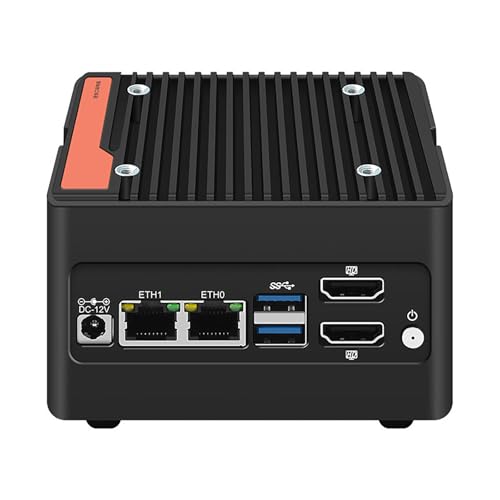
- Four M.2 NVMe slots in a pocket-sized chassis
- Dual 2.5GbE networking and dual HDMI 2.0
- Intel i3-N305 with efficient 12th Gen architecture
Best For: Power users wanting a tiny, configurable high-speed NAS platform
Prosumer 4-Bay NAS
UGREEN DXP4800 GT for Creators

- Ryzen-powered 4-bay NAS with expandable memory
- Dual 10GbE and strong transfer performance
- Docker, VM, and surveillance support
Best For: Creators and teams needing fast storage with advanced app support
High-Capacity DIY Pick
8-Bay Mini ITX Micro ATX NAS Case

- 8 hot-swap bays for HDDs and SSDs
- Dual-channel cooling with 3 silent fans
- Mini-ITX and Micro-ATX compatible
Best For: DIY media servers, backups, and expandable storage builds
Easy-to-Use Bundle
Synology DS223 2-Bay Diskstation NAS

- Includes two 4TB IronWolf drives
- 2-bay desktop NAS with hot-swap support
- Compact tabletop design with 1GbE
Best For: Beginners who want a bundled NAS for simple backups and file storage
Starter-Friendly Choice
UGREEN NAS DH2300 2-Bay Desktop NAS

- Entry-level 2-bay NAS for personal storage
- AI photo organization and cross-platform backups
- Up to 64TB capacity with 1GbE
Best For: First-time NAS buyers focused on backups and photo storage
Portable Backup Hub – PocketCloud Portable NAS with SSD and Battery Power
If you want portable NAS enclosures that can travel with you, PocketCloud is built more like an all-in-one field backup device than a simple drive box. It combines an M.2 NVMe slot, SD card support, Wi-Fi 6, AP mode, and even Ethernet through the dock, so you can move media from cameras, phones, and USB drives without relying on a laptop.
Best For: Photographers, vloggers, and travelers who need secure on-the-go backup with battery power.
Pros:
- Supports up to 8TB on the base unit and up to 16TB with the matching dock.
- Offers multiple backup paths: SD cards, USB drives, Wi-Fi 6, AP mode, cloud sync, and dock-based Ethernet.
- Dual 3200mAh batteries provide around six hours of use and up to twenty days of standby.
- Aluminum alloy enclosure, turbo fan cooling, LCD display, and one-click backup improve field use.
Cons:
- Storage is diskless, so you need to supply your own M.2 NVMe SSD.
- Ethernet support requires the separate dock.
- Best fit is backup and portability rather than a traditional multi-bay NAS setup.
For creators who care more about safe capture and easy transport than rack-style expansion, PocketCloud stands out as a practical portable NAS enclosure with strong battery support and flexible input options.
Desktop Storage Dock – WAVLINK 4-Bay USB-C Enclosure with HDMI
Among portable NAS enclosures, this WAVLINK model is better suited to desktop expansion than true travel use. It gives you four SATA bays, 10Gbps USB-C connectivity, and hot-swappable drive access, making it a strong option when you need a lot of local storage in one enclosure. The added 4K HDMI output also makes it more than just a drive box for compatible systems.
Best For: Users who want a high-capacity desktop enclosure for mixed storage and display connectivity.
Pros:
- Four bays support 3.5-inch and 2.5-inch SATA HDDs and SSDs.
- USB 3.2 Type-C supports up to 10Gbps transfer speeds.
- Built-in fans and aluminum construction help with cooling during heavier workloads.
- Independent power switches and hot-swap support make drive management easier.
Cons:
- 2.5-inch drives need separate mounting brackets.
- HDMI output depends on host USB-C video support and the correct cable.
- It is a bulky desktop unit, not a travel-friendly portable NAS enclosure.
If your priority is organizing multiple hard drives in one sturdy box, this is a capable storage dock with useful expansion features, though it is less portable than the keyword may suggest.
Starter Home NAS – Yxk Zero1 2-Bay NAS for Private Storage
If you are comparing portable NAS enclosures, the Yxk Zero1 is more of a compact home NAS than a grab-and-go unit. It is designed for simple private storage, remote access, and easy file sharing, with 2.5GbE speed and support for Docker if you want to grow into more advanced use later.
Best For: Beginners who want a simple private cloud for home photo, video, and file backup.
Pros:
- Easy-to-use 2-bay design aimed at beginners.
- 2.5GbE networking supports faster transfers than standard 1GbE.
- Remote access works through phone app, desktop client, or web browser.
- Includes encryption, permission controls, RAID options, and snapshot recovery.
Cons:
- Drives are not included and must be purchased separately.
- Plastic enclosure is less rugged than metal portable units.
- Designed mainly for home use rather than true battery-powered portability.
For buyers who want a straightforward private storage hub instead of a field-ready enclosure, the Zero1 offers a balanced mix of simplicity, speed, and remote access.
High-Speed NVMe Array – TERRAMASTER D4 SSD 4-Bay USB-C Enclosure
For portable NAS enclosures focused on speed, the TERRAMASTER D4 SSD is built around four M.2 NVMe slots and a 40Gbps USB-C connection. It is aimed at users who want fast local storage for large files, editing workflows, and backup tasks, while keeping the footprint compact enough for a desk or travel bag.
Best For: Power users who need compact, very fast NVMe storage for editing and backup.
Pros:
- Four M.2 NVMe bays support up to 32TB total capacity.
- 40Gbps connectivity is suitable for demanding file transfers and video work.
- Active cooling with temperature sensors helps keep operation quiet and controlled.
- Tool-free installation and hot-swap support simplify drive changes.
Cons:
- No built-in RAID, so redundancy depends on third-party software.
- Diskless design means you must supply your own NVMe SSDs.
- It is optimized for performance, not all-in-one NAS features like larger network boxes.
If speed matters more than server-style features, this enclosure gives you a compact, high-throughput way to build a fast portable storage array.
Entry-Level Personal NAS – UGREEN NAS DH2300 2-Bay for Beginners
If you want one of the simplest portable nas enclosures for personal backup and private file storage, the UGREEN NAS DH2300 is aimed squarely at beginners. It centralizes photos, videos, and documents, supports automatic backups across Windows, iOS, Android, and macOS, and offers a straightforward path away from scattered cloud files and external drives.
Best For: Beginners, personal users, and anyone who wants simple private storage for photos, videos, and backups.
Pros:
- 2-bay entry-level design with up to 64TB capacity support
- Automatic cross-device backups across major operating systems
- AI photo tagging, duplicate detection, and live photo backup
- Privacy-focused local storage with RAID, 2FA, permissions, and encryption
Cons:
- Does not support Docker or virtual machines
- Wi-Fi requires an external USB adapter
- Performance is positioned as consumer/entry-level rather than pro-grade
Overall, this is a practical buy if you want a low-friction NAS enclosure for everyday media and backups rather than an advanced self-hosting platform. The wired-first setup and simple software approach make it especially approachable for first-time NAS buyers.
Pocket NVMe Mini Server – 4-Bay i3-N305 Pocket NAS PC
Among portable nas enclosures, this mini server stands out if you want compact, high-speed NVMe storage in a true pocket-sized form factor. It combines an Intel i3-N305 processor, dual 2.5GbE ports, and four M.2 2280 NVMe slots, making it a flexible choice for mobile work, fast local file access, and small-scale data storage.
Best For: Power users who need a very compact NAS-style system with fast NVMe storage and 2.5GbE networking.
Pros:
- Intel i3-N305 processor with low-power Alder Lake-N architecture
- 4 x M.2 2280 NVMe slots for high-speed storage expansion
- Dual Intel i226-V 2.5GbE ports for faster networking
- Very compact 100mm x 100mm x 58.5mm pocketable design
Cons:
- Ships with no RAM and no SSD
- Requires assembly and component selection before use
- More of a mini NAS server than a consumer plug-and-play enclosure
This is a strong pick if portability and NVMe speed matter more than simplicity. It is best treated as a configurable compact NAS platform for users who are comfortable building their own storage setup.
Prosumer 4-Bay NAS – UGREEN DXP4800 GT for Creators
If you need portable nas enclosures with more headroom for media work, backups, and home services, the UGREEN DXP4800 GT is built for a far more demanding workload. It pairs an AMD Ryzen Embedded R2514 with dual 10GbE, expandable memory, SSD options, and a full app ecosystem for virtualization, Docker, and media/server tasks.
Best For: Creators, tech enthusiasts, and office teams that need fast multi-user storage with app expansion.
Pros:
- AMD Ryzen Embedded R2514 with 4 cores, 8 threads, and up to 3.70GHz
- Dual 10GbE networking with high-speed transfer potential
- Supports Docker, virtual machines, SAN Manager, and media apps
- Built-in surveillance tools plus SD and USB instant backup options
Cons:
- Drives are not included
- Full feature set may be more than casual users need
- Pro-focused hardware and storage capacity can push it beyond basic home backup use
For buyers who want one enclosure to cover fast storage, local privacy, app hosting, and even surveillance, this is the most versatile option in the group. It is a better fit for serious workflows than for simple file dumping.
High-Capacity DIY Pick – 8-Bay Mini ITX Micro ATX NAS Case
If you want one of the more flexible portable nas enclosures for a custom home server or small-office build, this 8-bay case is built around expandability. It supports 3.5-inch HDDs and 2.5-inch SSDs, includes hot-swap drive bays, and uses a dual-channel cooling layout to keep the drives and mainboard separated for better airflow.
Best For: DIY users building a compact Plex, backup, or media-storage NAS with room to grow.
Pros:
- 8 hot-swap bays support both 3.5-inch HDDs and 2.5-inch SSDs
- Dual independent air channels and 3 temperature-controlled silent fans
- Broad compatibility with Mini-ITX and Micro-ATX motherboards
- Thick steel chassis with drive status lights and front USB 3.0
Cons:
- Requires you to supply the motherboard, CPU, and other core parts
- More of a DIY enclosure than an out-of-box NAS appliance
Overall, this is a strong choice if your priority is storage density and hardware flexibility rather than plug-and-play simplicity. The included accessories and hot-swap design make it practical for multi-drive builds where maintenance and upgrades matter.
Easy-to-Use Bundle – Synology DS223 2-Bay Diskstation NAS
For buyers who want portable nas enclosures with a simpler setup, the Synology DS223 bundle keeps things straightforward. It combines a 2-bay DiskStation with two 4TB IronWolf drives, plus a compact tabletop design, 1GbE networking, and hot-swap support for easy drive changes.
Best For: Users who want a ready-to-run 2-bay NAS bundle for personal storage and everyday backups.
Pros:
- Includes 2 x 4TB Seagate IronWolf NAS HDDs for an 8TB bundle
- 2-bay desktop design with hot-swap support
- Synology platform is a familiar option for home NAS users
- Compact tabletop form factor with 3 USB 3.2 Gen 1 ports
Cons:
- Only 2 bays, so expansion is limited compared with larger enclosures
- 1GbE networking may be a bottleneck for heavier transfers
This is a practical pick if you want an easier path into network storage without assembling a full DIY system. The bundled drives and small footprint make it especially appealing for basic file backup, photo storage, and home media sharing.
Starter-Friendly Choice – UGREEN NAS DH2300 2-Bay Desktop NAS
The UGREEN NAS DH2300 is a beginner-friendly option in portable nas enclosures, aimed at people moving away from cloud storage or scattered files across devices. It offers 2-bay personal storage, up to 64TB capacity, cross-platform automatic backups, and AI-powered photo organization, while keeping the setup focused on everyday storage rather than advanced server features.
Best For: First-time NAS buyers who want simple personal storage, backups, and photo management.
Pros:
- Designed as an entry-level 2-bay NAS for personal files, photos, and videos
- Supports automatic backups across Windows, iOS, Android, and macOS
- AI tools tag faces, locations, texts, and objects for easier photo search
- Up to 64TB capacity with 1GbE networking and 4GB LPDDR4X RAM
Cons:
- Does not support Docker or virtual machines
- Drives are not included
As a long-term storage alternative to recurring cloud fees, this model is built around simplicity and convenience. It makes the most sense if you want a straightforward home NAS that helps organize media and back up devices without a steep learning curve.
How We Picked the Best Portable Nas Enclosures
We focused on options that balance size, expansion potential, and real-world usability. For this roundup, that means choosing systems with practical drive support, modern connectivity such as USB-C, 2.5GbE, or Wi-Fi 6 where applicable, and features that simplify setup like app-based management, hot-swap access, or one-click backup.
We also considered whether each model suits a different buyer: simple personal backup, multi-drive media storage, DIY builds, or higher-performance NAS use. The goal is to help you compare Portable Nas Enclosures by actual use case, not just raw specs.
Quick Comparison of Portable Nas Enclosures
In broad terms, 2-bay systems are the best starting point for beginners and personal use, while 4-bay and 8-bay options make more sense when you need capacity, redundancy, or room to grow. SSD-focused enclosures typically offer quieter operation and faster transfers, while HDD-based enclosures usually deliver better value per terabyte.
If portability is the priority, look for smaller chassis, diskless designs, and simpler power and network requirements. If performance matters more, prioritize faster interfaces and stronger networking over compact size.
Key Buying Factors for Portable Nas Enclosures
Drive Type and Bay Count
Choose between HDD and SSD support based on your goals. HDD enclosures are usually better for large media libraries and backups. SSD-based Portable Nas Enclosures are better for speed, silence, and smaller physical footprints. Bay count should match both your current storage needs and how quickly you expect them to grow.
Connectivity and Network Speed
Connectivity matters just as much as the enclosure itself. USB-C can be useful for direct attachment or setup workflows, but networked storage is more useful for shared access. For home and small office use, 1GbE is acceptable; 2.5GbE or faster is preferable if you move large files often.
Thermals, Noise, and Reliability
Good cooling is essential in compact storage. Look for temperature-controlled fans, airflow-friendly cases, and hot-swap support if you want easier maintenance. A well-cooled enclosure can improve long-term drive health and reduce throttling under load.
Software and Backup Features
Helpful software can matter more than hardware extras. Mobile backup, one-click backup, app control, and simple user management are especially valuable if you want a low-friction setup. For beginners, a clean interface often saves more time than advanced spec upgrades.
Who Should Buy Which Portable Nas Enclosures?
If you want simple personal backup, a compact 2-bay model is usually the safest choice. If you need more capacity for photos, video, or shared household storage, step up to a 4-bay enclosure. If you are a DIY builder or power user, choose a chassis or mini NAS platform that gives you more control over hardware, networking, and expansion.
For shoppers comparing Portable Nas Enclosures, the best pick is the one that fits your storage workload today while leaving enough headroom for tomorrow. That balance matters more than chasing the largest spec sheet.