If you need sharp details, smooth surfaces, and reliable repeatability, resin printers for prototypes are still the go-to choice for fast product iterations.
This roundup focuses on models that balance resolution, speed, build volume, and ease of use so you can choose the right printer for concept models, fit checks, and functional mockups.
Best 10 Resin Printers for Prototypes Picks for 2026
16K Precision Flagship

- 16K resolution for fine prototype detail
- Smart heating keeps resin at 30°C
- Auto-leveling and AI monitoring reduce hassle
Best For: High-detail prototype printing with automation
Balanced Large-Format Pick

- 10K LCD for detailed prototype output
- Large build volume supports daily projects
- Stable platform and resume printing help reduce waste
Best For: Detail-focused prototypes with a roomy build area
Compact Detail Starter

- 22µm XY resolution for crisp small parts
- Compact tabletop design fits tight spaces
- Supports popular slicers for flexible workflows
Best For: Small prototype parts and beginner-friendly detail
Fast Smart Prototype Runner

- Up to 150mm/h for quick prototype cycles
- AI camera and sensor help catch issues early
- WiFi cluster printing supports remote workflows
Best For: Fast prototype iteration with smart monitoring
Industrial Precision Speed Pick
Reflex RS Turbo Resin 3D Printer

- Amber Screen with 566:1 contrast for sharper detail
- ±2μm repeat positioning with industrial C5 Z-axis
- One-click slicing, defect repair, and auto support generation
Best For: Rapid prototype teams needing speed, precision, and automation
Easy Setup Detail Pick
ELEGOO Mars 5 Resin 3D Printer
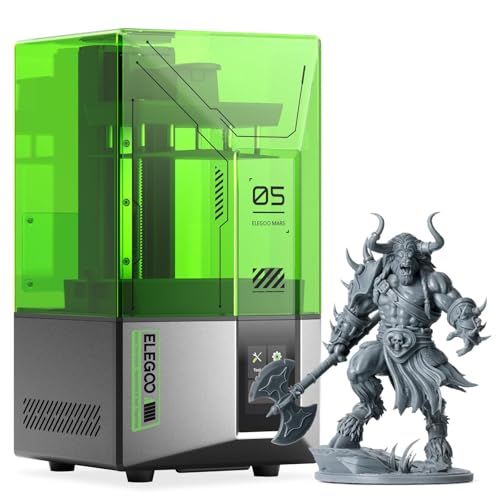
- One-click automatic leveling simplifies setup
- 4K mono LCD with COB light source for detail
- Smart sensors add residue detection and self-checks
Best For: Beginners and small teams making detailed prototypes
Large Format Prototyping Pick
UniFormation GK3 Ultra 16K Resin Printer
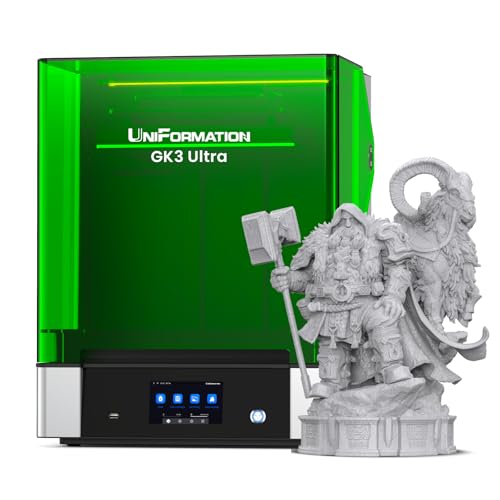
- 300 × 160 × 300 mm build volume for large parts
- 16K LCD with 20 × 26μm pixels for sharp detail
- Auto resin feeder and built-in heating support long runs
Best For: Large prototypes and batch printing needs
Beginner-Friendly Compact Pick
ELEGOO Mars 5 MSLA Resin 3D Printer

- Automatic leveling simplifies setup
- Built-in sensor and self-check improve reliability
- 4K monochrome screen suits detailed small parts
Best For: Beginners printing small prototypes with minimal setup hassle
Large-Format Prototype Workhorse
ELEGOO Jupiter 2 16K Resin 3D Printer

- Huge build volume handles large or batch prototypes
- 16K detail supports fine surface features
- Heating, feeding, and monitoring features reduce interruptions
Best For: Teams and makers who need big prototype capacity with fine detail
Fast High-Detail Prototype Pick
ELEGOO Saturn 4 Ultra 16K Resin 3D Printer

- Up to 150 mm/h printing speeds up iteration
- 16K detail works well for precise prototype parts
- AI camera and Wi-Fi make monitoring easier
Best For: Fast prototype turnaround with detailed prints and remote oversight
16K Precision Flagship – ELEGOO Saturn 4 Ultra 16K
If you’re comparing resin printers for prototypes, the ELEGOO Saturn 4 Ultra 16K is built for high-detail parts that need smooth surfaces and precise texture. Its 16K resolution, smart tank heating, and fast tilt-release system make it a strong fit for detailed concept models and iterative prototype work.
Best For: Users who want premium detail, automated setup, and fast turnaround on prototype prints.
Pros:
- 16K resolution is aimed at fine detail and clean surface quality.
- Smart tank heating keeps resin at 30°C for better fluidity and adhesion.
- AI camera adds real-time monitoring, alerts, and time-lapse capture.
- Auto-leveling and plug-and-play workflow reduce setup friction.
Cons:
- Advanced features may be more than casual users need.
- Large format and feature set make it a heavier desktop machine.
Overall, this model stands out if detail quality and workflow automation matter more than keeping things simple. It is especially appealing for prototype users who want fewer failed prints and more consistent results.
Balanced Large-Format Pick – ANYCUBIC Photon Mono 4
For buyers looking at resin printers for prototypes, the ANYCUBIC Photon Mono 4 offers a practical mix of precision, speed, and usable build volume. Its 10K LCD, uniform LighTurbo lighting, and stable build platform are designed to support detailed parts without making the workflow overly complicated.
Best For: Prototype makers who want strong detail, a decent build area, and a straightforward setup.
Pros:
- 7-inch 10K LCD delivers very fine detail for small parts and prototypes.
- LighTurbo matrix light source is designed for smoother surfaces and less visible layering.
- Large build volume gives room for everyday prototype jobs.
- Pre-assembled and tested, so you can unbox and start after first leveling.
Cons:
- Requires first leveling before printing.
- Not as feature-heavy as some higher-end smart printers.
This is a sensible choice if you want a capable prototype printer without jumping straight to the most advanced ecosystem. It balances output quality and productivity well for frequent use.
Compact Detail Starter – phrozen Sonic Mini 8K S
If you want resin printers for prototypes in a smaller, beginner-friendly package, the Phrozen Sonic Mini 8K S is worth a look. It combines 22µm XY resolution with an 8K mono LCD, making it suited to fine models, miniatures, and compact prototype parts where detail matters most.
Best For: Beginners and hobbyists who need sharp detail in a compact tabletop printer.
Pros:
- 22µm XY resolution supports crisp, detailed prototype output.
- Compact footprint works well for smaller workspaces.
- Open software support gives flexibility with slicers like Lychee and Chitubox.
- Precise Z-axis calibration helps with accurate printing.
Cons:
- Smaller build volume limits larger prototypes.
- More focused on precision than high-throughput production.
This printer makes sense if your prototype workflow centers on small parts and careful detail rather than size. It is a solid entry point for users who want good results without a large machine.
Fast Smart Prototype Runner – ELEGOO Mars 5 Ultra 9K
Among resin printers for prototypes, the ELEGOO Mars 5 Ultra is built for users who want speed, automation, and remote convenience in one package. Its 9K LCD, tilt-release system, AI camera, and WiFi cluster printing make it a strong option for fast iteration and hands-off monitoring.
Best For: Makers who need quick prototype turnaround with smart monitoring and remote workflow tools.
Pros:
- Up to 150mm/h printing speed helps speed up prototype cycles.
- AI camera and mechanical sensor add monitoring and issue alerts.
- WiFi cluster printing supports faster file transfer and multiple-printer coordination.
- 9K LCD and COB light source are aimed at detailed, lifelike models.
Cons:
- Remote and smart features may be more than basic users need.
- Best suited to users who value workflow efficiency over minimalism.
This model is a good fit when prototype work depends on fast iteration and fewer interruptions. It brings together speed and monitoring features that can help keep prints moving.
Industrial Precision Speed Pick – Reflex RS Turbo Resin 3D Printer
If you are comparing resin printers for prototypes and care most about speed without giving up fine detail, the Reflex RS Turbo is built for that workflow. Its Amber Screen, C5 industrial Z-axis, and auto-leveling aim to reduce setup friction while keeping dimensions tight on demanding prototype parts.
Best For: Rapid prototype teams and advanced users who want fast resin printing with high precision and automation.
Pros:
- Amber Screen with a 566:1 contrast ratio for sharper detail and faster curing
- ±2μm repeat positioning with C5 ball-screw Z-axis for precise output
- One-click slicing, defect repair, and automatic support generation
- Built-in monitoring and auto-pause features to help catch print issues early
Cons:
- Larger, heavier machine at 50.6 pounds
- Feature-rich system may be more than a casual user needs
- Industrial-style setup may feel overkill for simple hobby prints
This is a strong pick when prototype quality and throughput both matter. The combination of high-speed printing, auto-leveling, and motion control support makes it easier to keep production moving on detailed parts.
Easy Setup Detail Pick – ELEGOO Mars 5 Resin 3D Printer
For resin printers for prototypes where ease of use matters as much as detail, the ELEGOO Mars 5 keeps the process straightforward. Automatic leveling, a self-check routine, and smart error alerts make it a practical choice for quick turnaround prototype work.
Best For: Beginners and small shops that want a simple resin printer for detailed prototype parts.
Pros:
- One-click automatic leveling for quick setup
- Smart mechanical sensor helps detect residue and prevent LCD damage
- One-click self-check verifies components before each print
- 4K mono LCD with COB light source for fine detail reproduction
Cons:
- Smaller build-focused machine than large-format options
- Detailed notes emphasize ease of use more than raw throughput
- Best suited to lighter production demands than bulk printing
The Mars 5 is a practical pick if you want fewer setup headaches and dependable detail on prototype pieces. It leans into user-friendly automation and safety features rather than maximum build size.
Large Format Prototyping Pick – UniFormation GK3 Ultra 16K Resin Printer
If your shortlist of resin printers for prototypes includes bigger parts or multiple test pieces at once, the UniFormation GK3 Ultra is built around capacity. Its large 300 × 160 × 300 mm build volume, 16K LCD, and auto resin feeder make it well suited to high-volume prototype runs and large-scale models.
Best For: Large prototypes, batch printing, and teams that need more build space and continuous resin supply.
Pros:
- Large 300 × 160 × 300 mm build volume for bigger models or multiple parts
- 16K LCD with 20 × 26μm pixel size for sharp detail
- Integrated KK60 module for stable Z-axis movement and reduced layer lines
- Built-in heating and auto-refill features support longer print sessions
Cons:
- Large footprint and 85.8-pound weight make it less portable
- More machine than users with very small parts may need
- Designed for a more involved workflow than compact desktop printers
This model stands out when prototype size, volume, and workflow convenience are priorities. It combines a roomy build area with stability and resin-management features that help keep bigger jobs moving.
Beginner-Friendly Compact Pick – ELEGOO Mars 5 MSLA Resin 3D Printer
If you want resin printers for prototypes and need a compact machine that reduces setup friction, the ELEGOO Mars 5 is built to make first-time printing easier. Its automatic leveling, one-click self-check, and built-in safety alerts help streamline routine jobs while the 4K monochrome screen supports detailed prints for everyday prototype work.
Best For: Beginners and small prototype projects that benefit from simple setup and reliable safety checks.
Pros:
- Automatic leveling removes repeated manual setup.
- One-click self-check helps catch issues before printing.
- Mechanical sensor can detect foreign objects, resin level problems, and leveling failures.
- Overheat protection and cooling system add a safety buffer during printing.
Cons:
- Smaller 6.6-inch build area may limit larger prototype parts.
- Designed as a beginner-friendly machine, so it is less specialized for high-volume production.
For prototyping, the Mars 5 stands out more for ease of use and protection features than for maximum size. If your priority is getting clean resin prints with less hands-on calibration, it offers a practical entry point.
Large-Format Prototype Workhorse – ELEGOO Jupiter 2 16K Resin 3D Printer
Among resin printers for prototypes, the ELEGOO Jupiter 2 is aimed at users who need a large build volume and strong print detail in one machine. With its 16K resolution, smart tank heating, auto resin feeding, and monitoring tools, it is set up for bigger prototype runs with less interruption.
Best For: Makers and teams producing large prototypes or multiple parts in a single job.
Pros:
- Very large 302.4 × 161.98 × 300 mm build volume for bigger models or batch jobs.
- 16K resolution with 20 × 26 μm XY detail supports fine prototype surfaces.
- Auto-leveling, resin feeding, and tank heating help maintain smoother print workflows.
- Built-in camera, Wi-Fi cluster control, and recovery features support monitoring and uptime.
Cons:
- Large footprint and 63.8-pound weight make it less convenient for tight workspaces.
- More complex feature set may be more than casual users need for simple parts.
If your prototype work includes large components or multiple parts per build, this printer is the most scalable option here. It combines size, detail, and automation in a way that fits more demanding resin workflows.
Fast High-Detail Prototype Pick – ELEGOO Saturn 4 Ultra 16K Resin 3D Printer
If you are comparing resin printers for prototypes and want speed without giving up detail, the ELEGOO Saturn 4 Ultra 16K is built around fast production and smart monitoring. Its tilt-release design, 16K printing, tank heating, and AI camera make it a strong fit for iterating on parts quickly while keeping an eye on print quality.
Best For: Users who want faster prototype turnaround with detailed output and remote monitoring.
Pros:
- Print speed up to 150 mm/h helps speed up prototype iterations.
- 16K resin printing supports fine detail for small functional parts and models.
- Tank heating can preheat resin to 30°C to improve printing success.
- AI camera, built-in light, and Wi-Fi printing support easier monitoring and control.
Cons:
- Build size is smaller than large-format machines like the Jupiter 2.
- Speed-focused design may be more than you need for occasional low-volume use.
For prototype work where turnaround time matters, this model offers a compelling balance of speed, detail, and oversight. It is especially useful when you want to catch problems early and keep prints moving.
How We Picked These Resin Printers for Prototypes
For prototype work, the best machines are not just high-resolution—they also need consistent layer quality, stable mechanics, and practical workflow features. We prioritized printers with strong XY detail, dependable light engines, useful automation, and build sizes suited to real-world iteration.
We also considered print speed, leveling convenience, resin handling, tank heating, and software/ecosystem maturity, since these factors can matter as much as raw resolution when deadlines are tight.
Quick Comparison: What Matters Most
If you want the fastest path to the right choice, compare build volume, resolution, and automation first. Smaller tabletop models are ideal for tight-detail parts and low resin use, while larger machines are better for batch prototypes or taller assemblies. High-resolution screens help with surface finish, but speed and temperature control can improve day-to-day reliability.
Key Buying Factors for Resin Printers for Prototypes
Resolution and Surface Detail
Look for fine XY resolution if your prototypes include logos, text, snap features, or cosmetic surfaces. Higher resolution can reduce sanding and improve fit verification, though it should be paired with stable motion and good exposure consistency.
Build Volume
Choose a compact printer for small parts, test coupons, and quick design checks. If you need larger enclosures, concept shells, or multiple parts per run, a bigger build area saves time and improves throughput.
Speed and Throughput
Fast layer times help when you are iterating frequently, but speed should not come at the expense of detail or consistency. For prototype teams, a balanced machine often beats a spec-heavy printer that needs constant tuning.
Automation and Ease of Use
Features such as auto-leveling, smart sensors, tank heating, resin feeding, and camera monitoring can cut setup time and reduce failed prints. These are especially valuable if more than one person will use the printer.
Workflow and Reliability
For Resin Printers for Prototypes, reliability is a major buying factor. A printer that produces repeatable results with less babysitting is usually more valuable than one with a higher headline specification but more maintenance.
Who Should Buy Which Resin Printers for Prototypes?
If you are a designer or engineer printing fine-detail parts, choose a high-resolution mid-size model with strong precision. If you need larger prototype batches or bigger enclosures, move up to a large-format printer. Beginners and small teams should favor easy leveling, clear controls, and smart monitoring features to keep the workflow simple.
In short, match the printer to your prototype size, detail requirements, and production pace. That gives you the best balance of quality, speed, and overall cost of ownership.