For engineering students, a resin printer is more than a hobby machine—it’s a tool for creating accurate prototypes, fit checks, and detailed model parts. The best options balance precision, speed, and a workflow that won’t slow down deadlines.
This roundup focuses on 10 picks that make sense for student labs, dorm setups, and budget-conscious makers who still want sharp results and reliable repeatability.
Best 10 Resin Printers for Engineering Students Picks for 2026
High-Detail Starter Pick
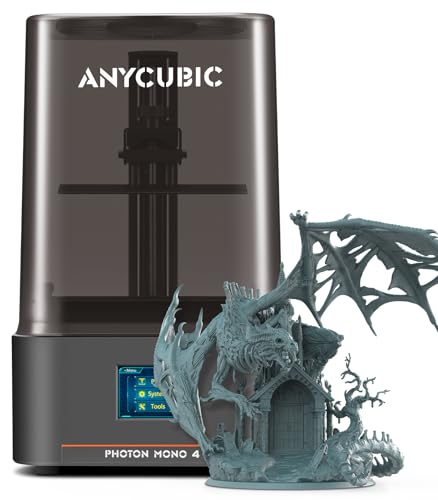
- 10K 7-inch screen with 17×17μm pixel precision
- Stabilized light source for smoother surfaces
- Fully assembled with fast, easy setup
Best For: Students who want a fast, easy-to-start resin printer with very fine detail.
Easy-Setup Safety Pick
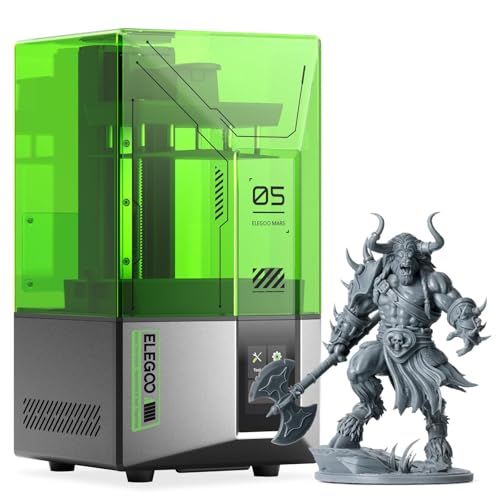
- One-click automatic leveling for simpler setup
- Smart sensor alerts for residue and resin issues
- 4K mono LCD with COB light source
Best For: Students who want simple setup and extra print-safety features.
Precision Performance Pick

- 14K mono LCD for fine detail
- Stable motion system with guide rails and ball screws
- AI checks and resin detection for reliability
Best For: Students who want precision-oriented hardware and automated print checking.
Fast Smart Pick

- Up to 150mm/h printing speed
- 9K LCD with 18x18μm XY resolution
- AI camera and WiFi cluster printing
Best For: Students who want faster prints with smart monitoring and remote control.
High-Detail Starter Bundle
ANYCUBIC Photon Mono 4 + Wash & Cure 3.0

- 7-inch 10K LCD with 17 x 17 μm pixels
- Includes Wash & Cure 3.0 for cleaner post-processing
- 6.04" x 3.42" x 6.49" build volume for student projects
Best For: students who want an all-in-one resin printing and curing setup
Large-Format Smart Printer

- 16K LCD with 14 x 19 μm XY resolution
- Auto-heated resin tank improves cold-weather consistency
- AI camera and monitoring tools help spot print issues early
Best For: students making larger, detailed prototypes with reliable automation
Compact Precision Printer

- 7-inch 10K mono LCD with 17 x 17 μm pixels
- LighTurbo lighting supports smooth, detailed surfaces
- Pre-calibrated setup helps you start printing faster
Best For: students who want a ready-to-use compact resin printer for detailed parts
Creator Lab Bundle
Saturn 4 Ultra 16K + Mercury Plus V3.0

- Large build area for bigger prototypes
- Includes 7.5 L wash-and-cure station
- 150mm/h printing speeds up projects
Best For: Engineering students needing a roomy, all-in-one resin setup
Precision Speed Pick

- ±2μm precision for fine-detail parts
- 4.5s/layer printing for fast iteration
- Auto leveling and C5 Z-axis boost consistency
Best For: Students who want precision-focused, fast resin printing
Large Build Classroom Choice

- Large 302.4 × 161.98 × 300 mm build size
- Auto-leveling and smart tank heating
- Includes 2000g ABS-Like resin
Best For: Students making larger prototypes and wanting bundled materials
High-Detail Starter Pick – ANYCUBIC Photon Mono 4 10K
If you want resin printers for engineering students that emphasize fine detail without a complicated setup, the ANYCUBIC Photon Mono 4 is a strong entry point. Its 10K 7-inch screen, stable light source, and quick startup process make it well suited for crisp prototypes, small parts, and detailed classroom projects.
Best For: Students who want a fast, easy-to-start resin printer with very fine detail.
Pros:
- 10K 7-inch screen with 17×17μm pixel precision for micro-detail
- LighTurbo matrix light source for smoother surfaces and near-invisible layer lines
- Upgraded build plate helps improve adhesion and reduce warping
- Power failure recovery can resume prints after interruptions
Cons:
- Requires a quick 4-point leveling check before printing
- Focused on detail rather than large-format output
Overall, this model is a practical fit for students who care more about sharp results and reliable everyday printing than advanced bells and whistles. It should work especially well for lab parts, visual models, and design iterations where surface quality matters.
Easy-Setup Safety Pick – ELEGOO Mars 5
The ELEGOO Mars 5 is a solid choice if you’re comparing resin printers for engineering students and want a machine that keeps setup simple. One-click automatic leveling, self-checks, and built-in warnings can help reduce wasted prints, which is useful when you’re balancing coursework and lab deadlines.
Best For: Students who want simple setup and extra print-safety features.
Pros:
- One-click automatic leveling reduces calibration hassle
- Smart mechanical sensor helps detect residue, resin shortage, and leveling failures
- One-click self-check verifies components before each print
- 4K mono LCD and COB light source for detailed models
Cons:
- 4K resolution is lower than the higher-detail models in this roundup
- Build and feature set are more about ease of use than maximum speed
For students who want fewer setup headaches and more protection against failed prints, this is a very practical pick. It’s especially appealing if you value reliability and straightforward operation over chasing the highest possible resolution.
Precision Performance Pick – ANYCUBIC Photon P1 14K
For engineering students who want a more performance-focused option, the ANYCUBIC Photon P1 brings higher-end mechanics and advanced automation. Its 14K screen, stable motion system, and AI-assisted checks make it a strong candidate for detailed prototypes and repeatable printing sessions.
Best For: Students who want precision-oriented hardware and automated print checking.
Pros:
- 14K mono LCD for very fine model detail
- Industrial-grade ball screws and precision guide rails improve stability
- Wave release technology reduces release force for smoother layer separation
- AI-assisted inspection and resin level detection help prevent failed prints
Cons:
- Larger and heavier than the more compact options here
- More advanced feature set may be overkill for casual users
This is the strongest fit if your projects demand stable motion, higher precision, and more automation. It’s the kind of printer that makes sense when you expect to run more demanding prints and want extra safeguards built in.
Fast Smart Pick – ELEGOO Mars 5 Ultra 9K
If speed and monitoring matter most, the ELEGOO Mars 5 Ultra stands out among resin printers for engineering students. It combines fast tilt-release printing, a 9K screen, and AI camera monitoring, making it appealing for students who need quick turnaround on prototype iterations.
Best For: Students who want faster prints with smart monitoring and remote control.
Pros:
- Up to 150mm/h printing speed with tilt release innovation
- 9K LCD with 18×18μm XY resolution for high-precision models
- Built-in AI camera can detect issues like warping or an empty build plate
- WiFi cluster printing supports remote transfer and multiple-printer workflows
Cons:
- Faster print modes may still require tuning for best quality
- More advanced networking and AI features may be unnecessary for basic users
This is a strong option if you value speed, oversight, and convenience in a lab or dorm setup. The combination of fast output and smart monitoring makes it especially useful for students iterating through multiple design versions.
High-Detail Starter Bundle – ANYCUBIC Photon Mono 4 + Wash & Cure 3.0
If you’re comparing resin printers for engineering students, this bundle is a practical way to get both high-detail printing and post-processing in one package. The Photon Mono 4 offers a 7-inch 10K screen, a compact but usable build volume, and stable lighting for sharp prototypes, while the Wash & Cure 3.0 helps finish parts cleanly after printing.
Best For: students who want a single bundle for detailed prototypes and easier resin cleanup.
Pros:
- 7-inch 10K LCD with 17 x 17 μm pixels for very fine detail
- LighTurbo matrix light source helps reduce layer lines and rasterization
- 6.04″ x 3.42″ x 6.49″ build volume is enough for many student projects
- Wash & Cure 3.0 adds a larger 4L cleaning bucket and increased basket capacity
Cons:
- Smaller build volume than larger-format resin printers
- Best results still depend on careful washing and curing workflow
Overall, this is a strong choice if you want a detail-focused setup that also simplifies finishing. For engineering coursework, it offers a balanced mix of precision, practicality, and post-processing support.
Large-Format Smart Printer – ELEGOO Saturn 4 Ultra 16K
For engineering students who need resin printers for engineering students work that includes larger prototypes and reliable monitoring, the Saturn 4 Ultra 16K brings a lot to the table. Its 16K screen, heated resin tank, AI camera, and automatic checks are aimed at making prints more consistent, especially when temperatures drop.
Best For: students building larger, highly detailed models with a strong focus on print reliability.
Pros:
- 16K resolution with 14 x 19 μm XY detail for intricate parts
- Large 8.33 x 4.66 x 8.66 inch build area for bigger models
- Automatic heated resin tank helps maintain better printing conditions below 25°C
- AI camera and smart monitoring features help catch issues early
Cons:
- Heavier and larger than compact desktop resin printers
- Feature set may be more than needed for very basic print jobs
Its automation and high-resolution output make it especially appealing if you want fewer surprises during long prints. For technical projects that need size, detail, and oversight, this is the most capable option in this group.
Compact Precision Printer – ANYCUBIC Photon Mono 4
If you want a focused resin printer for engineering students without paying for extra accessories, the Photon Mono 4 is a clean, straightforward pick. It combines a 7-inch 10K screen, stable lighting, and a medium build volume with a setup that is already calibrated and tested before shipment.
Best For: students who want a compact, precision-oriented printer that is ready to use quickly.
Pros:
- 7-inch 10K mono LCD with 17 x 17 μm pixels for sharp detail
- LighTurbo matrix light source aims for uniform lighting and smoother surfaces
- Build volume of 6.04″ x 3.42″ x 6.49″ suits many daily projects
- Pre-assembled, calibrated, and tested before shipping for easier startup
Cons:
- No bundled wash and cure station included
- Build size is not as large as some higher-capacity resin printers
This model makes sense if you prioritize detail, simplicity, and a lower-friction setup. It should fit well for coursework prototypes, small mechanical parts, and general lab use where reliability matters.
Creator Lab Bundle – Saturn 4 Ultra 16K + Mercury Plus V3.0
ELEGOO Saturn 4 Ultra 16K Resin 3D Printer and ELEGOO Mercury Plus V3.0 Wash and Cure Station
Check Price On AmazonIf you’re comparing resin printers for engineering students, this bundle gives you a large-format printer plus a wash-and-cure station in one setup. The Saturn 4 Ultra 16K offers a roomy build area, flip-up lid, smart tank heating at 30℃, and fast 150mm/h printing, while the Mercury Plus V3.0 helps finish parts with its 7.5 L capacity.
Best For: Students who want a high-capacity resin workflow for prototypes, class projects, and post-processing in one package.
Pros:
- Large 8.33 x 4.66 x 8.66 inch build volume for bigger prototypes
- Smart tank heating at 30℃ can help with resin handling and print consistency
- 150mm/h high-speed printing supports faster turnaround for coursework
- Includes a 7.5 L wash-and-cure station for a more complete workflow
Cons:
- Bundle is more than a basic printer-only setup
- Large footprint may be less convenient for tight dorm or desk spaces
- Wash-and-cure station adds extra hardware to manage
This is a practical pick if you want both print size and post-processing support without piecing together separate accessories later. It’s especially appealing for engineering work where larger models and repeatable cleanup matter.
Precision Speed Pick – Reflex RS Turbo
For engineering students who care about fine detail and fast turnaround, this resin printer focuses heavily on precision and automation. The Reflex RS Turbo combines ±2μm high precision, a 4.5s/layer high-speed workflow, auto leveling, and an industrial C5 Z-axis for more controlled results.
Best For: Students who need high-detail resin prints with automated setup and strong dimensional control.
Pros:
- ±2μm high precision for detailed parts
- 4.5s/layer high-speed printing supports quick iteration
- Auto-leveling can simplify setup
- C5 industrial Z-axis is built for repeat positioning accuracy
Cons:
- Feature list is highly specialized, which may be more than casual users need
- Advanced automation may come with a steeper learning curve than simpler printers
- Large industrial-style system may not suit very small workspaces
This model stands out when accuracy and speed matter more than keeping the setup minimal. It’s a strong fit for engineering coursework that involves tight tolerances, repeated prototypes, and careful dimensional checks.
Large Build Classroom Choice – Jupiter 2 + ABS-Like Resin
ELEGOO Jupiter 2 Resin 3D Printer and ELEGOO ABS-Like Resin 3.0 Pro Black 2000g
Check Price On AmazonIf your engineering projects need a bigger build area, this Jupiter 2 package is aimed at large-format resin printing with classroom-friendly automation. The printer includes auto-leveling, smart tank heating, auto resin feeding, a smart mechanical sensor, and Wi-Fi cluster support, plus a bottle of ABS-Like Resin 3.0 Pro Black.
Best For: Students printing larger prototypes and wanting a bundled resin to get started right away.
Pros:
- Large 302.4 × 161.98 × 300 mm build size for bigger models
- Auto-leveling and smart tank heating support easier setup
- Auto resin feeding helps keep the print process more convenient
- Includes 2000g of ABS-Like Resin 3.0 Pro Black
Cons:
- Large machine may be bulky for compact dorm setups
- Bundle includes resin, so it may be more than needed if you already have supplies
- Designed around a more advanced workflow than entry-level printers
This package is a strong choice for students who need room for larger parts and want features that reduce hands-on setup. The included resin makes it easier to start printing without sourcing materials separately.
How We Picked These Resin Printers for Engineering Students
We prioritized accuracy, repeatable layer quality, practical build volume, setup simplicity, and overall value. For Resin Printers for Engineering Students, the most useful models are the ones that produce clean small parts, support iterative design work, and fit into a manageable post-processing workflow.
We also looked for features that matter in real student use: auto-leveling or simplified calibration, smart sensors, compatible wash-and-cure options, and screens or motion systems that support consistent output.
Quick Comparison
If you want the simplest student setup, bundle options can save time by pairing the printer with wash-and-cure gear. If you need finer detail for miniature components or lab models, higher-resolution machines and stronger Z-axis stability are worth considering. If your projects are larger, build volume becomes the priority over raw pixel count.
Key Buying Factors for Resin Printers for Engineering Students
Resolution and Dimensional Accuracy
Look for a printer that can hold tight tolerances and capture small features cleanly. That matters for gear housings, brackets, enclosures, and prototype assemblies where parts need to mate correctly.
Build Volume
A compact printer may be enough for test coupons and small components, but a larger vat and platform are better for multi-part builds, mechanical assemblies, and classroom projects that need several iterations at once.
Workflow and Post-Processing
Resin printing is only half the job. Washing, curing, and safe handling are essential, so bundle kits or a reliable separate wash-and-cure station can make a big difference for busy students.
Reliability and Ease of Use
Features like auto-leveling, mechanical sensors, and better light engines can reduce failed prints and wasted resin. That’s especially helpful when you’re balancing coursework, labs, and club projects.
Who Should Buy Which Resin Printers for Engineering Students?
Choose a smaller, faster printer if you mainly print detailed parts, miniature models, or rapid prototypes. Go for a larger machine if you need bigger assemblies or want to batch-print parts for a project team. If you’re new to resin printing, a bundle with wash-and-cure accessories is often the easiest way to get started with Resin Printers for Engineering Students. If precision is your top priority, choose the highest-resolution option you can afford; if value matters most, prioritize a dependable midrange printer with a simple workflow.