A laptop screen extender can turn a compact workspace into a more productive dual- or triple-screen setup without requiring a permanent desktop monitor. The right model makes multitasking easier for spreadsheets, video calls, research, and creative work.
We selected 10 portable extenders across common 14- and 15.6-inch sizes, focusing on resolution, laptop compatibility, connection options, mounting flexibility, and travel-friendly design.
Best 10 Laptop Screen Extenders for Home Offices Picks for 2026
Flexible Desk Setup
Anyking 15.6-Inch Detachable Extender

- Offers five display and orientation modes
- Includes height-adjustable stand with 90-degree rotation
- Supports 75×75mm VESA mounting
Best For: Adjustable home-office desks and hybrid setups
Compact Dual-Screen Pick
Funhill 14.1-Inch 1080p Extender

- Adds a compact 14.1-inch 1080p IPS display
- Supports up to 280-degree rotation and multiple modes
- Includes USB-C, HDMI, power, and adapter cables
Best For: Smaller desks and portable dual-screen work
Travel-Friendly Value
KYY 15.6-Inch Portable Monitor
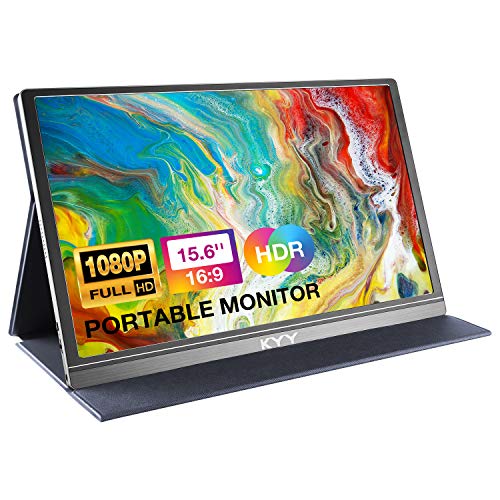
- Weighs 1.7 pounds with a 0.3-inch profile
- Includes a protective cover that doubles as a stand
- Offers USB-C, mini-HDMI, speakers, and HDR
Best For: Remote workers needing a versatile portable second screen
Best Lightweight Pick
Ultra-Portable 14.2-Inch Dual Monitor Extender

- 1.87-pound, 0.27-inch-thin design
- 1080p IPS display with adjustable viewing
- Supports major desktop and mobile operating systems
Best For: Remote workers and travelers needing a light second screen
Best Triple-Screen Upgrade
15.6-Inch FHD Portable Monitor
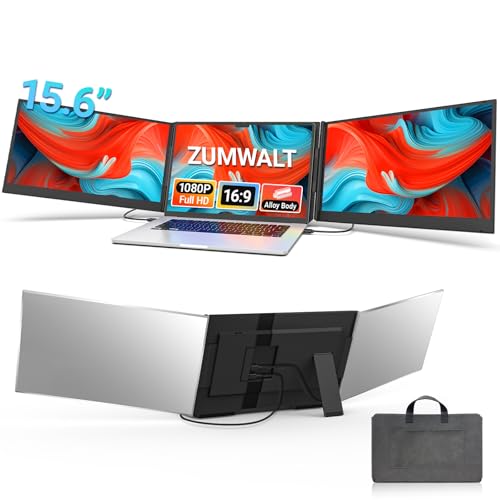
- Adds two 15.6-inch 1080p displays
- Simplified dual USB-C setup on compatible laptops
- Includes power adapter and carrying bag
Best For: Professionals needing a large three-screen workspace
Best Large-Screen Flexibility
15.6-Inch Detachable Monitor Extender

- Large 15.6-inch FHD IPS display with 100% sRGB
- Detachable screen and rotating stand for flexible setups
- Supports landscape, portrait, sharing, and privacy modes
Best For: Home-office multitaskers who prefer a larger display
Triple-Screen Powerhouse – KEFEYA 15.6-Inch Triple Monitor Extender
For home offices that need maximum multitasking space, this KEFEYA model is one of the more expansive laptop screen extenders for home offices. It adds two 15.6-inch Full HD IPS displays, supports landscape and portrait viewing, and folds into its included leather bag for storage or travel.
Best For: Remote workers, programmers, stock traders, and anyone who regularly manages several applications at once.
Pros:
- Creates a triple-screen workstation with two 15.6-inch 1080p IPS displays.
- Supports mirror, extend, landscape, and portrait modes with 180-degree rotation.
- Includes multiple USB-C and HDMI connection cables and has a thin 0.16-inch profile.
- Offers 100% sRGB color coverage and adjustable display settings.
Cons:
- Not directly compatible with Mac devices using M1, M2, or M3 chips without a separate H6 adapter.
- The two-display setup weighs about 3.9 pounds, making it less convenient than a single portable monitor.
- USB-A to USB-C connection provides power only.
This is the strongest choice here when productivity depends on three simultaneous screens. Check your laptop’s USB-C video support or available HDMI ports before buying, particularly for Mac systems.
Flexible Desk Setup – Anyking 15.6-Inch Detachable Extender
The Anyking is a flexible option among laptop screen extenders for home offices, combining a 15.6-inch Full HD IPS panel with a height-adjustable stand and detachable design. Its five viewing modes and VESA compatibility make it suitable for both laptop use and a more permanent desk arrangement.
Best For: Home-office users who want adjustable positioning, occasional travel use, and the option to mount the display.
Pros:
- Provides extend, mirror, landscape, portrait, and rotated display modes.
- Built-in slide-rail stand offers height adjustment and 90-degree rotation.
- Supports 75×75mm VESA mounting for horizontal or vertical setups.
- 330cd/m² brightness, 1080p resolution, and 60Hz refresh rate suit work and streaming.
Cons:
- HDMI connections require a separate USB-A power connection.
- Its 15.6-inch size may be less compact for frequent travel than smaller extenders.
- Compatibility details should be checked for the specific laptop and USB-C port.
Choose this model if adjustability matters as much as portability. The stand and VESA support give it more placement flexibility than a basic laptop-mounted extender, while one-cable USB-C operation can simplify compatible setups.
Compact Dual-Screen Pick – Funhill 14.1-Inch 1080p Extender
For a smaller home-office footprint, the Funhill 14.1-inch model adds a Full HD IPS screen while fitting laptops from 13 to 17.3 inches. It supports USB-C or HDMI connections, multiple viewing orientations, and a broad range of operating systems and devices.
Best For: Home-office workers who want a dual-screen setup without choosing a larger 15.6-inch extender.
Pros:
- 14.1-inch 1920×1080 IPS display provides a compact second screen.
- Supports extend, duplicate, portrait, and other display modes with up to 280-degree rotation.
- Includes USB-C, HDMI, power, and adapter cables.
- Works with Windows, Mac including M1 through M5 systems, Chrome, Linux, Android, and select consoles.
Cons:
- USB-C video requires a full-featured DP- or Thunderbolt-capable port.
- HDMI use requires an additional USB-A or USB-C cable for power.
- The smaller screen provides less workspace than a 15.6-inch alternative.
This is a practical choice for users who value a lighter, less imposing second display. Pay close attention to the connection requirements, especially if your laptop’s USB-C port does not support video output.
Travel-Friendly Value – KYY 15.6-Inch Portable Monitor
The KYY K3 is a straightforward choice for laptop screen extenders for home offices when you also want a display that travels easily. Its 15.6-inch 1080p IPS screen weighs 1.7 pounds, includes a protective cover that doubles as a stand, and connects through USB-C or mini-HDMI.
Best For: Remote workers who want one lightweight monitor for home-office use, travel, gaming, and phone or console connections.
Pros:
- Lightweight 1.7-pound design and 0.3-inch profile are easy to pack.
- 15.6-inch 1080p IPS display includes HDR, a 178-degree viewing angle, and 300cd/m² brightness.
- Protective PU-leather cover doubles as a stand with two viewing-angle grooves.
- Includes two full-function USB-C ports, mini-HDMI, built-in speakers, and a 3.5mm audio input.
Cons:
- USB-C one-cable operation requires a compatible Thunderbolt 3 or USB-C video device.
- The included cover offers limited stand-angle choices.
- Unlike the other featured extenders, this is a single portable monitor rather than a dual-panel attachment.
The KYY K3 is best when portability and broad device compatibility matter more than a permanently attached second screen. Its cover, speakers, and multiple inputs make it useful beyond desk work, including entertainment and console gaming.
Best Lightweight Pick – Ultra-Portable 14.2-Inch Dual Monitor Extender
For shoppers comparing laptop screen extenders for home offices, this model emphasizes low weight, flexible positioning, and a simple connection process. Its 14.2-inch 1080p IPS display supports extended, mirrored, and portrait modes, while compatibility with 14- to 17.3-inch laptops makes it a practical choice for both desk work and travel.
Best For: Remote workers, students, programmers, and frequent travelers who want a lightweight second screen.
Pros:
- Weighs 1.87 pounds and measures 0.27 inches thick for easier portability.
- 1080p IPS display offers 300 nits of brightness and a 226-degree adjustable viewing angle.
- Supports Windows, macOS, ChromeOS, Linux, and Android.
- Can connect through full-function USB-C or HDMI and USB-A, with cables included.
Cons:
- USB-C direct connection requires a full-function USB-C port.
- The display is limited to a 60Hz refresh rate.
This is a strong fit when portability is a priority without giving up Full HD resolution. Its broad operating-system support and adjustable viewing range make it especially adaptable for changing home-office or travel setups.
Best Balanced Home-Office Option – 14-Inch 1080p Laptop Monitor Extender
This 14-inch model is a straightforward option for anyone evaluating laptop screen extenders for home offices. It combines a 1080p display, three viewing modes, and Type-C, HDMI, and USB-A connectivity, with support for laptops from 13 to 17 inches that measure up to 15.35 inches wide.
Best For: Home-office users who want a versatile second display for multitasking, presentations, or cafe work.
Pros:
- 1080p resolution and 72% NTSC color gamut provide crisp, color-rich visuals.
- Supports extended, mirrored, and portrait modes.
- Works with Windows, Mac, and Chrome systems.
- Includes HDMI-to-Type-C, Type-C-to-Type-C, and Type-C-to-USB-A cables.
Cons:
- HDMI connections require an additional USB-A-to-USB-C cable for power.
- At about 2.34 pounds, it is heavier than the lightest option in this roundup.
- Compatibility depends on the laptop’s available ports and screen width.
Its combination of flexible inputs and adjustable display settings makes this a well-rounded choice for a permanent desk or occasional mobile workspace. Buyers should confirm both laptop width and port availability before ordering.
Best Triple-Screen Upgrade – 15.6-Inch FHD Portable Monitor
For users who need more than one extra panel, this triple-screen extender is designed to turn a compatible laptop into a three-screen workstation. It includes two 15.6-inch 1080p displays, simplified USB-C connections, and support for laptops from 12 to 17.3 inches, making it a substantial productivity upgrade for a home office.
Best For: Multitaskers, professionals, and coders who need a larger three-screen workspace.
Pros:
- Adds two 15.6-inch 1080p displays for a triple-screen setup.
- Full-function USB-C laptops can use two USB-C-to-USB-C cables for a cleaner connection.
- Each display offers 280 nits of brightness and a 178-degree viewing angle.
- Includes cables, a power adapter, and a carrying bag.
Cons:
- At 4 pounds, it is considerably heavier than single-screen extenders.
- Laptops without full-featured USB-C ports may require an additional H5-T cable, HDMI, USB-A, external power, and driver installation.
- M1, M2, and M3 MacBooks require the additional connection setup described by the manufacturer.
This model offers the greatest workspace expansion of the three products, but its size, weight, and more demanding compatibility requirements make it better suited to users who genuinely need three screens. Check your laptop ports carefully before purchasing.
Best Compact FHD Pick – 14-Inch Portable Laptop Screen Extender
For home offices that need extra workspace without a bulky desktop monitor, this 14-inch model is a practical choice among laptop screen extenders for home offices. Its 1080p IPS display supports extended, mirrored, and portrait viewing, while HDMI and USB-C connectivity make it suitable for many laptop setups.
Best For: Remote workers and home-office users who want a compact, portable second screen.
Pros:
- FHD 1080p IPS display with 300-nit brightness and a 178-degree viewing angle.
- Supports extended, mirror, and portrait modes without requiring drivers.
- Works with compatible Windows, Mac, Chrome, Linux, Android, and gaming devices.
- Folds to about 0.9 inches thick and weighs roughly 2.34 pounds.
Cons:
- HDMI connections require a separate USB-A-to-USB-C cable for power.
- Devices need a full-featured USB-C or HDMI port, and some Surface Pro models may not be supported.
This extender balances useful home-office screen space with portability. It is especially appealing if you want a straightforward 14-inch display and do not need the larger panels or triple-screen setup offered by some alternatives.
Best Large-Screen Flexibility – 15.6-Inch Detachable Monitor Extender
Home-office users who prefer a larger viewing area may find this 15.6-inch option a strong fit among laptop screen extenders for home offices. The detachable screen and rotating stand support landscape, portrait, single-screen, sharing, and privacy configurations.
Best For: Users who want a spacious second display with flexible positioning for documents, calls, and data work.
Pros:
- Large 15.6-inch FHD IPS screen with 300-nit brightness and 100% sRGB coverage.
- Detachable screen and 360-degree stand support flexible placement and viewing angles.
- Plug-and-play compatibility with Windows, Mac, Android, Linux, and Chrome OS.
- At approximately 0.27 inches thick and 2.8 pounds, it remains relatively portable.
Cons:
- Non-full-featured USB-C laptops require HDMI for video and USB-A-to-USB-C for power.
- The manufacturer recommends an external 5V/2A power adapter if flickering or a “No Signal” message occurs.
The larger panel is useful for side-by-side documents and multitasking, while the detachable construction gives it more setup flexibility than a fixed extender. Check your laptop’s ports and available power before buying.
Best Triple-Screen Setup – Ultra-Slim 14-Inch Laptop Extender
For demanding home-office workflows, this triple-screen model expands a laptop with two additional 14-inch displays. It is one of the more ambitious laptop screen extenders for home offices, offering independent, extended, mirrored, portrait, and landscape viewing modes in a portable clamp-on design.
Best For: Programmers, traders, IT professionals, and other users who regularly need several applications visible at once.
Pros:
- Creates a triple-screen workspace with two 14-inch FHD 1080p IPS displays.
- Ultra-slim 0.27-inch screens with a built-in aluminum stand and 180-degree rotation.
- Driver-free connection through compatible full-featured USB-C or HDMI ports.
- Includes HDR, anti-glare technology, blue-light filtering, and 178-degree viewing angles.
Cons:
- M1, M2, and M3 MacBooks may require an additional H5-T cable.
- Laptops without full-featured USB-C may need HDMI, and an external power connection may be necessary.
- At about 3 pounds, it is heavier than a simple single-screen extender.
This is the most productivity-focused option of the three, particularly for workflows that benefit from three simultaneous screens. Its broader cable and compatibility requirements make a port check essential before ordering.
How We Picked the Best Laptop Screen Extenders for Home Offices
We evaluated these Laptop Screen Extenders for Home Offices based on the features that most affect everyday usability: display size and clarity, supported laptop dimensions, USB-C and HDMI connectivity, power requirements, mounting design, portability, and flexibility for dual- or triple-screen configurations. We also considered whether a monitor can detach for use as a standalone portable display and whether its design suits a regular desk rather than occasional travel only.
Because laptop ports and operating systems vary, compatibility should be confirmed before purchase. A model advertised as plug and play may still require a compatible USB-C port, an HDMI connection, a separate power source, or a driver for certain computers.
Quick Comparison
| Feature | What to look for | Why it matters |
|---|---|---|
| Screen size | 14 to 15.6 inches | Balances workspace with desk and travel space |
| Resolution | Full HD 1080p | Keeps text, windows, and video reasonably sharp |
| Configuration | Dual or triple display | Determines how much content you can view at once |
| Connections | USB-C, HDMI, and USB-A support | Improves compatibility across laptops |
| Portability | Thin body, cover, or detachable design | Makes storage and transport easier |
Key Buying Factors for Laptop Screen Extenders for Home Offices
Check Laptop Fit and Port Compatibility
Confirm your laptop’s screen size range and physical design, especially if it has a narrow lid, unusual hinge, or limited clearance. USB-C ports are not all identical: some carry video, while others provide charging or data only. HDMI models may need separate USB power.
Choose the Right Screen Size and Layout
A 15.6-inch extender offers more room for documents and side-by-side windows, but it adds weight and width. A 14-inch model is often easier to position on a smaller desk. Triple-screen options maximize workspace but typically require more cables, power, and desk clearance.
Consider Daily Ergonomics
Look for adjustable viewing angles, stable attachment, and a layout that keeps the screens close to eye level. A portable extender can improve workflow, but placing screens too far apart or at different heights may create neck and eye strain during long sessions.
Match the Power and Connection Setup
Review whether the extender uses one cable or separate video and power cables. If your laptop has limited ports, you may need a hub. Check brightness controls, refresh rate, audio behavior, and whether the monitor supports your operating system before relying on it for primary work.
Who Should Buy Which Laptop Screen Extenders for Home Offices?
Choose a 14-inch extender if you work from a compact desk, travel regularly, or want a lighter setup. Choose a 15.6-inch model if spreadsheets, editing timelines, and large documents are your priority.
Choose a detachable or multi-mode design if you want to use the display independently or change between home-office and travel setups. Choose a triple-monitor model if maximum multitasking matters more than minimal cables and desk space.
For most home-office buyers, the best choice is the model that fits the laptop securely, supports the available ports without adapters, and provides enough screen area for the way you actually work.