Graphic design workflows often demand more room than a single laptop display can provide. A portable screen extender can keep references, tool panels, timelines, and communication apps visible while your main canvas stays clear.
We selected 10 laptop screen extenders with an emphasis on resolution, panel quality, connectivity, laptop compatibility, portability, and useful multi-screen configurations for designers working at home, in the studio, or on the go.
Best 10 Laptop Screen Extenders for Graphic Design Picks for 2026
Balanced Dual-Screen Pick
KEFEYA 14-inch FHD Laptop Screen Extender

- 14-inch 1080p IPS display with 300-nit brightness
- Supports portrait, landscape, mirror, and extension modes
- Includes cables for USB-C, USB-A, and HDMI setups
Best For: Portable design workflows needing a flexible second screen
Lightweight Travel Choice
14.2-inch Ultra-Slim Dual Monitor

- Only 1.87 pounds and 0.27 inches thick
- 1080p IPS display with 300-nit brightness
- Supports portrait, mirror, and extended modes
Best For: Mobile designers prioritizing low weight and quick setup
Vertical-Workflow Pick
FLYTOCCA 15.6-inch Detachable Monitor

- Large 15.6-inch 1080p IPS second display
- Detaches and supports vertical mounting
- Fits laptops from 13 to 17.3 inches
Best For: Vertical design, documents, dashboards, and video workflows
Streamlined Triple-Screen Pick
15.6-inch FHD Triple Monitor Extender
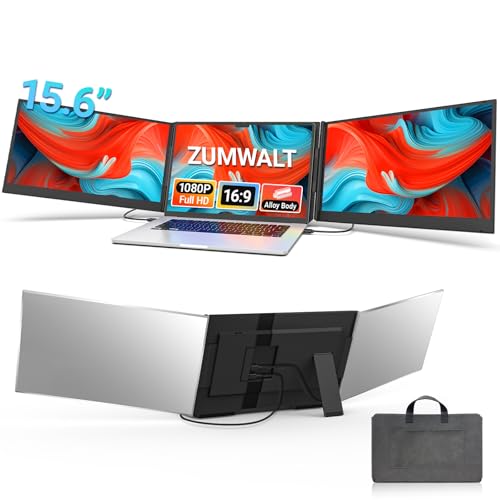
- Two 15.6-inch 1080p displays for expanded workspace
- Slim aluminum design with carrying bag
- Check USB-C compatibility before purchase
Best For: Mobile designers who want a triple-screen setup
Flexible Mounting Choice
15.6-inch IPS Dual-Screen Extender

- Multiple mounting and display modes
- 1080p IPS panel with 3 ms response time
- Supports reverse PD charging up to 100W
Best For: Designers switching between travel and desktop setups
Best Balanced Pick
KEFEYA 14-inch FHD Laptop Screen Extender

- 14-inch 1080p IPS display with 300-nit brightness
- USB-C and HDMI connectivity with included cables
- Foldable, portable design with 180-degree rotation
Best For: Mobile designers needing a practical second screen for multitasking
Best Triple-Screen Setup
P7 15.6-inch Triple Laptop Extender
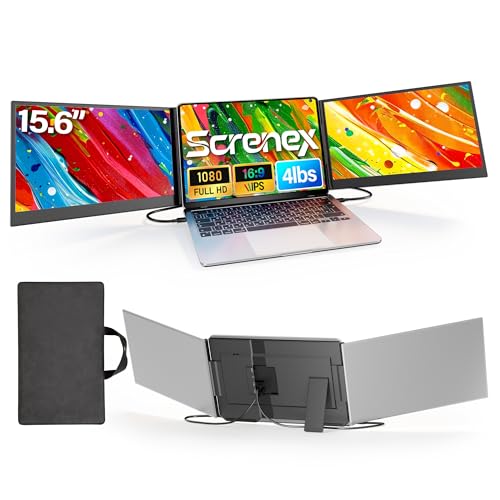
- Adds two 15.6-inch 1080p IPS screens
- Free-standing design avoids laptop hinge stress
- Includes cables, power adapter, and carrying case
Best For: Designers needing maximum workspace for multitasking
Balanced Dual-Screen Pick – KEFEYA 14-inch FHD Laptop Screen Extender
For graphic designers who want a practical second canvas without carrying a large monitor, the KEFEYA is a well-rounded option among laptop screen extenders for graphic design. Its 14-inch FHD IPS display offers a portable workspace for references, tool panels, email, or video calls while your main laptop screen handles the design.
Best For: Designers who need a portable dual-screen setup with broad device compatibility and flexible viewing modes.
Pros:
- 1920×1080 IPS display with 300-nit brightness and 72% NTSC color gamut.
- Supports extension, mirroring, landscape, portrait, and 180-degree rotation.
- Includes USB-C, USB-C-to-USB-A, and HDMI cables for driver-free setup.
- Compatible with Windows, Mac, Chrome, Linux, Android, and select consoles.
Cons:
- The 14-inch workspace is smaller than the 15.6-inch alternatives.
- HDMI connections require an additional USB-A-to-USB-C cable for power.
- Its listed 72% NTSC gamut may be less suited to color-critical work than a dedicated professional monitor.
The KEFEYA combines useful adjustability, solid everyday image specifications, and easy connectivity in a relatively compact format. It is a sensible travel companion for designers who prioritize extra workspace over maximum color coverage.
Triple-Screen Workflow – Venraty 15.6-inch Detachable Monitor Extender
The Venraty expands a compatible laptop into a triple-screen workstation, making it one of the more expansive laptop screen extenders for graphic design. Its two detachable displays can support reference material, palettes, timelines, or communications around your primary design workspace.
Best For: Designers who want maximum screen area and regularly work with several applications at once.
Pros:
- Two detachable 15.6-inch FHD IPS screens provide a large multi-display workspace.
- Supports multiple screen combinations plus 90-, 235-, and 360-degree rotation.
- Offers 300-nit brightness, 72% NTSC color gamut, low-blue-light, and flicker-free features.
- Folds into the included storage bag and includes built-in speakers.
Cons:
- Its triple-screen construction is likely less compact than a single-screen extender.
- It does not support Mac laptops with M1, M2, or M3 chips.
- HDMI use requires an additional USB-A-to-USB-C connection for power.
Choose this model when a broad, multi-window layout matters more than minimal bulk. The detachable design adds flexibility, but Mac users with Apple silicon should verify compatibility before buying.
Lightweight Travel Choice – 14.2-inch Ultra-Slim Dual Monitor
For designers who move between studios, offices, and client sites, this 14.2-inch model emphasizes portability without giving up a full-HD second screen. It is a streamlined choice among laptop screen extenders for graphic design, with support for extended, mirrored, and portrait layouts.
Best For: Frequent travelers, remote designers, and students who want a lightweight dual-screen workstation.
Pros:
- Weighs 1.87 pounds and measures 0.27 inches thick.
- 1080p IPS display provides 300-nit brightness and a 60Hz refresh rate.
- Offers extension, mirroring, portrait mode, and a 0-to-226-degree adjustable viewing angle.
- Supports USB-C or HDMI plus USB-A connection and requires no driver.
Cons:
- It is designed for 14- to 17.3-inch laptops, so smaller laptops may not fit.
- The supplied details do not specify a color-gamut rating.
- HDMI setups need both HDMI and USB-A connections.
This is a strong fit when carrying weight and setup simplicity are priorities. Its specifications suit general design production and multitasking, while color-critical users may want to confirm their calibration needs separately.
Vertical-Workflow Pick – FLYTOCCA 15.6-inch Detachable Monitor
The FLYTOCCA stands out for designers who benefit from a larger second display and vertical orientation. Its detachable 15.6-inch panel is useful for tall documents, coding, social dashboards, and vertical video work, giving it a specialized role among laptop screen extenders for graphic design.
Best For: Designers working with vertical content, long documents, social media dashboards, or larger reference panels.
Pros:
- 15.6-inch 1920×1080 IPS display offers more viewing area than common 14-inch models.
- Detachable screen supports vertical mounting as well as horizontal use.
- Fits 13- to 17.3-inch laptops with a telescoping design and two mounting positions.
- Includes USB-C, USB-A, and HDMI connection options, plus built-in speakers.
Cons:
- The larger screen may add more bulk than smaller dual-screen extenders.
- Its stated compatibility is limited to Windows, Mac, and Chrome in the supplied notes.
- The listed display specifications do not include a color-gamut rating.
The FLYTOCCA is especially compelling when screen orientation matters as much as extra workspace. Its 15.6-inch panel and detachable vertical capability make it more versatile for tall layouts, though color-critical designers should evaluate their calibration requirements.
Streamlined Triple-Screen Pick – 15.6-inch FHD Triple Monitor Extender
For graphic designers who want more canvas without a permanent desk setup, this laptop screen extender for graphic design adds two 15.6-inch 1080p displays to compatible laptops. Its streamlined USB-C setup, aluminum shell, and included carrying bag make it a practical choice for mobile workflows.
Best For: Designers who need a portable triple-screen workspace for multitasking, presentations, and on-the-go production.
Pros:
- Two 15.6-inch FHD displays with 280-nit brightness and 178-degree viewing angles.
- Triple-screen, mirror, extended, and portrait modes support flexible creative workflows.
- Aluminum construction, slim profile, and included leather carry bag improve portability.
- Uses two USB-C cables for full functionality when the laptop supports compatible video connections.
Cons:
- M1/M2/M3 MacBooks and laptops without full-featured USB-C may require an additional H5-T cable, external power, and driver installation.
- At about 4 pounds, it is portable but heavier than a single compact monitor.
This model is appealing when screen real estate and simplified connections matter most. Before buying, verify your laptop ports—especially if you use an Apple silicon Mac or a system without full-featured USB-C.
Flexible Mounting Choice – 15.6-inch IPS Dual-Screen Extender
This laptop screen extender for graphic design combines a 15.6-inch 1080p IPS display with flexible mounting options. It can work as a detachable or clamp-mounted extension, desktop display, or standalone screen, making it useful for designers who alternate between travel and stationary setups.
Best For: Creatives who value multiple mounting configurations, portrait orientation, and broad device compatibility.
Pros:
- 15.6-inch 1920×1080 IPS screen with 280 cd/m² brightness and a 3 ms response time.
- Supports mirror, extended, portrait, and single-stand modes.
- Can connect with one USB-C cable on compatible laptops or HDMI plus USB-A when needed.
- Supports reverse PD charging up to 100W when connected to an external PD power supply.
Cons:
- The listed 45% NTSC coverage may be less suited to color-critical design work than a wider-gamut display.
- Its glossy finish may produce reflections in bright environments.
The versatile mounting system is the main draw, particularly for designers who need portrait layouts or a desktop-friendly arrangement. For color-sensitive projects, consider the stated color coverage alongside your primary calibrated display.
Color-Focused Travel Option – KEFEYA 15.6-inch Triple Monitor
Among laptop screen extenders for graphic design, the KEFEYA stands out on paper for its two 15.6-inch IPS panels and stated 100% sRGB coverage. Its 0.16-inch profile, matte finish, independent image adjustments, and rotating design suit creatives who need a more adaptable workstation while traveling.
Best For: Mobile designers and visual professionals who prioritize stated sRGB coverage, portrait support, and a thin foldable design.
Pros:
- Two 15.6-inch 1080p IPS displays with stated 100% sRGB coverage and 300-nit brightness.
- Ultra-thin 0.16-inch design and approximately 3.9-pound weight support travel use.
- Independent brightness, contrast, and backlight adjustments help tailor each screen.
- Supports mirror, extension, landscape, portrait, and 180-degree rotation modes.
Cons:
- Mac laptops with M1, M2, or M3 chips are not directly compatible and require a separate H6 adapter.
- USB-A to USB-C is for power only, so setup may still require multiple cables.
The KEFEYA is a strong fit for designers who want a portable triple-screen arrangement with more useful color specifications than the other listed options. Confirm your laptop’s USB-C or HDMI capabilities, and factor in the additional adapter requirement for newer Apple silicon Macs.
Best Balanced Pick – KEFEYA 14-inch FHD Laptop Screen Extender
For graphic designers who need a portable second screen without carrying a full-size monitor, the KEFEYA 14-inch extender offers a practical balance of clarity, portability, and connection flexibility. Its 1080p IPS display, matte finish, and adjustable image controls make it suitable for keeping reference material, palettes, or communication tools visible beside a primary canvas.
Best For: Designers who want a compact, travel-friendly second display for multitasking, client calls, and content creation.
Pros:
- 14-inch 1920×1080 IPS display with 300-nit brightness and 178-degree viewing angles.
- Supports USB-C or HDMI connectivity, with included cables for flexible setup.
- Foldable design and 180-degree rotation make it convenient for mobile workstations.
- Independent brightness, contrast, and backlight adjustments help tailor the viewing experience.
Cons:
- The 75% sRGB specification is less color-focused than a dedicated professional design monitor.
- HDMI setups require an additional USB-A connection for power.
The KEFEYA is a sensible choice when portability and easy setup matter more than wide-gamut color coverage. It adds useful workspace for design workflows while remaining light enough for travel.
Best Ultra-Slim Option – 15.6-inch FHD Detachable Laptop Monitor
This 15.6-inch extender is a strong fit for graphic designers who want a larger workspace in a travel-oriented package. The FHD IPS panel, 178-degree viewing angle, detachable stand, and multiple display modes support flexible arrangements for references, tool panels, and presentations.
Best For: Frequent travelers and remote designers who value a larger screen, slim packing profile, and versatile positioning.
Pros:
- 15.6-inch 1080p IPS screen with a 1000:1 contrast ratio and 178-degree viewing angle.
- At just 0.27 inches thick, it is designed to fit easily in standard backpacks.
- Offers mirror, extend, portrait, and standalone single-screen modes.
- Supports USB-C or HDMI plus USB-A setups and includes the required cables.
Cons:
- Its listed 280-nit brightness may be limiting in bright environments.
- Color specifications are not positioned as professional wide-gamut coverage.
- Compatibility and power requirements vary by port and device.
Choose this model if screen size and portability are equally important. Its detachable, rotating design adds flexibility, though designers seeking color-critical work should verify their requirements before relying on it as a primary display.
Best Triple-Screen Setup – P7 15.6-inch Triple Laptop Extender
For graphic design workflows that benefit from a large amount of screen real estate, the P7 creates a triple-screen workspace with two additional 15.6-inch FHD IPS panels. Its free-standing design avoids hanging extra weight from the laptop display, making it a useful option for keeping a canvas, reference material, and tool panels visible at once.
Best For: Designers who prioritize maximum multitasking space for content creation, reference work, and extended desktop workflows.
Pros:
- Two 15.6-inch 1080p IPS panels provide a substantial triple-screen workspace.
- Free-standing construction with non-slip pads avoids clamping or hanging from the laptop screen.
- Supports mirror, extended, and portrait display modes.
- Includes connection cables, power adapter, and a portable carrying case.
Cons:
- The complete setup weighs 3.9 pounds, making it less convenient than a single extender.
- Two full-function USB-C ports are required for the simplest plug-and-play setup.
- M1–M3 MacBooks and some laptops require an extra cable combination and driver installation.
The P7 is the most workspace-oriented option in this group, especially for designers who dislike switching between panels and references. Its weight and more demanding connectivity make it better suited to hotels, offices, or other semi-permanent setups than lightweight travel.
How We Picked the Best Laptop Screen Extenders for Graphic Design
We focused on portable extenders with Full HD 1080p resolution, IPS-style viewing performance where specified, and support for common 13- to 17.3-inch laptops. We also considered connection options, detachable designs, weight, thickness, mounting flexibility, and whether a product is better suited to dual- or triple-screen setups.
Because graphic design depends on accurate, comfortable viewing, display size and usability matter as much as the number of screens. USB-C and HDMI support can simplify setup, but compatibility still depends on your laptop’s ports, video output capabilities, operating system, and power delivery.
Quick Comparison
| Feature | What to Look For | Why It Matters |
|---|---|---|
| Screen size | 14 to 15.6 inches | Balances workspace with portability |
| Resolution | 1080p Full HD | Keeps text and interface elements reasonably sharp |
| Panel type | IPS or IPS-style panel | Provides broader viewing angles for flexible positioning |
| Configuration | Dual or triple display | Supports references, palettes, timelines, and communication tools |
| Connections | USB-C and/or HDMI | Improves compatibility across laptop models |
Key Buying Factors for Laptop Screen Extenders for Graphic Design
Display Quality and Usable Workspace
Full HD is a practical minimum for portable 14- and 15.6-inch screens. Look for an IPS panel or an explicitly stated wide-viewing-angle design, especially if the extender will sit beside or above your laptop. Remember that a larger screen increases workspace but also adds weight and may place more strain on the laptop hinge or mounting system.
Port and Power Requirements
USB-C is convenient, but not every USB-C port carries video. Check whether your laptop supports DisplayPort over USB-C, and confirm whether the extender needs one cable for video and power or separate connections. HDMI models may require an additional USB power cable and can be more broadly compatible.
Portability and Stability
For frequent travel, prioritize slim, lightweight models with a secure attachment mechanism and a protective case if included. Detachable screens can offer more positioning freedom, while hinged designs may set up faster. Check the supported laptop-size range and avoid loading a screen that your laptop cannot safely support.
Software and Operating-System Support
Most extenders are designed for plug-and-play use, but some systems may require drivers or display settings adjustments. Windows laptops generally offer broad compatibility; macOS support can vary, particularly for multiple external displays. Verify the manufacturer’s requirements before buying.
Who Should Buy Which Laptop Screen Extenders for Graphic Design?
Choose a 14-Inch Dual-Screen Model If You Travel Often
Smaller extenders are easier to carry and usually place less weight on the laptop. They work well for designers who need a reference image, asset library, email window, or compact tool panel beside the main canvas.
Choose a 15.6-Inch Model for a Larger Secondary Workspace
A 15.6-inch screen gives palettes, timelines, and browser-based references more room. It is a strong choice for desk-based designers who still want a portable setup but do not mind carrying a larger accessory.
Choose a Triple-Screen Setup for Intensive Multitasking
Triple portable monitors suit users who regularly keep a design application, reference material, and communication or project-management tools open simultaneously. They are less travel-friendly and require more careful attention to laptop ports, power, stability, and desk space.
Check Your Laptop Before Ordering
Confirm screen-size fit, available USB-C or HDMI ports, video-output support, operating-system compatibility, and power requirements. For color-critical professional work, treat these extenders as productivity displays unless the manufacturer provides trustworthy color-gamut and calibration specifications.