The best electronic loads for power supplies make it easier to verify regulation, endurance, protection circuits, batteries, and DC output performance under controlled conditions.
This roundup compares 10 programmable and bench-friendly options across key ranges from 120W to 400W, helping you match voltage, current, operating modes, and connectivity to your testing workflow.
Best 10 Electronic Loads for Power Supplies Picks for 2026
High-Speed Dynamic Tester

- 150 V/30 A and 200 W capacity
- 25 kHz CC dynamic testing
- 100-step programmable list function
Best For: Detailed power-supply and component characterization
Automated Test Bench

- 300 V/30 A and 300 W capacity
- USB, RS232, and RS485 with SCPI
- Battery charge/discharge test support
Best For: Computer-controlled R&D and production testing
High-Voltage Bench Load

- 600 V/15 A and 150 W capacity
- USB, RS232, and RS485 with SCPI
- 5 kHz dynamic testing and protection features
Best For: High-voltage DC power-supply testing
Versatile High-Power Tester
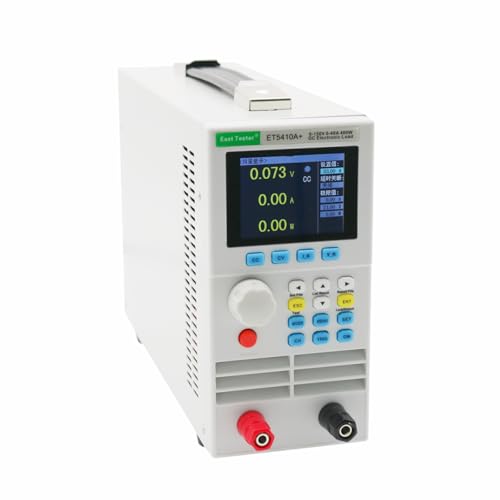
- 150V, 40A, and 400W capacity
- Six basic load modes
- Battery, LED, dynamic, and resistance tests
Best For: High-current charger, battery, and power-supply testing
Fast Programmable Bench Load

- 150V, 20A, and 200W rating
- 5kHz dynamic mode
- USB, RS232, RS485, and SCPI support
Best For: Automated lab and rack-based power-supply testing
High-Voltage Dynamic Tester

- 300V, 15A, and 150W operation
- 5kHz dynamic testing with slew-rate control
- SCPI interfaces and battery cycling support
Best For: High-voltage and automated battery or power-supply testing
High-Capacity Dynamic Tester
OWON OEL1530 300W Electronic Load

- 150V, 30A, and 300W operating range
- 5kHz dynamic testing with adjustable slew rate
- USB, RS232, RS485, and SCPI control
Best For: High-current power-supply and battery testing
Compact Midrange Bench Tester
OWON OEL1515 150W Electronic Load

- 150V, 15A, and 150W operating range
- Four modes plus 5kHz dynamic testing
- PC control and battery charge/discharge testing
Best For: Routine lab testing of moderate-power supplies
Balanced 300W Bench Load
OWON OEL1520 20A Electronic Load

- 150V, 20A, and 300W capacity
- Four load modes and 5kHz dynamic testing
- SCPI-compatible USB, RS232, and RS485 control
Best For: 300W testing where a 20A limit is sufficient
High-Speed Dynamic Tester – Siglent SDL1020X-E
Siglent Technologies SDL1020X-E Programmable DC Electronic Load,1 Channel,150 V/30 A, 200 W
Check Price On AmazonThe Siglent SDL1020X-E is a versatile choice among electronic loads for power supplies, combining 150 V, 30 A, and up to 200 W capacity with four static operating modes. Its fast dynamic testing and programmable list functions make it suitable for detailed bench characterization.
Best For: Engineers testing power supplies and components under adjustable dynamic loads.
Pros:
- Supports CC, CV, CR, and CP modes plus dynamic operation.
- Reaches 25 kHz in CC dynamic mode and 12.5 kHz in CP mode.
- List function supports up to 100 editable steps.
- Offers an adjustable current rise time from 0.001 A/µs to 2.5 A/µs.
Cons:
- Its 200 W maximum rating may not suit higher-power applications.
- At 15 pounds, it is less convenient to move than compact bench loads.
The SDL1020X-E stands out when dynamic response testing and programmable load sequences matter more than portability. Verify that its 150 V and 200 W limits match your power supply testing requirements.
Automated Test Bench – OWON OEL3030
The OWON OEL3030 is a practical option among electronic loads for power supplies when automated control, battery testing, and broad operating range are priorities. It handles up to 300 V, 30 A, and 300 W, with USB, RS232, and RS485 connectivity.
Best For: R&D benches and production environments requiring computer-controlled load testing.
Pros:
- Provides CC, CV, CR, and CP modes with dynamic testing up to 5 kHz.
- Supports USB, RS232, and RS485 interfaces with SCPI protocol.
- Includes OCP, OVP, OPP, OTP, and reverse-polarity protection.
- Supports automated battery charge/discharge testing through PC software.
Cons:
- Its 5 kHz dynamic rate is lower than the Siglent model’s stated CC rate.
- The 2.8-inch display may be relatively small for users wanting a larger readout.
Choose the OEL3030 for a feature-rich, software-friendly setup with strong protection coverage. Its 300 W rating and 1.1 V minimum operating specification at 30 A offer useful flexibility for many DC test tasks.
Compact Manual Tester – DH-801 120W Electronic Load
The DH-801 is a straightforward desktop choice among electronic loads for power supplies, offering essential constant-current, voltage, resistance, and power modes in a compact 120 W unit. Its LED display and front-panel controls keep routine testing simple.
Best For: Basic battery, power-supply, and DC-source testing on a desktop bench.
Pros:
- Supports CC, CV, CR, CP, and short-circuit testing modes.
- Covers 0–150 V and 0–20 A, with resistance settings from 0.1 to 999.9 ohms.
- Measures watt-hours and amp-hours for battery and power-supply testing.
- Compact 2-pound design includes a clear real-time LED display.
Cons:
- The 120 W maximum power rating is lower than the other listed units.
- The supplied notes do not mention computer interfaces or programmable dynamic testing.
The DH-801 is best suited to hands-on measurements rather than automated test sequences. Its compact size and broad basic mode selection make it a sensible choice for routine low-to-moderate-power bench work.
High-Voltage Bench Load – OWON OEL6015
The OWON OEL6015 is designed for higher-voltage applications among electronic loads for power supplies, supporting up to 600 V, 15 A, and 150 W. It combines four operating modes, 5 kHz dynamic testing, and multiple communication interfaces for controlled bench or production work.
Best For: High-voltage DC testing where 600 V input capability and remote control are important.
Pros:
- Supports up to 600 V, 15 A, and 150 W.
- Offers CC, CV, CR, and CP modes with dynamic testing up to 5 kHz.
- Provides USB, RS232, and RS485 connectivity with SCPI protocol support.
- Includes OCP, OVP, OPP, OTP, and reverse-polarity protection.
Cons:
- The 15 A current limit is lower than the 30 A models listed here.
- Its 150 W maximum rating limits high-power testing despite the high-voltage range.
The OEL6015 is the strongest fit when voltage headroom is the deciding factor. Before buying, confirm that the 150 W power limit and 15 A current ceiling align with the devices you plan to test.
Versatile High-Power Tester – 400W Electronic Load
For users comparing electronic loads for power supplies, this programmable tester combines broad 150V, 40A, and 400W ratings with multiple operating and test modes. Its 2.8-inch TFT screen and USB connectivity make it suitable for bench testing chargers, batteries, and power supplies.
Best For: Battery, charger, USB, and power-supply testing where high current and power capacity are useful.
Pros:
- Supports up to 150V, 40A, and 400W.
- Offers CC, CV, CR, CP, CC+CV, and CR+CR modes.
- Includes battery, LED, dynamic, scanning, list, and internal-resistance tests.
- Provides USB connectivity and device protection functions.
Cons:
- At 2.8 kg, it is less portable than smaller bench testers.
- The supplied notes do not list included accessories.
This is the most capable option in the group for higher-current loads and varied diagnostic work. Choose it when its 400W capacity and expanded test functions matter more than compactness.
Fast Programmable Bench Load – OWON OEL8511 200W Load
The OWON OEL8511 is a practical choice among electronic loads for power supplies when programmable control, dynamic testing, and rack integration are priorities. It handles up to 150V, 20A, and 200W, with 5kHz dynamic operation and fine readback resolution.
Best For: Lab benches, automated test setups, and users who need dynamic testing or multiple-unit expansion.
Pros:
- Provides 150V, 20A, and 200W operation.
- Supports CC, CV, CR, and CP modes plus CC dynamic testing.
- Offers 5kHz dynamic operation and adjustable current rise time.
- Includes USB, RS232, RS485, SCPI, and parallel expansion support.
Cons:
- Parallel operation does not support CV mode.
- Its 200W rating is lower than the 400W tester in this roundup.
- The listed warranty description is only one week.
With strong interfaces and expansion capability, the OEL8511 suits repeatable engineering or production testing. Its lower power ceiling makes it better for moderate-power supplies than high-power battery work.
High-Voltage Dynamic Tester – OWON OEL3015 150W Load
For electronic loads for power supplies that need higher voltage coverage, the OWON OEL3015 supports up to 300V while providing programmable CC, CV, CR, and CP modes. Its 5kHz dynamic testing, computer interfaces, and battery cycling functions extend its usefulness beyond basic bench loading.
Best For: High-voltage power-supply testing, automated systems, and battery charge/discharge analysis.
Pros:
- Supports up to 300V, 15A, and 150W.
- Provides USB, RS232, RS485, and SCPI control.
- Offers 5kHz dynamic testing with adjustable slew rate.
- Includes protection features and PC-managed battery cycling tests.
Cons:
- Its 150W maximum is the lowest power rating among these three products.
- Maximum current is limited to 15A.
- The supplied notes do not specify included accessories.
The OEL3015 is the logical pick when voltage range and automated analysis are more important than maximum wattage. It is particularly well matched to high-voltage, lower-power supplies and structured battery testing.
High-Capacity Dynamic Tester – OWON OEL1530 300W Electronic Load
For demanding electronic loads for power supplies testing, the OWON OEL1530 combines a 150V, 30A, and 300W operating range with four load modes. Its 5kHz dynamic testing and computer interfaces make it suitable for evaluating transient behavior, production testing, and battery discharge performance.
Best For: Engineers who need the highest current and power capacity among these three models, plus automated testing and battery analysis.
Pros:
- Supports CV, CC, CR, and CP operating modes.
- Switches between preset levels at up to 5kHz with adjustable slew rate.
- Offers USB, RS232, and RS485 connectivity with SCPI support.
- Includes OCP, OVP, OPP, OTP, and reverse-polarity protection.
Cons:
- Its 2.5 kg benchtop form factor is less convenient for portable use.
- The 300W capacity may be more than needed for lower-power projects.
The OEL1530 is the strongest choice when testing requires up to 30A or 300W. Its display resolution, dynamic capabilities, and PC-managed charge/discharge testing provide a broad toolkit for lab and production work.
Compact Midrange Bench Tester – OWON OEL1515 150W Electronic Load
The OWON OEL1515 is a practical option for electronic loads for power supplies when test requirements reach 15A and 150W. It provides four operating modes, 5kHz dynamic switching, PC connectivity, and battery charge/discharge testing in a compact benchtop design.
Best For: General-purpose lab testing where 150W and 15A provide sufficient headroom.
Pros:
- Provides CV, CC, CR, and CP modes for flexible testing.
- Supports dynamic tests up to 5kHz and adjustable current rise rates.
- Includes USB, RS232, and RS485 interfaces with SCPI protocol support.
- Built-in protection covers over-current, over-voltage, over-power, over-temperature, and reverse polarity.
Cons:
- Its 150W and 15A limits are lower than the other listed models.
- It does not offer as much capacity for high-current loads.
Choose the OEL1515 when your power supplies and components stay within its 150W and 15A limits. It retains the series’ automation, dynamic-testing, protection, and battery-testing features while offering a lower-capacity configuration.
Balanced 300W Bench Load – OWON OEL1520 20A Electronic Load
For electronic loads for power supplies that need 300W capacity without the full 30A rating of the largest model, the OWON OEL1520 offers a balanced configuration. It handles up to 150V and 20A, while adding four operating modes, 5kHz dynamic testing, and automated control interfaces.
Best For: Bench users who want 300W power handling with a 20A maximum current.
Pros:
- Combines a 150V maximum voltage with 20A and 300W capacity.
- Supports CV, CC, CR, and CP modes.
- Provides 5kHz dynamic testing with adjustable slew rate.
- Supports USB, RS232, and RS485 control with SCPI commands.
Cons:
- Its 20A current rating is lower than the OEL1530’s 30A rating.
- The benchtop unit weighs 2.5 kg, limiting portability.
The OEL1520 sits between the other models in current capacity while matching the OEL1530’s 300W rating. It is a sensible middle-ground choice for users who need substantial power handling but do not require a 30A load.
How We Picked These Electronic Loads for Power Supplies
We focused on programmable DC loads with clearly defined voltage, current, and wattage limits. The selection includes compact 120W and 150W models, higher-output 200W and 300W units, and a 400W tester for more demanding battery and power-supply work.
We also considered useful operating modes, including constant current (CC), constant voltage (CV), constant resistance (CR), and constant power (CP). USB or RS-232 connectivity, dynamic-load capability, readback resolution, and bench usability helped distinguish models with stronger automation and measurement potential.
Quick Comparison
| What to Compare | Available Range in This Roundup | Why It Matters |
|---|---|---|
| Maximum voltage | 150V to 600V | Determines whether the load can safely test your DC source. |
| Maximum current | 15A to 40A | Sets the highest output current you can draw. |
| Maximum power | 120W to 400W | Controls how much sustained load the unit can dissipate. |
| Control modes | CC, CV, CR, and CP on many models | Supports different validation and failure-testing methods. |
| Computer interface | USB and/or RS-232 on selected units | Useful for logging, automation, and repeatable test sequences. |
Key Buying Factors for Electronic Loads for Power Supplies
Voltage, Current, and Wattage Headroom
Choose a load with margin above your source’s maximum specifications. A 150V supply may require a load rated above 150V, while a high-current low-voltage supply may be limited by amperage or total wattage. Remember that voltage and current often cannot both reach their maximum values simultaneously; check the manufacturer’s operating envelope and derating information.
Operating Modes and Dynamic Testing
CC is the most common choice for drawing a controlled current. CV, CR, and CP modes are valuable when modeling different real-world loads or checking how a supply responds to changing conditions. Dynamic response matters for converters, adapters, and battery systems, so look for programmable transitions and a suitable dynamic frequency when transient testing is important.
Resolution, Cooling, and Safety
Better readback resolution helps when testing low-current outputs or monitoring small changes. Also check cooling requirements, fan behavior, overvoltage and overtemperature protection, input polarity precautions, and whether the unit is designed for continuous operation at its headline power rating.
Connectivity and Workflow
USB or RS-232 can simplify automated test benches and data collection. If you plan to control the load from a computer, verify supported commands, software compatibility, cable requirements, and whether measurements can be exported in a format your existing tools can use.
Who Should Buy Which Electronic Loads for Power Supplies?
- For general bench testing: Choose a 150W to 200W model with multiple operating modes and straightforward front-panel controls.
- For higher-current supplies: Prioritize 20A to 40A capability, while checking the load’s thermal limits at your intended voltage.
- For higher-voltage sources: Select a unit rated comfortably above your source voltage; 300V or 600V models provide more appropriate headroom for specialized testing.
- For automated validation: Look for USB or RS-232, programmable settings, useful readback resolution, and dynamic-load support.
- For batteries and endurance tests: Favor higher wattage, constant-current control, reliable cooling, and protection features that suit long-duration discharge testing.
Before buying, compare the complete voltage-current-power curve rather than relying on one maximum specification. The right electronic load should provide safe headroom, stable thermal performance, and the control features your test procedure actually requires.