Enclosed 3D printers make desktop printing cleaner, quieter, and easier to manage while helping maintain a more consistent print environment. The right model can also simplify setup, improve safety, and support demanding materials or multicolor projects.
We compared these 10 standout printers across speed, automation, build quality, material support, usability, and overall value to help you choose the best fit for your workspace and experience level.
Best 10 Enclosed 3d Printers Picks for 2026
Best Overall Enclosed 3D Printer

- Up to 500mm/s printing speed
- Automatic bed leveling and 15-minute setup
- Enclosed body for advanced filaments
Best For: Fast, convenient everyday printing
Best Enclosed 3D Printer Combo
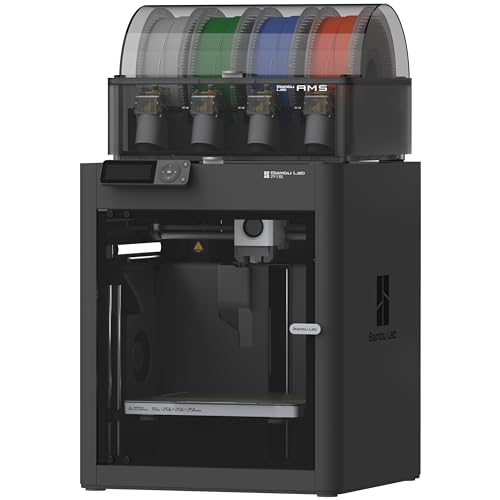
- Includes AMS for multi-color printing
- Up to 16-color capability
- 500mm/s speed and auto leveling
Best For: Multi-color and multi-material projects
Best for Quiet, Filtered Printing

- Enclosed chamber with HEPA13 filtration
- Under-50dB silent printing mode
- 600mm/s CoreXY performance and camera
Best For: Home, classroom, and office printing
Fast Multicolor Workhorse
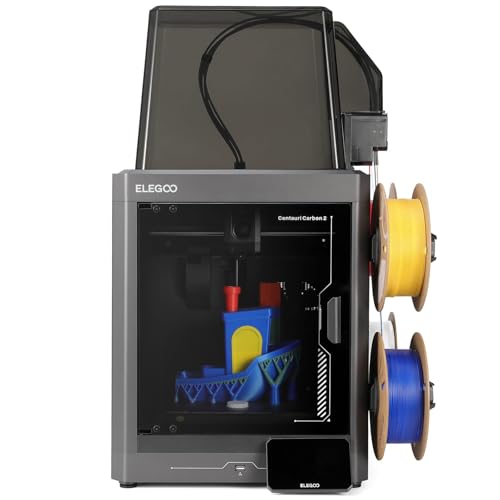
- Four-color CANVAS printing with filament monitoring
- Up to 500 mm/s CoreXY printing
- Automated calibration and broad material support
Best For: Makers seeking fast, automated multicolor printing
Family-Friendly Starter

- Enclosed, quiet, pinch-resistant design
- AI-assisted creation and 12,000+ tested models
- Includes eight PLA rolls and starter tools
Best For: Families and children learning 3D printing
Advanced Enclosed Platform

- Up to 600 mm/s high-speed printing
- AMS 2 Pro supports multicolor and filament drying
- Adaptive airflow and AI-assisted automation
Best For: Users wanting fast, automated multicolor printing
Best Multicolor Enclosed 3D Printer

- Up to 16-color printing with expanded CFS setup
- Pre-assembled with automatic leveling
- AI camera and quiet step-servo operation
Best For: Makers seeking convenient multicolor printing
Best Multi-Material Enclosed 3D Printer

- Four toolheads with five-second tool changes
- Prints mixed materials with less purge waste
- 270 mm cube build volume and 500 mm/s speeds
Best For: Advanced makers and small production environments
Best Fast-Setup Enclosed 3D Printer

- Automatic leveling for easier first layers
- Up to 600 mm/s travel speed
- Quick nozzle changes and remote monitoring
Best For: Beginners and rapid-prototyping workflows
Best Overall Enclosed 3D Printer – Bambu Lab P1S
The Bambu Lab P1S is a practical choice for shoppers comparing enclosed 3D printers with fast output, automatic bed leveling, and straightforward setup. Its enclosed body is designed to improve performance with advanced filaments, while setup takes about 15 minutes.
Best For: Users who want a fast, ready-to-use enclosed printer for everyday PLA, PETG, TPU, PVA, PET ABS, and ASA projects.
Pros:
- Print speeds up to 500mm/s with 20,000mm/s² acceleration.
- Automatic bed leveling helps simplify first-layer setup.
- Enclosed design supports advanced-filament printing.
- Can support up to 16 colors when connected to the Bambu Lab AMS.
Cons:
- The AMS is required for multi-color or multi-material printing.
- Carbon- and glass-fiber-reinforced polymers are not recommended.
- At 38.9 pounds, it is not especially lightweight.
The P1S balances speed, convenience, and enclosure benefits well. Choose it when you want a capable enclosed machine without needing to assemble a printer from scratch.
Best for Carbon-Fiber Filaments – Creality K1C
The Creality K1C stands out among enclosed 3D printers for high-speed printing and compatibility with carbon-fiber materials. Its CoreXY system, 300°C hotend, hardened steel nozzle tip, and enclosed chamber are aimed at demanding filament and production needs.
Best For: Makers who need fast printing with PLA-CF, PA-CF, PET-CF, ASA, and other high-temperature or wear-resistant materials.
Pros:
- CoreXY motion system reaches up to 600mm/s and 20,000mm/s² acceleration.
- 300°C hotend and hardened steel nozzle support carbon-fiber filaments.
- AI camera enables monitoring, malfunction detection, and time-lapse recording.
- Auto calibration, activated-carbon purification, and silent mode down to 45dB.
Cons:
- Its advanced features may be more than casual users need.
- The listed dimensions and enclosed design require dedicated space.
With its reinforced extrusion hardware and enclosed chamber, the K1C is the most material-focused option in this group. It is a strong fit when carbon-fiber capability matters as much as speed.
Best Enclosed 3D Printer Combo – Bambu Lab P1S Combo
The Bambu Lab P1S Combo pairs the enclosed P1S printer with an AMS for multi-color and multi-material printing. It offers the same 500mm/s speed, automatic bed leveling, and quick setup while making color-focused projects possible out of the box.
Best For: Creators who want an enclosed 3D printer bundle for multi-color designs without purchasing the AMS separately.
Pros:
- Includes the AMS for multi-color and multi-material printing.
- Supports up to 16 colors with the appropriate setup.
- Prints at up to 500mm/s with 20,000mm/s² acceleration.
- Enclosed design and automatic bed leveling simplify advanced projects.
Cons:
- Carbon- and glass-fiber-reinforced polymers are not recommended.
- It weighs 40.8 pounds, making it the heaviest Bambu option listed here.
- Multi-color capability adds complexity compared with a standard single-material setup.
The Combo is the better-value configuration for users already planning to print in multiple colors or materials. If you only need single-color printing, the standard P1S may be the simpler choice.
Best for Quiet, Filtered Printing – FLASHFORGE Adventurer 5M Pro
The FLASHFORGE Adventurer 5M Pro is one of the more practical enclosed 3D printers for shared spaces. It combines CoreXY speed with a fully enclosed chamber, HEPA13 and activated-carbon filtration, silent printing under 50dB, and remote camera monitoring.
Best For: Home, classroom, and office users who want enclosed printing with filtration, low-noise operation, and broad material support.
Pros:
- CoreXY platform reaches 600mm/s with 20,000mm/s² acceleration.
- HEPA13 and activated-carbon filtration is designed to block particles and VOCs.
- Supports PLA, ABS, PETG, ASA, TPU, PC, PLA-CF, and PETG-CF.
- Offers one-click auto leveling, a camera, quick-swap nozzles, and power-off resume.
Cons:
- The 280°C extruder is less temperature-capable than the Creality K1C’s 300°C hotend.
- It weighs 32.1 pounds and still requires a sizable workspace.
- Its broad feature set may be unnecessary for basic PLA printing.
The Adventurer 5M Pro is especially compelling where noise and air filtration matter. Its quick setup and monitoring tools also make it convenient for users who want a more hands-off workflow.
Fast Multicolor Workhorse – Centauri Carbon 2 Combo
The ELEGOO Centauri Carbon 2 Combo is a strong choice among enclosed 3d printers for makers who want automated setup, fast CoreXY performance, and convenient four-color printing. Its broad material support and monitoring features make it suitable for both everyday projects and more demanding materials.
Best For: Makers who want fast, automated multicolor printing in an enclosed, connected system.
Pros:
- CANVAS system supports four-color printing with smart filament detection, auto refill, and tangle detection.
- Print speeds reach up to 500 mm/s with 20,000 mm/s² acceleration.
- Fully automated calibration, monitoring, and active vibration compensation simplify reliable printing.
- Supports materials ranging from basic filaments to engineering-grade options.
Cons:
- Its 42.6-pound weight and roughly 19-by-20-by-29-inch footprint require substantial space.
- The feature-rich ecosystem may be more than casual users need.
Choose this model if speed, material flexibility, and integrated four-color printing matter more than a compact footprint. It is positioned as a capable enclosed printer for users who want a largely hands-off workflow.
Family-Friendly Starter – AOSEED AI 3D Printer
The AOSEED AI 3D Printer is one of the more approachable enclosed 3d printers for families, with a compact design, one-tap printing, and a library of more than 12,000 reviewed and tested models. Its enclosed, pinch-resistant construction and quiet operation are designed with children and home use in mind.
Best For: Families introducing children to creative, app-guided 3D printing.
Pros:
- Enclosed, pinch-resistant design, quiet operation, and a leveling-free platform support simpler home use.
- AI Doodle, AI MiniMe, and MINIMAKIE offer accessible ways to create personalized models.
- Reaches speeds up to 400 mm/s, with precision up to 0.05 mm and filament runout detection.
- Includes eight PLA rolls, tools, a magnetic build plate, and DIY stickers.
Cons:
- It supports single-color printing only; multicolor designs require separate parts and assembly.
- The compact printer is intended for smaller projects rather than large-format work.
This is a practical pick when ease of use, supervised creativity, and included supplies outweigh advanced material flexibility. Smartphone monitoring and broad device compatibility also make it convenient for families.
Advanced Enclosed Platform – Bambu Lab P2S Combo
The Bambu Lab P2S Combo is a high-speed option among enclosed 3d printers, pairing the P2S printer with the AMS 2 Pro for multicolor and multimaterial workflows. Automatic calibration, AI failure detection, adaptive airflow, and filament drying make it well suited to users who want a more streamlined path to precise prints.
Best For: Beginners and experienced makers who want high-speed multicolor printing with smart automation.
Pros:
- Prints at speeds up to 600 mm/s with active flowrate compensation for consistent layers.
- AMS 2 Pro enables multicolor and multimaterial printing while drying filament up to 65 °C.
- Automatic calibration, quick-swap nozzles, and AI failure detection simplify operation.
- Adaptive airflow can cool overhangs or maintain a 50 °C chamber for engineering materials.
Cons:
- The standard P2S does not support multicolor printing; the Combo version is required.
- At 47.5 pounds and 18 by 22 by 18 inches, it needs a substantial workspace.
The Combo is the better fit for users who value speed, automation, and a polished multicolor workflow. Its airflow management and filament drying also provide useful flexibility across everyday and engineering-focused projects.
Best Multicolor Enclosed 3D Printer – Creality K2 Combo
The Creality K2 Combo is a practical choice among enclosed 3D printers if you want fast, largely hands-off multicolor printing. Its included CFS supports up to four colors, while additional CFS units can expand the system to as many as 16 colors. Pre-assembly, automatic leveling, and AI monitoring also make setup and oversight simpler.
Best For: Makers who want multicolor capability, quiet operation, and a plug-and-play setup.
Pros:
- Supports up to 16 colors when connected with up to four CFS units.
- Pre-assembled design and smart automatic leveling reduce setup work.
- AI camera monitors for spaghetti failures and idle printing.
- 260 × 260 × 260 mm build volume and support for materials including PLA, PETG, ABS, and PLA-CF.
Cons:
- The Combo includes only one CFS unit; additional units are needed for the maximum 16-color capability.
- Its 65.9-pound weight may make repositioning difficult.
The K2 Combo combines speed, color flexibility, and automation in a sturdy enclosed format. It is especially compelling for users who value multicolor prints without extensive post-print painting or manual calibration.
Best Multi-Material Enclosed 3D Printer – Snapmaker U1
The Snapmaker U1 stands out among enclosed 3D printers for its four independent toolheads and rapid five-second tool changes. Instead of repeatedly swapping and purging one filament path, it can combine rigid, flexible, soluble-support, and engineering materials in a single print, making it suited to more demanding prototypes and functional parts.
Best For: Workshops, professionals, and advanced makers printing multicolor or mixed-material parts.
Pros:
- Four independent toolheads enable true multicolor and multi-material printing.
- Five-second tool changes can reduce material waste and changeover time.
- Supports materials such as PLA, PVA, TPU, PETG, ABS, ASA, PA, and PC.
- Automatic calibration, AI print monitoring, and remote app control simplify operation.
Cons:
- Its feature-rich toolhead system may be more than casual users need.
- At 59 pounds, it is not especially easy to move.
With a 270 × 270 × 270 mm build volume and CoreXY speeds up to 500 mm/s, the U1 targets productivity as much as convenience. Its strongest advantage is the ability to use different materials in one print while minimizing purge waste.
Best Fast-Setup Enclosed 3D Printer – FLASHFORGE Adventurer 5M
The FLASHFORGE Adventurer 5M is a practical entry among enclosed 3D printers for users who prioritize fast setup and rapid single-material printing. One-click automatic leveling, a quick-heating extruder, and a CoreXY structure help shorten the path from loading filament to producing a finished part.
Best For: Beginners and rapid-prototyping users who want automatic leveling and high-speed printing.
Pros:
- Automatic bed leveling helps produce consistent first layers without manual adjustment.
- CoreXY motion system reaches up to 600 mm/s travel speed.
- Quick three-second nozzle changes and 35-second warm-up to 200°C support efficient workflows.
- Remote monitoring and status alerts are available through Flash Studio.
Cons:
- Its 220 × 220 × 220 mm build volume is smaller than some alternatives.
- Multicolor printing is not listed among the supplied features.
- Some nozzle sizes are optional rather than included.
The Adventurer 5M focuses on speed and simplicity rather than an extensive material-management system. Its automatic features, detachable nozzle, and remote monitoring make it a sensible choice for quick prototypes and everyday projects.
How We Picked These Enclosed 3d Printers
We focused on practical features that affect daily printing rather than headline specifications alone. Our comparison considers print speed, automatic bed leveling, extrusion reliability, enclosure design, build volume, noise control, camera or monitoring features, software experience, and support for specialty or multicolor printing.
We also weighed each printer against its likely user. A fast machine with advanced automation may suit experienced makers, while a simpler enclosed model can be a better choice for families, classrooms, and first-time users. Availability of accessories, filament systems, replacement parts, and upgrade paths also influenced the overall value assessment.
Quick Comparison
- Best all-around enclosed printer: Bambu Lab P1S offers a polished ready-to-use experience and strong automatic features.
- Best for multicolor printing: Bambu Lab P1S Combo, P2S Combo, Creality K2 Combo, and Snapmaker U1 include dedicated multicolor workflows.
- Best for high speed: Creality K1C, Creality K2 Combo, and FLASHFORGE Adventurer 5M models emphasize rapid printing.
- Best for beginners or families: AOSEED’s enclosed, kid-focused design prioritizes accessibility and safety.
- Best for material flexibility: Look for a heated enclosure, higher-temperature hotend, and reliable direct-drive extrusion.
Key Buying Factors for Enclosed 3d Printers
Enclosure and Temperature Control
An enclosure helps contain drafts, odors, noise, and loose particles while improving consistency with materials that shrink or warp. Check whether the enclosure is actively heated or simply covered, and confirm that ventilation and filtration match your workspace.
Speed Versus Print Quality
Maximum speed figures are typically achieved under specific conditions. More important features include input shaping, automatic calibration, stable motion hardware, and a hotend that can melt filament quickly. A printer that maintains quality at moderate speed may be more useful than one with an impressive peak number.
Build Volume and Material Support
Choose a build area based on the objects you actually plan to make. Confirm hotend temperature, bed temperature, nozzle options, and enclosure clearance before using materials such as ABS, ASA, nylon, or carbon-fiber-reinforced filament. Standard PLA and PETG require fewer specialized features.
Automation and Monitoring
Auto leveling, flow calibration, filament-runout detection, power-loss recovery, and a camera can reduce failed prints. These conveniences are especially valuable for unattended jobs, though app and cloud requirements may matter if you prefer local control.
Multicolor Systems and Ongoing Costs
AMS, CFS, and tool-changing systems can expand creative options, but they add hardware, setup considerations, purge waste, and filament-management requirements. Budget for extra spools, dry storage, nozzles, and replacement components.
Who Should Buy Which Enclosed 3d Printers?
Choose the Bambu Lab P1S if you want a dependable general-purpose machine with a straightforward setup. The P1S Combo or P2S Combo is better for makers who prioritize integrated multicolor printing and a more automated workflow.
Creality’s K1C, K2 Combo, and FLASHFORGE’s Adventurer 5M models suit buyers who value high-speed printing, while the ELEGOO Centauri Carbon 2 Combo and Snapmaker U1 appeal to users seeking multicolor capability or more specialized workflows. The AOSEED model is the most approachable option for supervised family and educational use.
Before buying, verify current bundle contents, regional warranty coverage, software compatibility, and filament requirements. The best enclosed 3D printer is the one whose automation, materials, build size, and maintenance demands match how often and how confidently you plan to print.