The best handheld LCR meters make it easier to identify components, verify tolerances, and troubleshoot circuits without carrying a full bench setup. The models in this roundup range from compact SMD tweezers to versatile 100kHz testers.
We compare measurement range, frequency options, display quality, component detection, portability, and practical features to help you choose the right meter for electronics repair, design, education, or production work.
Best 10 Handheld Lcr Meters Picks for 2026
Best All-Around Pick
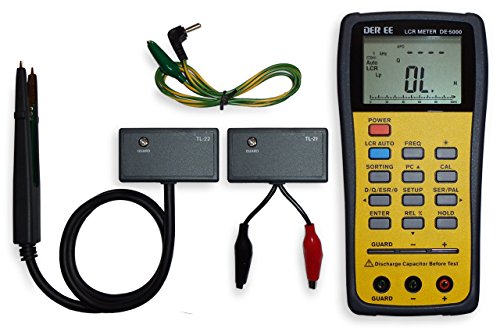
- Auto-ranging L/C/R measurement
- Five selectable test frequencies
- Includes leads and SMD tweezers
Best For: General-purpose component testing and sorting
Best Feature Set
FNIRSI LC1020E 100kHz LCR Meter

- Color TFT with dual parameters
- Sorting and open/short calibration
- Rechargeable 3000mAh battery
Best For: Detailed testing and component screening
Best Compact Option
Peak Atlas LCR45 LCR and Impedance Meter
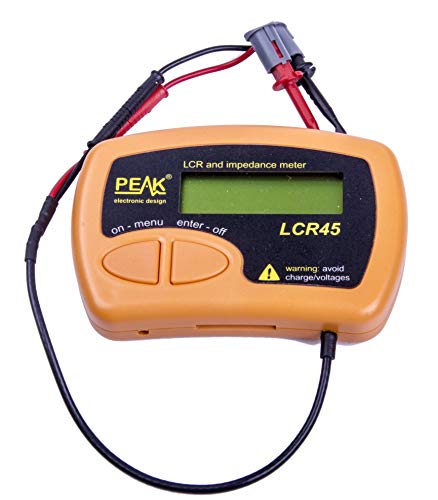
- Lightweight 145g design
- Automatic or manual component selection
- Supports frequencies up to 200kHz
Best For: Portable, straightforward component checks
Best Traditional Handheld
B&K Precision 879B LCR Meter

- Dual display with backlight
- Includes leads, battery, and USB cable
- AC adapter listed in kit contents
Best For: Bench or field use with a complete accessory kit
Best Value Bench Tester
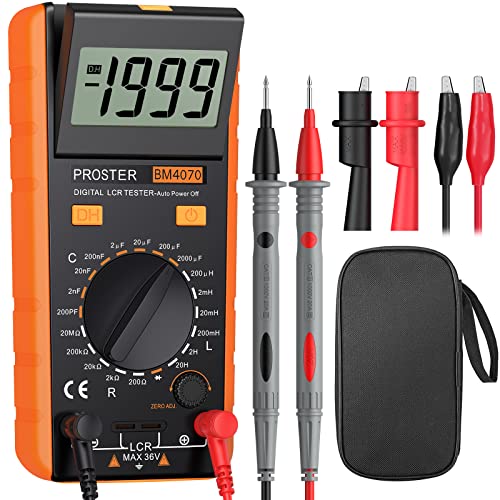
- Measures broad capacitance and inductance ranges
- Includes resistance and diode testing
- Rotatable display and complete accessory kit
Best For: Hobby electronics, repairs, and everyday component testing
Best for Precision Component Sorting

- Five selectable test frequencies up to 100kHz
- Measures ESR, phase, D, Q, and multiple LCR modes
- Includes SMD and alligator test leads
Best For: Detailed component verification and sorting
Best 2-in-1 Analyzer
ZOYI ZT-DQ02 LCR and Battery Tester

- Combines LCR and battery internal-resistance testing
- Uses four-wire Kelvin measurement
- Adds PASS/FAIL sorting and USB-C PC control
Best For: Battery maintenance and advanced component diagnostics
Best Tweezer-Style Pick

- Tweezer format for SMD testing
- Three frequencies up to 10 kHz
- Exports saved records to a PC
Best For: SMD repair and compact component testing
Best Large-Display Value

- 2.8-inch color LCD
- Six frequencies up to 100 kHz
- Displays primary and secondary parameters
Best For: General electronics testing and component evaluation
Best for Precision Logging

- 10 Hz–100 kHz range with 1 Hz stepping
- 0.2% basic accuracy and 5-digit resolution
- USB logging, calibration, and tolerance presets
Best For: Labs, quality control, and component sorting
Best All-Around Pick – DE-5000 Handheld LCR Meter
The DE-5000 is a versatile choice for shoppers comparing handheld LCR meters. It automatically measures inductance, capacitance, and resistance, while also reporting useful secondary parameters such as ESR, dissipation factor, quality factor, and phase angle.
Best For: Technicians and hobbyists who want broad component testing with multiple frequency options and sorting support.
Pros:
- Measures L, C, and R automatically in smart AUTO-LCR mode.
- Supports 100Hz, 120Hz, 1kHz, 10kHz, and 100kHz test frequencies.
- Includes alligator leads, SMD tweezers, a guard line, battery, and manual.
- Sorting mode helps screen batches of components quickly.
Cons:
- The optional IR-to-USB cable is not included.
- Uses a 9V battery as its listed power source.
With its dual display, auto-ranging operation, serial or parallel measurement, and included accessories, the DE-5000 offers a well-rounded feature set for general bench and field work.
Best Feature Set – FNIRSI LC1020E 100kHz LCR Meter
The FNIRSI LC1020E stands out among handheld LCR meters with a color TFT display, dual-parameter readout, component sorting, and calibration controls. It is designed for detailed testing across capacitors, resistors, and inductors, including ESR, Q, D, theta, and reactance readings.
Best For: Users who need component screening, Kelvin-style connections, calibration features, and rechargeable portability.
Pros:
- Displays main and secondary parameters simultaneously on a 19,999-count screen.
- Offers 100Hz through 100kHz test frequencies and adjustable test voltage.
- Sorting mode tracks pass/fail results using preset nominal values and tolerances.
- Includes a 3000mAh battery, Type-C charging, and open/short calibration.
Cons:
- Requires capacitors and inductors to be fully discharged before testing.
- Should not be used on live circuits.
The LC1020E is a strong option when display usability, screening workflows, and measurement flexibility matter more than having a basic handheld tester.
Best Compact Option – Peak Atlas LCR45 LCR and Impedance Meter
The Peak Atlas LCR45 is a compact choice for shoppers seeking handheld LCR meters with straightforward operation. It provides automatic or manual component identification, selectable test frequencies, a hold function, and enhanced resolution for inductance, capacitance, and resistance measurements.
Best For: Portable component checks where a small, lightweight meter and simple menu system are priorities.
Pros:
- Supports automatic or manual component type selection.
- Offers automatic or manual testing at DC, 1kHz, 15kHz, or 200kHz.
- Provides listed resolution of 0.2uH, 0.2pF, and 0.2 ohms.
- Compact 145g design with a measurement hold function.
Cons:
- The supplied details list corded electric power rather than battery operation.
- Its feature list does not mention sorting or dual-parameter display.
The LCR45 is appealing when portability and uncomplicated controls are more important than extensive screening or display features.
Best Traditional Handheld – B&K Precision 879B LCR Meter
B&K Precision 879B Dual Display Handheld Deluxe Universal LCR Meter with Backlit Display
Check Price On AmazonThe B&K Precision 879B is a practical traditional option among handheld LCR meters, combining a dual display with a backlit screen and a portable battery-powered design. Its supplied kit includes test leads, a 9V battery, a mini USB interface cable, and an AC adapter.
Best For: Bench and field users who prefer a recognizable handheld format with included power and connection accessories.
Pros:
- Uses a dual display with backlighting for easier viewing.
- Battery powered and supplied with a 9V battery.
- Includes banana-to-alligator test leads and a mini USB interface cable.
- AC adapter is listed among the kit contents.
Cons:
- The supplied notes do not specify measurement ranges or test frequencies.
- RoHS compliance is listed as NA in the product details.
The 879B makes sense for buyers who value a complete accessory package and a conventional handheld meter, though shoppers needing detailed performance specifications may want to verify them before purchase.
Best Value Bench Tester – Proster BM4070 LCR Meter
For shoppers seeking practical handheld LCR meters, the Proster BM4070 covers core inductance, capacitance, and resistance testing in a straightforward bench-friendly design. Its broad ranges, rotatable display, and included accessories make it ready for component testing, repair, and hobby electronics.
Best For: Hobbyists, electronics repair, and general component identification.
Pros:
- Measures capacitance from 200pF to 2000μF and inductance from 200μH to 20H.
- Includes resistance and diode testing, zero adjustment, data hold, and auto power-off.
- Rotatable LCD, test leads, crocodile clips, battery, case, and 18-month guarantee are included.
Cons:
- Its 3 1/2-digit, 1999-count display is less detailed than higher-resolution models.
- Manual range selection and a 3-readings-per-second sampling rate may feel basic for advanced workflows.
The BM4070 is a sensible all-around choice when you want dedicated LCR functions without moving into more specialized measurement and data-logging features.
Best for Precision Component Sorting – DE-5000 Handheld LCR Meter
The DE-5000 is one of the more feature-rich handheld LCR meters for users who need selectable test frequencies and detailed component parameters. It supports multiple series and parallel modes, high-resolution display counts, and tolerance-based sorting for more controlled verification work.
Best For: Technicians and serious hobbyists checking component values, ESR, phase, and quality factors.
Pros:
- Offers 100Hz, 120Hz, 1kHz, 10kHz, and 100kHz test frequencies.
- Supports Ls, Lp, Cs, Cp, Rs, Rp, DCR, ESR, D, Q, and phase-angle measurements.
- Includes alligator and SMD test leads plus a protective carrying case.
- Selectable tolerance settings and sorting modes help identify acceptable components quickly.
Cons:
- Its advanced measurement options may require more setup than a basic LCR meter.
- The supplied notes do not specify the component measurement ranges or battery runtime.
Choose the DE-5000 when measurement flexibility matters more than simplicity, particularly for component matching and tests performed at different frequencies.
Best 2-in-1 Analyzer – ZOYI ZT-DQ02 LCR and Battery Tester
The ZOYI ZT-DQ02 expands beyond typical handheld LCR meters by combining component analysis with battery voltage and internal-resistance testing. Four-wire Kelvin measurement, automatic component detection, multiple frequencies, and USB-C PC control make it well suited to repeatable diagnostics and battery maintenance.
Best For: Battery pack troubleshooting, low-resistance measurements, and advanced electronics testing.
Pros:
- Combines LCR testing with battery voltage and internal resistance measurement.
- Four-wire Kelvin connections help reduce lead and contact resistance effects.
- Provides five test frequencies, adjustable test levels, ESR, Q, D, reactance, and phase readings.
- Supports component PASS/FAIL sorting and USB-C PC control with SCPI support.
Cons:
- Its broader feature set may be more than needed for simple component checks.
- PC software is obtained through the manufacturer, according to the supplied notes.
- Battery testing uses a separate aviation connector and clips rather than the LCR terminals.
The ZT-DQ02 is the strongest fit here for users who need one instrument for components and batteries, especially when low-resistance accuracy and computer-assisted testing are priorities.
Best Tweezer-Style Pick – FNIRSI LCR-ST1
For quick board-level work, the FNIRSI LCR-ST1 is one of the most compact handheld LCR meters available in this group. Its tweezer format supports resistance, capacitance, inductance, and diode testing, while automatic component recognition helps speed up SMD troubleshooting.
Best For: SMD repair, circuit-board fault finding, and technicians who prefer an integrated tweezer tester.
Pros:
- Measures resistance, capacitance, inductance, and diodes with automatic recognition.
- Offers 100 Hz, 1 kHz, and 10 kHz test frequencies with selectable 0.3 Vrms or 0.6 Vrms levels.
- Displays D, Z, Q, R, and ESR readings and can export saved records to a PC via Excel.
- Includes pointed and hook tweezer heads, a carrying case, and USB-C charging.
Cons:
- The 1.14-inch display is smaller than the screens on the ET430 and ET433.
- The fixed screen does not flip or rotate.
- Tweezer-style operation is less suited to components that require conventional test leads.
The LCR-ST1 stands out for portability and direct SMD access rather than broad bench-style versatility. Choose it when compact tweezer testing and data export matter most.
Best Large-Display Value – ET430 100KHz LCR Meter
The ET430 is a practical choice for users who want a handheld LCR meter with a larger color display and a broad frequency range. It shows primary L/C/R readings alongside secondary parameters, making it useful for general electronics testing and component evaluation.
Best For: General-purpose bench and field measurements where a 2.8-inch dual-parameter display is helpful.
Pros:
- Supports six test frequencies from 100 Hz to 100 kHz.
- Displays primary L/C/R values and secondary D/Q/θ/ESR parameters together.
- Includes capacitor mode and support for free software.
- Comes with a power line, short-circuit chip, and red-and-black rubber chip.
Cons:
- Open- and short-circuit setup is required before use to reduce fixture error.
- The supplied accessories do not include Kelvin test clips.
- Its stated basic accuracy is 0.3%, less precise than the ET433’s listed 0.2%.
With its 100 kHz upper frequency and clear dual-parameter screen, the ET430 is well suited to everyday component work. It is a sensible middle ground, provided the lack of Kelvin clips is acceptable.
Best for Precision Logging – ET433 Handheld LCR Meter
The ET433 is the most feature-rich option here for users who need precise handheld LCR measurements and repeatable results. It combines 1 Hz frequency stepping, 5-digit resolution, calibration functions, adjustable test levels, and USB data logging for workshop or production use.
Best For: Repair labs, component sorting, quality-control screening, and PC-based measurement logging.
Pros:
- Measures L/C/R/Z at frequencies from 10 Hz to 100 kHz with 1 Hz stepping and listed 0.2% basic accuracy.
- Shows primary and secondary readings on a 2.8-inch color LCD, including D, Q, θ, and ESR.
- Provides open/short calibration, deviation percentage display, tolerance presets, and USB connectivity for Windows data logging.
- Rechargeable lithium battery, auto-off, test leads, shorting bar, and adapter are included.
Cons:
- Its broader feature set may be more than casual hobbyists need.
- It is larger than the tweezer-style FNIRSI LCR-ST1.
- USB data logging is specified for Windows PCs, which may limit compatibility with other systems.
The ET433 is the strongest fit when measurement control, matching, and documentation are priorities. Its frequency stepping and logging features make it particularly practical for repeated lab or production measurements.
How We Picked the Best Handheld Lcr Meters
We evaluated these Handheld Lcr Meters by focusing on the specifications and features that matter during real component testing. Key considerations included measurement accuracy, available test frequencies, resistance, capacitance, and inductance ranges, automatic component recognition, ESR and impedance functions, display readability, and ease of use.
We also considered the intended environment. A compact meter may be ideal for field service or quick checks, while a model with more frequency options and better test leads can be more useful for design validation and detailed troubleshooting. SMD tweezers were assessed separately because their integrated probes prioritize speed and convenience over general-purpose versatility.
Quick Comparison
- Best for broad component testing: Choose a 100kHz model with automatic identification and multiple measurement modes.
- Best for SMD work: An LCR tweezer meter provides fast one-handed testing on small components.
- Best for portability: Look for a compact enclosure, battery operation, clear display, and built-in or protected leads.
- Best for advanced measurements: Prioritize selectable test frequencies, ESR, Q, D, phase angle, and impedance functions.
- Best for occasional checks: A simpler resistance, capacitance, and inductance tester can reduce cost and setup time.
Key Buying Factors for Handheld Lcr Meters
Measurement Range and Accuracy
Confirm that the meter covers the component values you work with most often. Accuracy is particularly important when matching components, checking low-value resistors, or measuring small capacitors and inductors. Resolution and stated accuracy are more useful than headline range alone.
Test Frequency and Measurement Modes
Higher test frequencies, such as 100kHz, can provide more meaningful information for components used in switching supplies, RF circuits, and other high-frequency applications. ESR, impedance, quality factor, dissipation factor, and phase measurements add diagnostic value but may not be necessary for basic identification.
Probes, Fixtures, and Display
Test leads should make reliable contact without being awkward to use. A dedicated component fixture can improve repeatability, while tweezer probes are especially convenient for SMD parts. A backlit color or dual-display screen helps when working in dim areas, but a simple LCD may offer longer battery life.
Portability and Workflow
Consider battery type, auto-ranging, auto component detection, calibration options, and whether the meter can be operated comfortably with one hand. For repeated measurements, fast settling and easy-to-read results may matter more than extra functions.
Who Should Buy Which Handheld Lcr Meters?
Choose a versatile 100kHz handheld meter if you repair electronics, evaluate unknown components, or need ESR and impedance data alongside basic LCR readings. Choose an SMD tweezer tester if your work centers on compact boards and rapid in-circuit checks. Choose a straightforward portable tester for occasional bench use, school laboratories, hobby projects, or general maintenance. Professionals who need traceable accuracy, frequent calibration, or production-level consistency should verify the manufacturer’s specifications and consider a dedicated bench LCR analyzer instead.